Okay, if you’re so, so funny—
why not make a stunt about leaving your office
this instant and never take it back?
You’ll do a great favor to History books and bayarang midya
which won’t even dare to revise.
Headlines will set your name in bold below a photo of you crying for real. To be honest, I am tired of rolling my eyes every time I see your face on the screen, giving bad speeches.
I don’t blame you if you think what I’m saying seems incomprehensible but a vacancy in the seat can be considered
phenomenal at this moment.
For a year or so, you’ve invented gimmicks not even the false hero buried in the Land of Heroes managed to think of. It’s not in the howness of things
if ever you get to be thrown to the nearest dumpster
but the manuscript in which you, and your invisible gun, and your checkered polo
will be devoid of meaning. It’ll be a best-selling book
with everyone buying copies for themselves and their children’s children.
You’ll be known as the man who was nothing less of a living joke, the man who promised breathless Change. I’m waiting
for the punchline to punch you really hard.
Let me punch you really hard.
Hezron Pios received a BA degree in Communication from the University of St. La Salle. His poems have appeared in Glucose, Katitikan, The Spectrum, and Yuwana. He dreams of exploring visual arts and building a pop-up library someday. He lives in Bacolod City.
An easy trick not to forget which key is for the kitchen,
for mother’s old bookshelf, or for the lonely attic—
is to remember the cuts of the key’s body.
The only duplicate looks like ridges of Cuernos de Negros.
Another resembles the edge of the sea with dying eddies.
And the gold one is a weak heartbeat’s running green line
on the ECG monitor.
Somewhere, in an ancestral house,
a locksmith is replacing a jammed lock
of a front door left unrepaired for years.
A new spare key hangs on the doornail,
waiting to be useful.
Lyde Sison Villanueva was born in Dumaguete City, and graduated with a degree in Mass Communication from Silliman University in 2008. He was a fellow for poetry for the 2013 Silliman University National Writers Workshop. He is currently pursuing his MFA in Creative Writing at De La Salle University in Manila. His works have appeared in various publications like The Sunday Times Magazine, Inquirer.net, and The Quarterly Literary Review Singapore. His first poetry chapbook entitled Made Easy was published in 2019.
It has been a few years since the online publication of Conchitina Cruz’s “The (Mis)education of the Filipino Writer: The Tiempo Age and Institutionalized Creative Writing” in the Kritika Kultura Journal of the Ateneo de Manila University’s Department of English. I used to teach in the said department–and while I was already teaching in another unit when the essay came out, I felt its undeniable sting. It had to do with being both an Ateneo de Manila teacher and an alumnus of the Silliman National Writers Workshop, which the essay’s subjects, Edilberto and Edith Tiempo, cofounded in 1962.
The years offer some relief due to chronological distance, which also allowed for a critical assessment that, though still holding the writer and publisher accountable for what is I believe is an unbalanced portrayal of the Tiempos, I have been able to frame the critique in a different vision. The delineation where “The (Mis)Education of the Filipino Writer” fits is that of an anti-imperialist project, wherein it is the great structural forces that need to be focused on and rebalanced, even when the tone of the essay goes polemically overboard. Such a project has great value, especially at this crucial time when demagogues are trying to stay in power, our national sovereignty in the Philippines is under threat, and oppression based on class is rife.
The presentation that Cruz does is a multilayered one, and I hope to address these concerns, some of which hold water and will do well to be considered. The following four points, I believe, summarize the concerns that Cruz sought to address:
The Silliman Workshop was modeled after the Iowa Workshop, which is linked to American Cultural Diplomacy.
The Silliman Workshop’s focus on New Criticism prevents writers from seeing the political aspect of writing.
The Silliman Workshop’s focus on English prevents writers from seeing the political formation and dynamics of language.
The Silliman Workshop, having focused on works in English, also perpetuated a local elite in Philippine literature, which has enabled gatekeeping of those who might produce new literary works from within and outside the academe.
Although I am trying to take the most useful material from her presented concerns, I believe it important to present the problems that I have seen in her paper. The goal is not simply to put the Tiempos and the Silliman Workshop in a more appreciative light. It is to forward a possible fruitful approach to criticism in relation to national concerns, in which literature and creative writing play a part.
I would like to propose that “The (Mis)Education of the Filipino Writer” must be read with care because it is problematic in its assessment due to [1] the deployment of a framework that does not match its purposes, and [2] there are gaps in the presentation of the Tiempos, which can be alleviated by more research. I will develop this thesis by going through the following:
An elucidation of Renato Constantino’s “The Miseducation of the Filipino,” and an assessment of how it does not complement the project of Cruz;
An examination of ideas by Jose Maria Sison and Gelacio Guillermo that might provide a better framework for Cruz’s anti-imperialist project; and
A filling-in, so to speak, of what I see as gaps in the research of Cruz, which should complicate the way we view the Tiempos, the Silliman Workshop, and the anti-imperialist project that Cruz sought to launch.
I have elected to take a track different from critics such as Charlie Samuya Veric, who makes a formidable claim that Edith Tiempo, by being critic and poet, is able to place the two aspects of her life into a dialectic that synthesizes into work that breaks through the form-focused New Criticism that she was reared in (258-259). Critics such has Veric have focused more on addressing the claims echoed by Cruz in her work. My paper is an act of listening to her project and sorting out what has not been articulated properly in the process.
This paper, I believe, calls for a different approach as compared to the typical academic paper wherein one usually borrows an overarching frame from an established critic or theorist. Although I will refer to established theories and ideas, I choose to begin with a set of lyrics that Edith Tiempo had used as part of her essay entitled “When Music Sings in the Hearts of the People.”[1] In doing so, I hope to frame my project, which is to enable a potentially useful understanding between writers and critics.
Pahaloka Ko, Day
Boy: Pahaloka ko, Day! (Let me kiss you, Miss!)
Girl: Halok lang sa uban! (Just kiss others!)
Boy: Ikaw may gusto ko! (But you’re the one I want!)
Girl: Nganong ako nga anaa may uban? (Why me when there are others?)
Boy: Sigi na lagi, Day! (Come on now, Miss!)
Girl: Dili ako kay waa ako gusto! (I won’t because I don’t like to!)
Irog-irog! (Please move)
Boy: Unsay irog? (What do you mean move?)
Both: Irog-irog ngarig diyutay! (Move a little closer!) Irog-irog ngarig diyutay! (Move a little farther!)
Boy: Kanindot unta sa gugma ta, (How wonderful our love could be!)
Kun pahalok pa ikaw kanako! (If only you would let me kiss you!)
Girl: Iasa ko man kanang imong halok, (Why should I want your kiss,)
Nga dili man ko mahimuot? (When I could not be pleased?)
Both: Ay! (Oh!) (Repeat first part)
The composed song[2], which has aspects of Filipino folk songs and what seems to be a broad appeal to the people from Visayas and Mindanao, is akin to the balitaw form. The topic of the song is courtship, and it may be taken that what is happening in the lyrics is a moment of flirtation. However, it might also be said that it is also about the negotiation of boundaries and the sharing of space. After all, these matters are not irrelevant to the complications of courtship and romantic relationship.
One aspect of the lyrics has to do with a call for appropriate space. Edith has two takes on this matter. One is that a violation of space might occur if one forces the self on the other (Tiempo, Bernad and Tiempo 270). The other one, in “When Music Sings in the Hearts of the People,” is about the pretense that people who are in love hold on to while they avoid closeness and intimacy (Edith Tiempo 24). Ultimately, what is necessary is a negotiation between the two parties involved in a courtship situation. Talking things through in a thorough way with another will ensure that everyone can share a space and enjoy it.
Talking things through, according to the lyrics of the song, might enable us to understand each other better. The instruction and request “irog-irog,” clearly, is something that can only be understood if one truly felt deeply for the other. One other way to get to the core of the statement is to ask for clarification. The lyrics of the song, in my opinion, do not portray this level of communication between the boy and the girl. Thus, one might say that one grants space to someone by giving this person an open ear.
I believe that the lyrics of “Pahaloka Ko, ‘Day” might be explained from the philosophical viewpoint by Albert Alejo, SJ, who had written about the concept of loob, a word that though with Tagalog origins is still shared conceptually by people from different regions. What he writes, however, already goes beyond the mere understanding between two persons. What is really important is the benefit that companionship bears—the ability to understand the self better when the other person sees through you and communicates this with you in openness:
Hindi ko kayang mamalayan ang lahat ng nagaganap maging sa aking sarili mismo. Hindi ko kayang madama ang lahat ng tuwa at lungkot ng aking kapwa. At sa aking sarili, kung minsan, ang akala ko’y napatawad ko na ay nakatanim pa pala sa kaloob-looban ng aking kawalang-malay kaya hindi ko pa rin hawak. At hindi lahat ng nakikita kong maganda at dapat ay abot ng aking kawalangmalay kaya hindi ko pa rin hawak. At hindi lahat ng nakikita kong maganda at dapat ay abot ng aking kakayahan. Totoo, ang aking kalayaan ay nakasalalay sa sariling galaw ng aking loob. Subalit posible lamang ito sa loob ng isang daigdig na mayroon akong kasama, sapagkat kung ako lang, hindi ko alam kung hanggang saan ang aking abot. Kailangan kong mamulat na hindi ako nag-iisa, na kahit anong mangyari, meron akong kapiling na kapanalig na kapwa ko na nagnanasang magpakatao at lumaya ring tulad ko. At sa gitna ng ugnayang ito, mayroon pa akong makakapitang lubos na kasama ko, narito sa pinakaloob ng loob ko at hindi ako iniiwan. Siya ang pinaka-nakikisangkot sa lahat ng galaw ng aking loob. (115)
What is notable in Alejo is that the belief pakikipagkalooban can be a channel of healing. Forgiveness is something that might not be given by a person only because one does not see the resentment that still festers within. On the other hand, the beauty aspired for is still not attained because this beauty is not yet seen–and can only be pointed out by a companion who is willing to share another’s inner space, the kalooban. It is important to note that what the kalooban affords is not just healing on the personal level:
Naroon ang loob sa isang namumulat at dahan-dahang nagpapalawak ng abot ng kamalayan. Naroon ang loob sa nakikiramay at unti-unting nagpapalalim ng pakikiisang-loob sa kapwa lalo na sa mga gipit na gipit at hindi makahinga nang maluwag. Naroon ang loob sa nagpapasiya at pasulong na nangangatawan sa kanyang paninindigan sa harap ng mga hangganan at kamaarian ng makataong kalagayan. Naroon ang loob sa isang taong tahimik na nananatiling tapat sa minamahal o sinumpaan. Naroon din ang loob sa pagliliwayway ng mga likhangsining mula sa kaibuturan ng ating pagiging isang lahi. Kaya’t kasama ng mga lathalaing akademiko, hayaang umambag sa literatura ng loob ang mga salaysay at kuwentong-buhay, ang mga dalit at daing ng sambayanan, ang mga tula na nagmumula sa mga piitan, at ang mga pansin at di-pansing “kadakilaan ng loob” na hindi naibabantayog sa ating kabihasnang kung bakit ba naman lagi nang natutukso sa “ningning ng mga panlabas.” (Alejo 117)
It is apparent that for Alejo, changes can be effected beyond the personal through getting in touch with the kalooban. What might be a problem on the structural level might even be changed through the efforts of people in touch with their inner power, who are able to relate with each other on this level. It is clear that work against any structural imbalance is always rooted in the human and moves towards what benefits individual persons–and this can be done through endeavors that are artistic and creative, all of which are in touch with the kalooban.
What I am doing through writing this paper is to address the anti-imperialist concerns of Cruz through making the attempt to understand her work better and fill in what it has not been able to do. This attempt, I believe, comes from the attempt at appreciation, and hopes to foster a pakikipagkalooban among Filipino critics at a time when structural forces dominate Philippine life. This kind of relating, I hope, will help derive what is best from the approaches of people, even those we may not agree with. This should contribute to a greater sense of community, and possibly more collaborative approaches to the work of liberation.
My Subject Position as Critic
Coming to terms with writing this essay was a challenge, given that I feel a certain closeness to Edith, whom I learned to call Mom Edith after she asked my batch of fellows to call her that during my workshop in 2003. Maybe, it was because I had newly graduated from college that I decided to take a risk and find a way to live in Dumaguete. I ended up staying in the city for two years, and had quite an adventure. I regularly met with two of the workshop’s resident panelists at that time, Bobby Flores Villasis and the late Ernesto Superal Yee, while there were days that I would just drop by CAP Building to see Mom Edith as she worked on student modules for what was then CAP College.
It was a sense of closeness to both Mom Edith and Ernie Yee, whom I fondly called my Mamah in Dumaguete, that eased me into the work of helping out with the establishment of the Dumaguete Literary Arts Service Group, Incorporated, which was more commonly known as DüLA, Inc. I worked as secretary of the organization, which helped source funds that would augment the already present resources of the workshop [3] while being a Graduate Teaching Fellow at Silliman University–both a student of the MA Literary Studies program and a teacher of a few basic writing and reading classes.
I was able to get 32 units from my studies at Silliman, but I did not finish my degree. Generally, my mind was directed towards attempts to write poetry, other creative endeavors, and a way of enjoying life that I thought was part and parcel of my being a writer. As a matter of focus and in order to avoid hurting the feelings of the people whose stories are intertwined with my adventure, I will be selective in presenting certain details from the two special years that I stayed in Dumaguete. The ultimate point of telling a few stories, after all, is to support the objectives of this paper as well as to complicate my location to a sufficient degree.
Some of the material I will be using will be comprised of creative and critical texts selected from the work of the Tiempos and some of the students that they have had over the years. Selected interviews, done online because of the current pandemic situation, will also be excerpted and used to clarify fine points. As mentioned earlier, I will be including my own personal anecdotes, tailored in such a way that they honor the other persons involved in the narration by doing it in a way that respects human agency. Hopefully, my subjectivity will be complemented or interrogated by citing ideas from other critical thinkers.
I hope that it is apparent that the cue for this kind of perspective, wherein I try not to simply debunk any side of an argument, comes from the image that is derived from a close look at the lyrics of “Pahaloka Ko, ‘Day.” Indeed, one might say that what is encouraged is a healthy kind of relationality, which can contribute to people having the space that they need.
In our contemporary times, I think that sound relationships between parties that do not agree are needed because, as mentioned earlier, the point of our debating is liberation—something quite urgent at this point in history.
Problematizing the Framework of “The (Mis)Education of the Filipino Writer”
The title of Cruz’s paper is a clear reference to Renato Constantino’s landmark essay “The Miseducation of the Filipino” from which the following excerpt comes:
The first and perhaps the master stroke in the plan is use education as an instrument of colonial policy was the decision to use English as the medium of instruction. English became the wedge that separated the Filipinos from their past and later was to separate educated Filipinos from the masses of their countrymen. English introduced Filipinos to a strange, new world. With American textbooks, Filipinos started learning not only a new language but also a new way of life, alien to their traditions and yet a caricature of their model. This was the beginning of their education. At the same time, it was the beginning of their miseducation, for they learned no longer as Filipinos but as colonials. They had to be disoriented from their nationalist goals because they had to become good colonials. The ideal colonial was the carbon copy of his conqueror, the conformist follower of the new dispensation. He had to forget his past and unlearn the nationalist virtues in order to live peacefully, if not comfortably, under the colonial order. (6)
It is clear from the above portion that Constantino sees language as an important factor in forwarding nationalist goals, all of which serve the interests of the nation. The essay contains proposals that move towards the strengthening of one’s national identity in order to be conscious enough to subvert neocolonial forces and forward national interests. The essay has a wide range, spanning issues on language, education, history, and economics. It is no wonder that even though it was written in the 1960s, it continues to be influential.
What I think must be considered first in the appropriation of this Constantino essay by Cruz is that her approach to human agents is different. Indeed, Constantino places a big focus on the matter of language in “The Miseducation of the Filipino.” However, there are other considerations and allowances that he makes which Cruz does not. This, to me, speaks of need for a more qualified appropriation because Constantino seems to advocate for reflexivity and a closer examination of matters pertinent to the choices that Filipinos need to make for the nation. This kind of approach is not clear from the Cruz essay, if not at all absent.
If I may say so, what is present in Constantino might be a kind of openness that borders on playfulness. He is able to put his foot down on matters that will exacerbate the Filipinos’ subservience to neocolonial forces. However, his essay also makes allowances that enable a tolerance of things that can be useful for the nation. For example, the learning of English for Constantino, though limited, is something that is useful and advantageous:
This does not mean, however, that nothing that was taught was of any value. We became literate in English to a certain extent. We were able to produce more men and women who could read and write. We became more conversant with the outside world, especially the American world. A more widespread education such as the Americans desired would have been a real blessing had their educational program not been the handmaiden of their colonial policy. (4)
Constantino was an advocate of critical thought, which would help us be objective about colonial forces that we interact with. For him, it is important that what has not been done in order for us to view our colonial masters with objectivity–“seeing their virtues as well as their faults”–should be rectified. As he said, “The function of education now is to correct this distortion” (19). Overall, one might see Constantino’s advocacy had a view of the Filipino as capable of conscious choice-making and utilizing what has been received from the colonizers and using these to advantage.
This kind of approach, unfortunately, is not the approach that is reflected in Cruz’s “The (Mis)Education of the Filipino Writer.” The essay in general takes on a firmly polemic tone that seems to have fixed or limited views on the Edilberto and Edith Tiempo, which seem not to extend the benefit of doubt as to their agency. Cruz’s words (with quotations from Isabel Pefianco Martin) on Edilberto, the half of the couple less examined in the paper, prove the point clearly:
English was the language of creative writing at the onset of its disciplinary codification, and it cemented the role of the educational institution as the primary habitat of Philippine literature in English. The first Filipino writers in English were campus writers trained under a curriculum that excluded literature in the local languages. This turned the Anglo-American Canon, tailored specifically for the colony through selections that explicitly valorized colonial rule, and promoted colonial values, into the sole resource of models not only of “good English” but also “great literature.” (Martin 92, 95) As a Filipino officer who served the United States during the war, a product of American colonial education in the Philippines, and an Iowa-trained pioneer in teaching creative writing to Filipinos, Edilberto Tiempo is a clear-cut embodiment of the colonial subject shaped by both militarization and education. (9)
The way that Edilberto is portrayed as the ideal colonial subject by way of education and militarization lacks nuance and contextualization. Hence, I am led to think that the portrayal goes against the invitation of Constantino towards remembering the past, using what has been received from the Americans to our advantage, and using a greater level of critical thinking and reflection.
One of the things that can be gleaned from the novels of Edilberto K Tiempo is the keen eye focused on thorny questions pertaining to human concerns. From this alone, one would begin to question the clear-cut assessment that was made by Cruz. The literary scholar, Robert D. Klein, partially quoting from an essay by Lim Thean Soo, has this to say about the novels of Edilberto:
Edilberto K. Tiempo’s early novels are set in wartime Central Philippines and capture the spirit of the times from an insider’s perspective. As head of the Historical Section of the 7th Military District, United States Armed Forces in the Far East (USAFFE), he compiled documentation of Japanese abuses and torture of civilians, They Called Us Outlaws.

Portions of this book were used in the war crimes prosecution trial of Gen. Tomoyuki Yamashita and incorporated into his novel The Standard-Bearer. (1985).

As the first Filipino student in the Iowa Writers Workshop in 1946, he submitted Watch in the Night as his M.F.A. Thesis, coming out in print in the Philippines in 1953. It was later published in England and America as Cry Slaughter (1957) and quickly translated into several languages.

All of Tiempo’s subsequent novels have a similar focus on the choices and dilemmas its main characters have with the forces of history. Lim has called Tiempo’s heroes “basically contemplative, driven to judgmental evaluation of incidents and people around them all the time...His choice of protagonists—e.g., minister, lawyer, politician–fittingly demonstrates the questioning frame of mind that, given the centrality of moral questions to Tiempo, his novels ultimately require.” (1993b, 119-120) (66)
The assessment brings a number of questions to mind. Would a novel that is written in English not serve the interests of Filipinos even if the subject matter is a first-hand account of the Filipino experience of suffering during World War II? When one looks at the ideas presented by Constantino, Edilberto’s act of remembering the point of view of Filipino victims of the war might serve the nation despite being written in the English language. Looking at Cruz’s view that Edilberto was exposed to an Anglo-American canon that “valorized colonial rule, and promoted colonial values,” and thus inclined to such values, his act of remembering is cast in a bad light, seen as serving the cause of American Imperialism.
A More Appropriate Framework in Sison and Guillermo
One way to view Cruz’s perspective is that it makes less allowances for ambiguities–and there are other political views aside from Constantino’s that might allow for such takes. In this regard, I propose that it will be useful to examine the structural model of national liberation as proposed by Jose Maria Sison, which is informed with more structured ideas about feudalism and imperialism and which sees education as one means of propagation.[4]
Although the model that Sison proposes does not fully correspond to the view of Cruz, it does provide a basic dichotomy which might undergird the latter’s reading better. There are a few people who hold the resources material and otherwise, and they keep most of it for themselves so that those of the lower class will always stay within a relationship of dependency.
What complicates this dependency is that it ties in with the emotive aspect. Feudalism, according to Sison, is fueled by familial relations.
In his case, it was through this set of relations that he almost got into such a way of life:
A great deal of the inculcation of feudal values was done through stories about my great-grandfather who was supposed to have accumulated wealth because of hard work, intelligence, and the sacred right to private ownership of land and other assets. From childhood onward, I was encouraged to study law and become a lawyer so as to be able to defend the family property, become a political leader and revive the fading feudal glory of the family. The family was already assailed by fears of continuing land fragmentation from one generation to another and by the vigorous postwar political rise of professionals coming from the rural bourgeoisie as represented by President Elpidio Quirino. I was not very much impressed by the stories about my great grandfather’s hard work and accumulation of land. That was because my classmates and playmates in the local public school were children of our tenants and the local middle class and they told me stories about the way their own grandparents and great-grandparents had been dispossessed of land of their land by my own great-grandfather. I enjoyed bringing home and using those stories to make fun of the self-serving stories at home. (3-4)
Sison states that it was through the home that he received stories about his great grandfather, and how these served as guides towards retaining the feudal system. It puts the focus on hardwork and earnestness as factors that lead to success, and put under wraps the factors that promote the subjugation of the lower class under the hand of a few. What is interesting is that Sison, through this exposure to his classmates, is able to see beyond the stories. The short anecdote gives us both a dire outlook as well as a potential solution, which begins in the immersion in the lives of others.
For Sison, the arrival of the American regime would reconfigure the feudal system to serve imperial concerns. The power would move towards government as well as rich investors who run corporations, and the application of the feudal relationship would happen through the business framework (Guerrero 90). The shift is something that is seen in a critical articulation of the framework by Gelacio Guillermo, who had written a review of Edilberto Tiempo’s novel, To Be Free. The title of Guillermo’s take is very telling: “How Not to Be Free.”
The novel, spanning three generations of characters, involves the Alcantara family of Nueva Vizcaya, and the travails of its members. The focus of the novel, in a way, is discursive. It problematizes, indeed, how to be free. The answer comes in narrative form, through the lives of characters from three generations: Lamberto Alcantara and his brother Hilarion, Lamberto’s daughter, Teodora, and Teodora’s daughter Louise, whose apperance is very much like Lamberto’s wife, Luisa. Each generation has a specific answer to the question, unexpected and based on individual agency.
It seems that the project of Edilberto is to present how each character manages his or her own subjectivity. This is not what Gelacio Guillermo focuses on in his argument. For him, the focus is on what, in a way, lies at the back of the character action and introspection. He focuses on the social structures and apparently disparity and–perhaps to our advantage and disadvantage–creates a reading both compelling and problematic. He begins his assessment with a clear articulation that might sound positive:
Ostensibly, the main argument of Edilberto K Tiempo’s novel, To Be Free, is that individuals, bound by the ceremonious rigidities of traditional custom or swept away by the freewheeling whims of personal conduct, prove their worth and dignity through a long process of testing, whether this concerns the lives, loves and politics of the landowning class or the faithfulness of the ruled class, the aripans. The novel seems to be a search for the so-called bedrock decency that abides in the midst of changes that have transpired in Philippine history and ways of life for more than fifty years, starting from the late Spanish colonial administration up to the postwar period. For the principal character, Lamberto Alcantara, this search involves, first, a progress in the quality of discernment–that in matters of moral rectitude, the substance may remain where the form no longer avails–and second, an optimism in civilized man’s capability to adapt himself in all circumstances at whatever time and place. (109)
However, the heart of the critique beats for a structural view that the literary work does not exactly abide with. For him, it is important to examine how bigger forces such as capital and imperialist power impinge on human relations, and it is a focus on this that matters more than looking at how each character can make a decision for himself or herself:
Moral values, as well as political ideas have a life in the matrix of a specific historical period, whether such values and ideas serve to prolong such a period or undermine its ascendancy. To regard morality as a matter of private integrity alone, and politics as a process of unfolding an all- time, all-place concept of freedom whatever social forces are involved is to take issues in such a vacuum. This is clearly anomalous in a novel that presumes to situate the moral and political worth of its characters in well-defined strands of Philippine history. (Guillermo 110)
What is important, in the long run, for Guillermo is to uncover the matrix and eventually act on it so much that it falls apart so that the feudal lords may lose control and the dominated be given an opportunity for a better life. Only when system is broken can it be possible to install a new system in which people might act in more just ways.
A look at the framework on which Cruz built her argument makes me think of the greater alignment of her perspective not with Constantino’s, but with the reading of Gelacio Guillermo. This reading also ties in with Eric Bennett’s Workshops of Empire, which Cruz utilizes to forward her reading of the Tiempos. In this book, Bennett examines the formation of workshops by two major figues, Paul Engle—of the Iowa Writers Workshop—and Wallace Stegner, renowned fictionist who was instrumental in the workshop scene in Stanford University. Edilberto and Edith Tiempo are both alums of Iowa, were both close to Paul Engle, and had used the Iowa Workshop model for the one in Silliman.
What makes the Iowa Workshop problematic, says Bennett, is its complicity with the US Department of State, which is known for having conducted activities that enabled the propagation of imperialist ties with other countries. This propagation might be called Cultural Diplomacy, and it was in the analysis of Bennett that the State Department’s funding of the International Writers Program of the Workshop (IWP) was presented (112-113). This kind of complicity complicates the invitation of international writers to the program, making it appear that it was a kind of neocolonial methodology.
The choice of Conchitina Cruz to frame her reading of the Silliman Workshop and the labors of the Tiempos within anti-imperialist ideations moves it towards a structural reading in broad strokes.
This kind of reading enables one to see the movement of power from those who hold it to those under their control. I would agree that in certain contexts–like the present day–this kind of reading is useful. Capital, in its various forms, moves people and institutions in certain ways, in which individuals have no say in the matter.
However, such a reading is not entirely compatible with an appropriation of Constantino’s “The Miseducation of the Filipino.” To say, from this view that the Tiempos and the Silliman workshop had miseducated students of creative writing by providing an education focused on English and a New Critical approach that led towards an apolitical literary production, is therefore very problematic. Such a claim can lead to a misappreciation that can prevent future readers of Philippine literature to see the usefulness of the Tiempos’ writing to the concern of the nation—a claim that is justifiable via Constantino.
Filling in the Gaps: A View of the Tiempos and the Silliman Workshop
What might account for the heavy criticism imposed by Cruz on the Tiempos can be found in an assessment that aligns her project more with the views of Sison and Guillermo. I propose that a review might clarify the view of the Tiempos, who had foundational ideas that are in tension with the more structural approach of Sison and Guillermo:
The Tiempos have indicated in their critical work that they are deeply rooted in their Christian faith. This might have informed their liberal humanist approach to education and politics.
The Tiempos utilized their Filipino heritage in their creative work, as seen in the exploration of other modes of expression such as music.
The Tiempos built on the local focus on family, affecting their critical positioning and their approach to education and to the Silliman Workshop.
The Christian and Liberal Humanist Politics of the Tiempos
If there are persons who might have the most stories about Edilberto and Edith’s exercise of human agency in light of nationalist motives, it probably will be their children who must have been witness to much decisionmaking day in, day out. The following is an account from Rowena Tiempo Torrevillas, the elder of the two Tiempo children, about what happened to the family’s plan to move to Tehran, Iran in 1972, the year martial law was declared. Edith spoke to the late Leticia Ramos-Shahani, then Secretary of the Department of Foreign Affairs:aa
Mrs. Shahani put her arm across Mom’s shoulders and quietly led her outside the office to stroll in the corridor, where they could speak more privately. She whispered, “Alam mo, Edith, ang inyong familya…writers kayo. And writers, Marcos does not trust.”

We should have known. Dad’s entire career was founded on the principle of resistance. In 1972, he should have won the National Heritage Award…but the title of his latest book was To Be Free. And that was the year martial law was declared.

Dad was also known for his outspoken, uncompromising voice. Throughout his long teaching career, his colleagues would look to him to speak up, whenever a thorny issue arose at the Deans’ Conference or other faculty meetings. In 1971, when the writ of habeas corpus was taken away from the populace, and student activist unrest was sweeping the nation, General Fidel Ramos (Letty Shahani’s brother) was sent to Silliman, where he spoke at a university convocation there. Dad good up, and in his forthright way spoke directly to the general: “You’re aware, aren’t you, that your president is about to turn our country into a dictatorship?”

Alarmed, the faculty sitting next to Dad reached out to tug at him to sit down, whispering, “Ed! Ed, be quiet!”

Of course, Dad could would not, and could not, remain silent. (Torrevillas)
The family was set to move to Iran two days after martial law was declared, the plans ironed out. Apparently, it was the stance of Edilberto, ready to speak out against oppressive forces both via speech and creative writing that might have been the reason for the Marcos administration to prevent their departure at that point in time.
And not only was Edilberto willing to put himself on the line in front of government people, apparently. He was willing to present the problems of the nation even on the international stage:
On returning from an ambassadorial mission such as her Iran trip, one important Malacañang Order of the Day was for all school children in Metro Manila to line up along the ten-kilometer route from the international airport to her palace on the Pasig, each child waving a flag or strewing flowers as she passed. The world has not known that the Queen of Thailand demanded that kind of homage. (Edilberto Tiempo, “That Oxymoron, Freedom” 63)
Edilberto received the SEAWrite Award from Thailand’s Queen Sirikit around a decade after their family was not allowed to travel–and he would use the opportunity to deliver critical remarks about the ostentation of the First Lady in the face of the nation’s more than economic woes. Not long after this, he would publish what I think is a clear jab at the Marcos administration, a portion that nonetheless fit well with the narrative that Edilberto was writing:
“I remember now,” said the driver, unfazed. He turned right at the first corner, obviously to backtrack. He pointed to a high wall to their left. “Inside, Mister, is the house of the first wife of the president.”

“What president?” Delfin was still smarting at the deception of the man, who, it was quite evident now, really knew the streets of Greenhills.

“You know, the Old Lipunan.”

“What Lipunan?” In spite of himself he felt like laughing. “You know, the New Society and the Old Society.”

“The president of what society?”

“Everybody around here knows it. I will not tell you. You have to find out yourself. If you are interested.” He was thoughtful for a moment. “You know, Mister, if I were president I could afford three wives. I would build a house for Loretta Gutierrez.” (Cracked Mirror 62)
The above excerpt is taken from the novel Cracked Mirror, which is about the journey of a young man named Delfin Olivar through different levels of self-awareness. The taxi ride scene takes place when he goes in search of a girl who looks exactly like a sister that he lost through unusual circumstances.
Edilberto makes good of the trip and makes it a short illustration of how deception happens in daily life, as exemplified by a driver who tries to lengthen the trip for higher fare. Edilberto takes a swipe at the Marcoses’ Bagong Lipunan, which is juxtaposed with mansions created for wives and mistresses. The mention of Loretta Gutierrez in the excerpt makes reference to a bold star that Delfin and the driver were speaking of earlier–I would like to think that this alludes to the Dovie Beams scandal that the former president faced before the declaration of martial law.
From the above quotations, and from other materials too, one will see that Edilberto had been an active agent in fighting against the Marcos regime. If we look at this administration as allied with the US during the time of the Cold War, providing spaces for bases that were strategic in case a war took place with the USSR and China, then would Edilberto not also show aspects of agency that defines with greater detail the possibility that he was not simply the colonial subject Cruz calls him?
A good way to begin reassessing the life work of the Tiempos is to revisit their graves in Dumaguete City. Visiting Edilberto’s grave was something that I used to do when I lived in Dumaguete City. Thus, I am familiar with the words inscribed on the piece of marble on his grave, a quote from the Epistle of Paul to the Romans: “We are more than conquerors through Him that loved us.” It was years later when I would see Edith’s epitaph, during a visit to Dumaguete in 2019. It was from the Book of Micah: “He will bring me forth into the light, I will behold his deliverance.”
Beginning a revisit through their respective epitaphs should help one branch out into the different connected aspects of their lives. Firstly, the Tiempos were church elders in Silliman Church, a Christian church which is Presbyterian in orientation. They were involved in the affairs of the church, and thus it might be safely assumed that they were concerned with its Christian teaching and way of life. From this alone, one might see the divergence of their position to Sison and Guillermo: the work of church, without eschewing the structural, always has a sense of the personal and relational [5].
It is, I think, complementary to this personal and relational aspect of Christian life, which I will call “relationality,” that the Tiempos espoused a liberal and humanist framework. This framework is what might be said to have been the beacon of the Silliman Workshop and the relationships that the Tiempos had with their students, which is widely known for its family aspect. I believe that it is reasonable to connect this orientation to the family to the Tiempo’s commitment to Filipino life and culture, which was something that, despite the criticism, had bearing on the Silliman Workshop.
A reconsideration of the epitaphs of the Tiempos will show that there is a relational and communal focus that can be found in the words. In the case of Edilberto’s, the verses that lead up to the exclamation that is the epitaph has to do with the commitment of a shepherd to his sheep. The idea is that the sheep will not be left to perish alone and that the shepherd will be given extraordinary strength to face the dangers that might beset the sheep [6].
On the other hand, the epitaph on Edith’s tombstone is one that comes from a text that speaks of how the savior will come and redeem those who have been treated unjustly [7]. In fact, this is the precise scene that is depicted in the epitaph of Edith—there is a trust that the one speaking will meet the one who will take her from the difficulties of her situation. In a way, both epitaphs speak of a community in a less than ideal situation, as well as a trust placed in someone who will come for them.
What is interesting is that this person who will be there for others is what differs in the two epitaphs. In the quotation for Edilberto, the regular person is enabled to be “more than conquerors” by grace, while in the quotation for Edith, the person awaits the coming of the one who will bring the transformation. I personally would like to interpret the quotations as both significations of faith and commitment: the human being is an agent, but also one that is dependent on grace, and one that is gifted such by the presence in community and relationship.
What enables one to fully engage in community and relationship, I think, is the capacity to be conscious. A person must have a certain hold on subjectivity and agency in order to interact with others in a way that is liberating for the community. It is in this regard that I surmise that this might be the reason why the Tiempos encouraged a liberal and humanist take on education–because of the possibility that one might see one’s independence and agency, and having these, enable people to relate well and justly with others.
This is what Edilberto tells us of what a liberal education should be:
The first business of the university is the promotion of the expansion of the mind, for there is no true culture without acquisitions; in other words, the first business of a college student is the striving for enlargement, for illumination. This means acquiring a great deal of knowledge on a good number subjects, and translated into the program for a bachelor of arts degree it means about 147 units, or the equivalent of more than forty different courses. All this means a great deal of reading, a wide range of information. Matthew Arnold says that the function of criticism is the search and propagation of the best that is known and thought in the world in order to create a current of true and fresh ideas. Such a function is indeed the primary function of a university. This necessitates, for the student, the possession of a curious, exploring mind; a mind that can be both shocked into recognition of a folly or error, and startled into a new discovery; and finally a mind that dares to be challenged. A student with such a mind and with a willingness to buckle down to work has his university career more than half accomplished. (“On Liberal Education” 183-184)
Without saying it, the orientation of a student of liberal education would be relationality and its prerequisite openness. One receives and one responds in the most appropriate way possible. It is only through this that the Arnoldian invitation might be met: to be able to offer criticism, and be part of the “current of true and fresh ideas.”
Edith, sharing Edilberto’s ideas on liberal education, would manifest these in her writing about the creation of poetry, which must have what “a bright coherence”:
Thus, when Robert Frost speaks up he does not say, “Love thy neighbor.” Rather, he says in whimsical indirection and understatement, “Something there is that doesn’t love a wall.”

Something there is that doesn’t love a wall and would want to tear it down. Like the Great Wall of Ancient China, the Bamboo Curtain of the China of today, the Iron Curtain of Russia. Our cryptic modern poet says, Speak, but not a pretty affirmation, not a formula like “Love thy neighbor.” But more different than arresting, more cognizant of inhering complexity, our modern poet would speak and say, “Something there is that doesn’t love a wall.”

The ways of yesteryears, even the ways of writing and of saying things, are not for us today. We must make our own metaphors for thinking and living in our own age. Even the Bible has to have new translations to bring it closer to our modern experience and make it more meaningful to us.

Finally, in such a shaky atmosphere as ours today, the best poetry becomes a kind of crusading poetry that would preserve for man his finest and best self. Thus it is that all enduring poetry becomes tinged with the religious. We scrutinize the significant poems of all times and find them inevitably religious. Even our own tough-minded modern poetry is religious and spiritual, often in its peculiar terms. For spiritual communion is the unity that holds together the most heterogenous elements, whether in the diversified macrocosm of society or in the no less diversified microcosm of the inner person. (Edith Tiempo, “A Bright Coherence” 107)
From the lengthy quotation, we find Edith’s own application of liberal education in the discipline of poetry–the search for new poetic expressions and being aware of what had come before, the continuous need to make things contemporary and relatable. The call towards the religious can also be found here–hence the reference to Christianity and the psalms. One will also find here a discreet calling out of what Edith might have viewed as something that might go against the liberal vision of individual agency—references to the Iron Curtain and the Bamboo Curtain.
The metaphorical references to the Soviet Union and China in middle of the 20th century, I think, imply Edith’s possible preference for a politics other than the positioning of these countries, which would be Maoist and Leninist, involving the proletariat and the peasantry in the a cultural revolution that is supposed to eliminate determined feudal forces, all to promote a more communal way of life.
In this regard, I think it will be fair to reexamine whether the kind of writing advocated for by the Tiempo couple was truly apolitical or not. The fact that Edith speaks of contemporary realities in relation to writing, as well as Edilberto’s adherence to an idea of Matthew Arnold, who was certainly not an “art for art’s sake” figure [8], will lead us once again to reexamine the adherence of the couple to the New Criticism.
Writing about the charge that the Tiempos were “propagating a purportedly politically impotent movement of literary criticism,” Cruz presents the sides of the accusation:
On the one hand, the New Critical belief in the autonomy of literature tends to function as a convenient shorthand to justify the easy dismissal of the Tiempo school as indifferent to socio-historical realities in general, and the nationalist project in particular. On the other hand, the primacy of craft as the content of a creative writing education serves as a catchall explanation for the lack of emphasis on social consciousness in the Tiempo’s pedagogy. Both arguments rely on the deadlock that pits aesthetic against political investments and maintain that the Tiempos, for better or for worse, privileged the former over the latter. (6)
It has already been asserted by other critics that the Tiempos had made New Criticism their own. However, I think that a return to the words of Edilberto himself shows us how he really viewed writing:
The creative artist is not a chronicler; he synthesizes what has been recorded. He plows through the confused details and chooses only those that are relevant; he organizes them to achieve order and coherence and point up their meaning and significance as dramatized in terms of credible interrelationships among the personae, and to compel belief through the work’s integrity. The author of a novel which deals with a Filipino family through three generations, from the Philippine Revolution and the Philippine-American War to the two world wars, received a high compliment when Ansuri Nawawi, an Indonesian visiting professor at Silliman University who holds a Ph.D. in Political Science from Princeton, said, “I have learned more about the Philippines and its people from that novel than from any Philippine history book I have read.” (“People Power and the Creative Writer” 28)
From the above, it is clear that the writer takes material from the substance of real life. In the case of writing To Be Free, it probably would not have been possible to divorce oneself from tackling political issues, on which the anti-imperialist concerns of Cruz would be inextricably related.
For Tiempo, one writes because it is intended to serve a function in society. [9] How can this be apolitical? He writes in the same speech from which the above was lifted, “to understand the role of the artistic writer as a contributor to People Power, we should be able to see first his contribution as the writer’s responsibility in humanizing people’s perceptions, not only of other people, but also of events and, ultimately, history.” (29)
It certainly looks plausible that the Tiempos had a purpose for their writing, and it was to make one sensitive to the needs of others, with the intent of making good of that sensitivity in society. This is clearly not apolitical–and hence I must say clearly that to focus on this assertion is a regrettable error on the part of Cruz. The politics might have been focused on the relational, but certainly the Tiempos were not apolitical writers, nor was their teaching of writing apolitical.
If ever there was a focus on form, it was for the sake of the delivery of ideas that are humanized and relatable to readers. This alone, according to Edilberto, might have a profound and transformational effect on readers:
The ideas preserved in the best literature that the 3,000 years have produced do not conflict with the Christian ethics; on the contrary, the best literature and Christian ethics complement each other; and on points where they converge, they produce the transformation that comes with an encounter with greatness; they may produce a conversion through the illumination of the spirit. If the best literature may not “save a soul” in the theological sense, still it is enough that the best literature awakens a keener awareness of life and the world and of the sense of goodness and truth and beauty. Jesus was angry with those who had eyes but saw them not, with those who had ears but heard not. I think it is demanded of us, as students in a Christian university, to develop ears that hear, eyes that see, minds and quicken, hearts that can laugh and weep. And one excellent ground for this nurture is great literature. (“The Christian Faith and Literature” 242)
It should come as no surprise that Edilberto connects the Christian faith and literature as he sees that the function of literature is to make the heart sensitive and, hopefully, lead one to human transformation that will be of good to society.
The Tiempos, it may be said, had taken what they need from New Criticism–the ability to create an effective means of communication–as well as the strengths of a liberal education in order to be able to write humanizing pieces that are transformational. This, I would like to assert, is the liberal humanist theory behind the Silliman Workshop, and this is what Cruz, with her insistence on her particular lens, might not see.
The Combination of Modes of Expression
It is fair to ask–if such is a Tiempo theory of literature and creative writing, then what would be its praxis? It will be safe to say that it was the Silliman Workshop and their own creative practice. And a closer look at the workshop will not be close enough if one does not see that the notion of family is something associated with it. Before proceeding to this topic, it will be good to take a look at an aspect of the liberal humanist education that the Tiempos espoused, which put it in a suspicious feudal and imperialist mold–the role of English in the workshop.
English was known to be the language of the Silliman Workshop. Until recently, only works in this language were accepted for discussion. According to an email by Jaime An Lim, writer and former Silliman Workshop Director, it was in the year 2018 when the workshop accepted balak, poetry in Cebuano, for workshop applications. I believe that this shift is an important one; however, it needs to be considered in light of the reasons behind the use of English.
The primary reason behind Cruz’s focus on English as the language of the Silliman Workshop, as already stated in her assessment of Edilberto Tiempo, has anti-imperialist motives as impetus. Based on Cruz’s assessment, the formation of the Anglo-American Canon that was accessible to Filipinos early in the twentieth century was formative, and the formation had both language and values in view. Though her assessment of Edilberto might not be fair, it is valid that she problematizes the choice of language: because of the closeness of the formation of language use and the actuations of the person learning English, one might as well say that the use of language is reflective of character.
What Cruz would have wanted to happen was that the Tiempos unpack this relationship between language and life as an anti-imperialist stance—hence, subject English to variation from the Standard English that couple was teaching at the workshop. However, for Cruz, there is no openness to variation in the language, which does not conform with the notion of heteroglossia, reflective of a cacophony of voices within a particular social context. (23)
I propose that, though this idea is a good one to explore, perhaps Cruz was expecting the Tiempos to act the way her structural vision compels her to. This is because Cruz seems to be focused on the linguistic mode of expression in her vision of the theoretical concept of heteroglossia, whereas Edith was encouraging–as early as the 1960s–a combination of disciplines as a means of creating something new. One key to the Tiempos, I think, is to consider that they were more than focused on literary matters. Understanding their literary work involves being familiar with their other commitments and interests.
The dichotomy of divided writing that Cruz does well to point out in Edith’s essay “The Use of English in Philippine Creative Writing” can be supplemented well by a set of remarks given during a folk music conference once given at Silliman University:
One great danger from our times is the tendency to separate the form from the spirit in our thinking. As seen in the procedures of art, this deplorable tendency is displayed by some of our artists today in the dichotomy of form from substance, or technique from feeling. This dichotomy or separation is evident today in the strong emphasis upon form, often without the corresponding life and spirit in the artistic work. And ironically enough, it is this very life and spirit which can quicken the art and make it communicate itself and move people to respond.

Folk music does not have this trouble at all, of course. No one can accuse a folk song of being pure form and having little or no spirit. Quite the contrary.

Folk music is almost absolutely unguarded expression of a people’s spirit in every type of mood: The folk music in countries of the world over show this spontaneous outpouring....

Let us turn away from the great danger of our times, the danger of separation from feeling, of looking on unmoved at the crucial issues of our day; the danger of looking on at cruelty and imminent disaster, and at man’s inhumanity to man, as if these were mere ideas, mere items of knowledge that have no power to touch us, to move us to tears or to rage or to indignation. This is our danger.

This is the terrible dichotomy whose warnings are echoed today in the divided performance of many an artist and many a scientist, both. And the study and appreciation of our folk music is surely a step toward this return to sensibility. (Edith Tiempo, “When Music Sings in the Hearts of the People 21)
This lengthy but key portion in “When Music Sings in the Hearts of the People” speaks of a notion of spirit that animates a community, and which leads to the formation of a particular song, which is not the same as the one written according to the traditions we have received through Europe and the United States. By extension, Edith’s suggestion for the writer is to be immersed in this music from the folk and let it inform what must be the content and form.
If the language taken from what is known as the West is taken and broken into through an immersion not only in folk stories and images, but also folk melodies and rhythms, then would that not be a combination of modes of expression that will result in something hybrid? The colonized one, therefore, can use such hybrid material as performance against the colonizer, all in light of the linguistic turn which can considers the materials of music as comprising a kind of language.
Though there will be scholars who will insist on the music-ness of folk music (perhaps in a range of what can be called by musicologists as musics), it can be argued that it has a function of signification in the way language signifies. This will make it possible for me and others to read Edith’s poetic work as heteroglossic because it employs elements from a multimodal range which expresses various voices from her community.
I wish to illustrate this by expanding her own discussion of the poem “The Pestle,” (Edith Tiempo, “The Pestle”) which I personally claim to be a poem that can be read to contain nationalist and anti-imperial significations. I quote this important poem in full–it is relatively short, and there are no stanza breaks:
The Pestle

... in the beginning the sky hung low over the earth...and the woman took off her beads and her crescent comb and hung them up on the sky, the more freely to work. As her pestle struck the blur arch again and again, it began to rise, rise...
~ “The Origin of the Moon and the Stars,” a Philippine myth

… the bamboo split and out stepped Malakas [Strong] and Maganda [Beautiful], the first man and woman.
~ “The Story of the Creation,” a Philippine myth

On the bank the wash-stick is beating out time,
Time and wise words and riddles in a wooden rime;
Why should he listen, just to cross its dark message! If he,
A good smith beating his tempered muscles into plows,
And she (in prayers), folding her mildewed safety between bleached vows,
Once wrought for Beauty and Strength, if they be
Splinters from the cracked bamboo,
They shouldn’t listen to that crude tattoo!
To grapevine its heresies through some crumbling bole—
Why should they?—they, the divine stems? Yet strange, he stokes the fires,
Burns himself in a thousand spots. He is not done.
And she?—he sees her rinsed-out fears a whole
White line slacked, flopping through the mire.
Old woman, best leave the wash-stick in the sun;
(The pestle pushed the thigh-bone comb
And the beads of clay high, too high)
Our tough hands shake and our sweaty lips smirk and lie,
We had stored our treasures in a maggoty home.
Edith, without saying it, offers her own reading of this work in the key essay “Myth in Philippine Literature,” which tells us that the way to cross the divide created by language and culture is through accessing the universal images that connect us, presumably via the collective unconscious:
One common Philippine myth, the myth of creation, can give body to the idea of the impact of industrialism on the local sensibility, which is generally characterized as gentle and unsophisticated. Instead of an outright dramatization of this idea in a story or a poem (a procedure which would leave the outward terms of the situation strange and unreconciled to alien eyes, unless indeed made more detailed than artistic propriety would advise), the myth of Malakas and Maganda coming out of a split bamboo can be most happily used as a basis. Then one can rely on the universality of human behavior thus exposed in primitive terms; also one can take full advantage of the ironical connotations attached to the “bamboo underpinnings” evident in so many of our enterprises today, as contrasted with the steel rods and trappings of industrial efficiency. (265)
While Edith focuses on the content of the poem within the excerpt above, I would like to call attention to the internal rhythm that supports the whole poem. The rhythm is built only on strong-sounding consonants like d and b, but also soft-sounding ones such as m, as well as repeated vowel sounds.
Indeed, this might be the tattoo that Edith refers to in the middle of the poem.
I believe that her use of repetition, which is ambiguous in its signification of both cold industrial machines and repeated beating of the wash-stick by the river, is indicative of her efforts at multimodality, combining materials from music and language (Edith Tiempo, “When Music Sings in the Hearts of the People” 23-24). In any case, the structures of Standard English might be considered broken because of the repetitions of words and poetic torqueing that happens because Edith was following a distinct internal rhythm.
The quoted excerpt from “Myth in Philippine Literature” indicates that the reading of the poem might be framed in terms of the issues brought about by industrialization and class struggle in a primarily agricultural nation such as ours. However, I would consider it leaning towards a nationalist and anti-imperialist statement by virtue of the thigh-bone comb that is pushed away when the clouds go higher because of the up and down motion of the pestle used to separate chaff from the rice. The tines of the comb subtly indicate stripes, whereas the baked beads that hang with the comb–could those be stars?
The multimodal reading that I offered above will not suffice for an anti-imperialist reading premised on the pushing away of “stars and stripes,” so I choose to be frank and say that, in my conversations with Edith, she has told me of her determination to retain her Filipino culture–even in the way people address each other–not only when she was studying in the US, but also when she was studying with the American teachers at Silliman University.
Going beyond this and moving into her life context, husband Edilberto was also someone to problematize what it is to be Filipino. It is not well known these days that he had clearly presented his stakes about the national language in 1983, when he published the essay, “Tagalog: the Fourth Colonization,” in Panorama Magazine.
It is clear from the title that Edilberto refused to be dominated, indicating that the imposition of Tagalog as the basis, for the national language goes against the idea of freedom. He writes that “the allegation by the Tagalistas that English is the language of the elite is mindless and myopic; they seem to forget that propagating a Tagalog-based national language is creating their own brand of elitism” (“Tagalog: The Fourth Colonization” 214). It might be safe to say that the sting of colonization was still felt by the Tiempo couple, after all. [10]
It was Edith’s choice to retain manners Filipino and the concern for quashing the colonial and its extensions that Edilberto must have shared with her, that I take as handle for an anti-imperialist reading. Without a doubt, this also makes sense in light of that bigger act of moving back to the Philippines with Edilberto and her children even if options for her family to stay in the US had opened up.
Overall, the above details will place the use of English by the Tiempo couple and the Silliman Workshop under a different light–and it might add a dimension to Cruz’s take that it was an imperialist tool that the Tiempos were not able to address.
Reading the Family in the Silliman Workshop Context
Returning to the concern for a different political approach to the search for greater freedom, I am proposing that the Tiempos did not focus on creating a structure that would go against feudal and imperialist forces. However, the relationality that could be read from their Christian orientation, as well as their commitment to the return to local materials and interactions, must have led to what might be a logical return to the fundamental family structure, the basic unit of Philippine society.
The Silliman Workshop has long been known to be built on the family image. Edilberto was called Dad, and Edith Mom. I called them by these appellations even if I did not meet Edilberto in the flesh, not all workshop fellows did. I think that the family structure is easily relatable to the fact that Edith had miscarriages during the war, a fact of her life that would be reborn into poems such as “Lament for the Littlest Fellow.” However, to say this would be to immediately stop looking at other aspects of the Tiempos’ life that might enrich our understanding why the workshop was viewed as family.
Not all workshop fellows felt that they were part of a family structure, to be sure. To look at the Silliman Workshop and immediately associate it with the family might then be inappropriate although it would be on point to speak of it as a nurturing environment [11]. There are many stories that attest to the sense of nourishment one got from the Silliman Workshop. It was not just being fed in terms of knowledge, nor was it just about food. It was such a well-rounded experience that one might as well call family. The writer Merlie Alunan, in an email dated September 4, 2020, elaborates on how it was to be at the Tiempos’ old family home in Amigo Subdivision, Dumaguete:
Ed and Edith drew people into their circle, like moth to candle flame. It was probably out of mutual need. People attracted to literature rarely find good company anywhere they go in the world. In the environs of the Tiempo home, especially in the old Amigo house, literature breathed down upon one’s head from the santol and the mango trees that Ed had tended with so much love, the old furniture, the paintings, Mom Edith’s special way with her table, the little touches of refinement on china and sparkling fresh fruit drinks they loved to serve. One’s soul is fed, as well as the body. Conversation under the trees, under the moon, with the noontime serenade of the cicadas in the background scintillated. They lingered in the memory. Until now these memories are still with me. Where but in Amigo can you savor the refined air of poetry, not just in a book but as it is lived?
It was not only at the table that fellows feel like family. The dynamics of the relationship, if I might say so, had an inward and outward motion. It was as if one gave and one received both. Anthony Tan writes via Facebook Messenger, “Dad would go to the airport/wharf to welcome the arriving fellow. Cesar Aquino [12] was so impressed by this gesture of generosity and hospitality that he wrote a glowing tribute to Dad and called him ’a man whose heart was as large as Africa.’ No other workshops/heads of workshops that I know of, would do this. They usually send their staff/subalterns to pick up the writing fellows.”
There are many more former fellows of the workshop who can say more about the nurturing quality of the relationship with the Tiempos. However, perhaps the one who might be able to represent best what was the workshop family is the late Ernesto Superal Yee, who had written a short story illustrating the relationship. It is unabashedly titled “Valencia Drive: A Tribute to Dad.” A good part of the story illustrates similar memories as some details of the story, but Yee was able to direct the reader towards what the purpose of such nourishing was –the hopes of forming a more well-rounded writer and person:
Now it was time to write fiction. His first attempt (which was actually a mutant of that genre), was mildly criticized by Dad as lazy writing. After the session, Dad told him, Myles, if you can write a poem, then you shouldn’t find it hard to write fiction. Give the writing of stories the same amount of drive, energy and love as you do for your poems. If you can do that, show me your work. And while doing it, keep in mind the artisans at work. He who holds a blowtorch endures heat and glare while melding two edges of steel to form a design; and he who has conquered his fear of heights may measure space’s precise length and width from which his structure shall rise. Dad was right. The work he submitted was haphazardly done. After supper, Myles, bearing seriously Dad’s words, tackled the dizzying and crafty art of fiction. The revised work entitled “Anniversary,” altough there was a minor obscurity that Dad wanted cleared (nothing Freudian about it!), got Dad’s warmest smile and hug of congratulation. (Yee 52)
It might be said that the “amount of drive, energy and love” that Edilberto calls from Yee, who gave himself the name Myles (in reference to the Frost poem “Stopping by Woods on a Snowy Evening,” maybe?) is the same thing called for when Mom and Dad Tiempo ask him to drive up the mountain of Valencia town in Negros Oriental. The story, which happens internally, is really just about a car drive up challenging terrain. Yee’s character surmounts the challenge—and the writing challenges too—because of nurturing presence of the Silliman Workshop parents [13].
The closeness that is developed through nurturing makes the following words of Cruz particularly hurtful:
The filial logic that camouflages the colonialist enterprise embedded in the institutional history of the Silliman Workshop is replicated in the logic that deflects criticism of its institutional power over the literature produced, circulated, awarded, and studied in the Philippines. It is awkward, at the very least, to cast a critical eye on the legacy of a literary figure one has been taught to call “Mom” on the workings of a community one has been invited to regard as family. It is no wonder that the writings on the Tiempos by those they mentored tend toward hagiography. To regard the Silliman Workshop as family, while inspiring affection and harmony, also naturalizes a culture of deference and loyalty in an institutional setting. (15)
However, the call of criticality tells me that there is more. Firstly, it was not simply a camouflage, but a lived nurturing reality, which grew for some into a family relationship. To speak of a family relationship and say that what comes out of it in terms of writing is hagiographical is an unbalanced conjecture. The reason for this is that though affection might be seen, it does not mean that it always a condition towards deference. In fact, can the fullness of a family relationship not end up with individuals who exercise their own agency, utilize their independent judgment?
Anthony Tan, when asked about the expectations of the Tiempo couple on their writer students, gives the following response on the side of agency in his Facebook Message dated September 4, 2020:
Absolute autonomy. Write what you know best, in the language you are most capable of using. Choose your own genre which befits your abilities…. That’s what students learn in workshops. You can’t learn that from books. They didn’t stop me from writing my ”Sulu” stories. I don’t think they really ”love” the subject, especially Mom Edith, but they didn’t tell me: ”Hey, leave that subject alone.” They respected my choice.

Besides, I am sure they saw that that is the only subject close to me since I am from that place. They respected my choice… When ”The Cargo,” my story about Sulu massacre at sea was going to be anthologized, Dad Ed was asked by the editors Jaime An Lim and Christine Ortega to write the intro. Dad Ed thought—in that intro—that I had written a very good story in ”The Cargo.” The subject is a violent, gory one which could only be found in Sulu. So write what you know best, was a kind of unwritten law to them, and in a language that you know best, and in a genre which befits your talent.
This autonomy extended well beyond the writing life. As there is no separation between both, the students also had the freedom to exercise their own choices when it came to the visions that are the foundation of their endeavors.
It is notable that the Silliman Workshop, according to An Lim, gave birth to many workshops, stating that “it has spawned numerous local, regional, or national counterparts at UP Diliman, UP Mindanao, UP Tacloban, UP Iloilo, La Salle Manila, La Salle Bacolod, UST, Ateneo de Manila University, University of San Carlos, Far Eastern University, MSUIIT, not to mention the various workshops sponsored by such literary groups as LIRA or Linangan sa Imahen, Retorika, at Anyo. As a whole, these writers workshop have had arguably some impact on the development and direction of creative writing in the country.” (An Lim, “Keynote Address”)
What must not be consigned to forgetfulness is that the above workshops specialize in the encouragement of writing in the regional languages. This surely resonates with Tan’s assertion above that the Tiempo couple was not particular about the writing student’s language of choice, but one can immediately see that the couple did not exert control outwardly and otherwise. How can we therefore assume that the family relationship necessarily brings about deference [14]?
According to Edilberto as narrated by Yee, what enables the creation of a work of art is love. What is passed on through the nurturing and the family relationship within the Silliman Workshop community, in its different degrees and appellations, is love. It is this that allows for the students and writing children to be their own human agents, and it is this dynamic agency that has arguably enabled the rise of many workshops that put into question the idea that the Silliman Workshop propagates a feudal system and the American imperialist agenda.
Could the love fostered in the Silliman Workshop, being a parent-workshop, have contributed to decolonizing motions in the country via the nurturing of literature in the regional languages? This kind of idea is not an implausible one, if only through the lens of other people proposing similar theories. In fact, love as a decolonizing factor is a key concept in Chela Sandoval’s Methodology of the Oppressed, which views the wounds that love creates in a colonized context as Barthesian puncti from which decolonial movidas come about [15] (139-140).
What about the idea that the workshop has “gatekeepers?” I personally would think that any endeavor bound by various resources will always have limits, and the padrino system might always take place because of the vulnerability of human actors. Still, one needs to listen more. For example, my own recommendation to the workshop came from the writer Alfred “Krip” Yuson, whom Cruz criticized for his elaboration of the idea of the workshop family. I did not feel that padrino system she speaks of protect me when Ernie Yee, a member of the selection committee, told me that I was not top-ranked by the selection committee in 2003 [16].
Yuson, in a Facebook Messenger chat dated September 13, 2020, wrote me the following: “The matter of recommending? That came naturally. Former fellows and panelists would of course be an important source of dissemination about the workshop, and thus encourage friends and acquaintances to try getting in. Those who seemed impressive were recommended or required to come up with the note of support from workshop alumni or distinguished academics / lit profs / writers. Siempre it would turn into what was eventually condemned as ‘gatekeeping.’ But how else could info about the workshop spread out? But the evaluation for final fellowship selection was mainly based on manuscript quality. A factor was regional distribution.”
It was clear from the online chat that Yuson views “gatekeeping” and the padrino system was connected to the Silliman Workshop’s way of dissemination. To me, these are aligned with the idea that the Tiempos had prioritized relationality as part of a Christian-Liberal Humanist-Filipino approach—wherein love and the fascination for the literary work would have a place. As mentioned earlier, human actors are vulnerable. The fact that the Silliman Workshop had a safeguard in the screening committee must, however, be considered as a positive point.
I see the risk of the feudal possibilities that Cruz decries. This is also something that is clearly reflected in the thoughts of Sison, mentioned earlier, about how family becomes the means through which feudal relations are replicated. I think it prudent to return to the Tiempos’ philosophical perspective and give appropriate focus on individual agency when passing critical judgment on the matter while facing head-on the theorizing of structural power and dominance.
The individual actions taken by Edilberto in his own quest for freedom, I find it worth noting, could have come to fruit in the promotion of regional languages which he and Edith did not write with because of certain turns in their lived reality–including their having come from different provinces. It is entirely possible that coming to fruit happened through the family relationship that Cruz simply judged as “camouflage.” The family relation might have been the operationalization of the optic through which the Tiempos lived and taught, and which had its own vulnerabilities because of the focus on human actors.
Ending by Way of Story
There are three things that I wish to do as I conclude this critical analysis.
The first of these is to make clear ideas that arose while trying to listen carefully to “The (Mis)Education of the Filipino Writer”:
Firstly, it is not fair to frame the Silliman Workshop under the aegis of American Cultural Diplomacy without an attempt to formulate the approach of the Tiempos to creative writing. This, I theorize to be based on Christian, liberal humanist, and Filipino elements that still need to be accounted for better in the future.
The second point is that for the Tiempos, writing is always integrated with one’s life experience, and politics is part of life. This idea, which resonates with Constantino, should be a clear indication that the Tiempos, though they utilized New Criticism, were not New Critics and not apolitical.
Interpreting the choice for English in the Silliman Workshop should factor in the high-level debate about the choice for the national language, and a perceived inclination of the Tiempos towards interdisciplinarity. Upon looking closely at their work, it might be seen that they might have worked, consciously or not, towards a multimodal heteroglossia, which enables anti-imperialist gestures beyond language.
The last point I wish to make is that the family quality of the Silliman Workshop, though not something shared by all workshop fellows, is something that needs a closer examination. From my viewpoint, because of the element of love, there is something that makes the Silliman Workshop both transformative and vulnerable on many levels. It so happens that there has been a transformation of the Philippine writing scene, thanks to students of the Tiempos institutionalizing workshops that nurture the regional languages. Though the possibility of the padrino system is a vulnerability rooted in the focus on relationality, there might be something anti-imperialist in the Silliman Workshop after all.
The second major point I wish to make is that there might be a view that it is impossible to find middle ground between the Christian-Liberal Humanist-Filipino approach that the Tiempos used, and strictly structural approaches to feudalism and imperialism. I would think that Cruz, for all the possible good that anti-imperialist criticism can bring, might have been caught in the dichotomy because she had clearly taken one side.
My only wish is that it creates a dwelling—a new space—within the difficulty. What best represents this for me is the framework I had chosen for this paper. We must always make space for one another, even in our criticism and theory, and focus on pakikipagloob. It may seem to have a harmonizing function, but that is not the end goal. What is important is to make space for one another in a world where people wrest power and resources from others. Perhaps the expression irog-irog might work as a gentle reminder. Perhaps criticism can be geared towards listening and making space in discourse, not just the assault and wresting of power that seems associated with it.
The final point I wish to make is that that the answers we look for might be elsewhere. In the case of the Tiempos—how would it have been possible for me to see that their interdisciplinarity could have resulted in a multimodality, which might just be another way towards an anti-imperialist project?
Let me end with a story. Mom Edith Tiempo and Ernie Yee were once invited to judge a literary contest in Tagbilaran, Bohol. Ernie took me along perhaps so that he could have a companion when Mom Edith spent time with Ma’am Marj Evasco, who is a Bol-anon, and other friends in the city. After the judging was done, and while Mom Edith and Ernie were asleep in their respective rooms–or so I thought–I went down to the empty ballroom of our hotel to try the grand piano.
I was overeager back then to take lessons again, though Ernie, himself a pianist, wondered at how I could make time to practice. I had my MA studies and my involvement with workshop-related matters to attend to. I played Mozart’s Sonata K 545, movement 1. I remember how uneven the tempo was, how I infused the playing with a passion that I would most likely temper now. Lo and behold, Mom Edith entered the ballroom and approached me, watching closely until I finished the movement.
What I remember most are her words: ”You play like a college student!” My familiarity with her approach told me that she was both encouraging me and challenging me. After this, we would have conversations about music back in Dumaguete, which culminated with the advice that I should not let go of my music.
She taught me poetry at the workshop, Mom Edith, but her most direct piece of advice was to keep my music going. If I did not heed her advice, I would not be in a graduate program in musicology now. Without concepts from musicology, how could I even begin to have a fuller appreciation of the Tiempos’ lifework as an iteration of the dynamic connection between creative writing and nationalism?
If we don’t step away from perspectives that we are inclined to, how might we find new ways of understanding?
NOTES:
The song “Pahaloka Ko, Day” is more commonly available as “Pasayawa Ko, Day” on YouTube.
The folk song is composed by the community in a combination of conscious and unconscious ways. On the other hand, a composed song has a specific person who wrote it. “Pahaloka Ko, Day,” according to critic and professor Jose S. Buenconsejo (284), was written by Cebuano composer Ben Zubiri. It has a dialogue structure plus what seems to be a section that connects back to the beginning, making one think that there is a composer who put the music together. Still, it has elements of the folk—the differing titles indicate the influence of various communities on the song. I thank Dr. Jose Buenconsejo and Ms. Sol Trinidad of the UP College of Music, and Mr. Paolo Pardo, for allowing me to consult on the distinctions of the folk song and composed song.
The Creative Writing Foundation (CWF) had been the group that helped the Silliman Workshop when the university had withdrawn its support in the mid-1990s. Alfred “Krip” Yuson sent me the following as part of a message on September 13, 2020: “Re CWF, among the donor-friends we managed to secure financial assistance from were: Tonyboy Cojuangco (in a big way), Sen. Edgardo Angara, Dr. Jaime Laya, Erlinda Panlilio, and several other private donors who addressed individual fellowships.”
Writing as Amado Guerrero in Philippine Society and Revolution (85), Sison states that “feudalism still persists in the Philippines although US imperialism has introduced a certain degree of capitalist development. US monopoly capital has assimilated the seed of capitalism that is within the womb of domestic feudalism but at the same time it has prevented the full growth of this seed into a national capitalism. The persistence of feudalism and the growth of a limited degree of capitalism can be understood only by delving into history. Feudalism is a mode of production in which the principal forces of production are the peasants and the land which they till and the relations of production are basically characterized by landlord oppression and exploitation of the peasantry. The most immediate manifestation of feudalism is the possession of vast areas of cultivable land by a few landlords who themselves do not till the land and who compel a big number of tenants to do the tilling. Feudal relations between the parasitic landlord class and the productive peasantry essentially involve the extortion of exorbitant land rent in cash or kind from the latter by the former. Such basic relations leave the tenant-peasants impoverished as their share of the crop is just enough or even inadequate for their subsistence. They are further subjected to such feudal practices such as usury, compulsory menial service and various forms of tribute. The old landlord class which utilizes land rent essentially for its private pleasure and luxury is satisfied with the backward method of agriculture because it gets more than enough for its needs from the sheer exertion of physical labor with simple agricultural implements by a big mass of tenants. On the other hand, the tenant who has only his own assigned plot to till is further impoverished by the low level of technology.”
Although well beyond the flow of argumentation of this paper, I am putting down ideas of the philosopher Slavoj Zizek in this footnote, as he had articulated a value that Christianity has in a reexamination of a Marxist viewpoint. Touching on Zizek here shows that there have been recent ideational developments that bridge Christian ideas, leftist frameworks, and ideas of liberation–the last one approached by the Tiempos differently through their Christian background. Zizek borrows from a psychoanalytic position when he writes that “In Lacanian terms, the difference here is the one between idealization and sublimation: false idealizing idealizes, it blinds itself to the other’s weaknesses—or, rather, it blinds itself to the other as such, using the beloved as a blank screen on to which it projects its own phantasmagorical constructions; while true love accepts the beloved the way she or he is, merely putting her/him into the place of the Thing, the unconditional Object. As every true Christian knows, love is the work of love—the hard and arduous work of repeated ‘uncoupling’ in which, again and again, we have to disengage ourselves from the inertia that constrains us to identify with the particular order we were born into. Through the Christian work of compassionate love, we discern in what was hitherto a disturbing foreign body, tolerated and even modestly supported by us so that we were not too bothered by it, a subject, with its crushed dreams and desires—it is this Christian heritage of uncoupling that is threatened by today’s ‘fundamentalisms,’ especially when they proclaim themselves Christian.” (128-129) This quotation intersects with my proposed view of the Tiempos upholding the personal because this is not a denial of other overarching forces that influence lives. Though there is a focus on the personal, it is marked by the detachment, the uncoupling that Sizek writes about, that allows for a dynamic movement from the broad to the intimate—the structural to the personal.
Romans 8: 35-39, King James Version: (35) “Who shall separate us from the love of Christ? shall tribulation or distress, or persecution, or famine, or nakedness, or peril, or the sword? / (36) As it is written, for thy sake we are killed all the day long; we are accounted as sheep for the slaughter. / (37) Nay, in all these things we are more than conquerors through him that loved us. / (38) For I am persuaded, that neither death, nor life, nor angels, nor principalities, nor powers, nor things present, nor things to come, / (39) Nor height / nor depth, nor any other creature, shall be able to separate us from the love of God, which is in Christ Jesus our Lord.” The epitaph of Edilberto is to be found in verse 37.
Micah 7: 9, King James Version: “I will bear the indignation of the Lord, because I have sinned against him, until he plead my cause, and execute judgment for me: he will bring me forth to the light, and I shall behold his righteousness.” Only the italicized section appears on Edith’s tombstone.
National Artist for Literature Bienvenido Lumbera makes a distinction of the criticism of Arnold and the notion of “art for art’s sake:” Modernist standards, set by Western artists reacting against commercialism and the worship of technology in the industrialized economies of their society, were appropriated as norms for young Filipino writers seeking to keep abreast of the times. For instance, when the UP Writers Club was founded in the late 1920s, it borrowed its artistic credo, “Art for Art’s Sake,” from turn-of-the-century Western artists who wanted to break away from the hold of Matthew Arnold’s concept of literature as a “criticism of life.” (186)
In an email dated September 3, 2020, writer, administrator and critic Jaime An Lim shares a memory that proves the above point. He writes, The Tiempos were not always formalist. For instance, at one time Dr. Ed Tiempo criticized a well-written but ”sexually racy” piece of work as a waste of the writer’s creative talent. He saw literature as a vehicle for a more useful end. This was clearly not formalist anymore but already verging on the ethical and moral considerations. Moreover, he knew a wide range of critical theories. I took his graduate course in Literary Criticism which covered some of the important critics and critical concepts from Plato and Aristotle and Longinus to Shelley and Sydney and Arnold and Marx and Eliot and Brooks, etc.” The range of Edilberto’s readings in criticism and theory from this email must be considered as well.
What might be considered problematic in Edilberto’s notable argumentation is the idea that education is available to all of people elect to go to school. These days, poverty and other structural imbalances continue to make this difficult. However, what we must put our attention to is the likely intensity of the debate, so much so that it merited a non-mention from a well-known teacher from the University of the Philippines, SV Epistola, who proposed another way of going about the national language problem. “Instead of making a nation out of us, this only disunited us even further. Instead of breaking down the barriers that divide us, it has in effect made them even more implacable. Predictably someone in Dumaguete declared he would never submit to another colonialism, which sadly was how he perceived the propagation of a Tagalog-based national language.” (122) For Epistola, the solution was to have one national language and promote the reading of regional literature. Personally, I find the proposal problematic given that it does not address the signification of Tagalog being the basis of the national language. In any case, I present the stinging quote above in order to open up spaces to discuss the commitments of Edilberto on language as well the nation.
Jaime An Lim, who would become one of the foundational persons behind the Iligan National Writers Workshop, presented me with possible explanations aside from making it clear that not all the fellows felt that the workshop had a family structure. The following comes from an email from An Lim dated September 1, 2020: “During my time as an MA student, I never called the Tiempos Dad and Mom. I saw them first and foremost as my professors not as my parents. There were those who worked closely with them, helping out with the running of the workshop, etc.) and they perhaps felt entitled to call them Dad and Mom. I don’t know. I was never encouraged to call them that. But they were always kind to me and helpful in any way they could (getting me a scholarship, writing a recommendation letter, etc.) Because Silliman U was a relatively small university, they did not have so many students (there were only less than 15 MA students during my time) and could afford to give personal attention to every student. In a much bigger university (UP, Ateneo, La Salle) this might not be possible. But the workshop itself was more collegial rather than familial. When they discussed anyone’s work, that person was treated as a writer rather than as a son or a daughter. Rowena, the daughter of the Tiempos, was also a student at Silliman. The Tiempos were of course Dad and Mom to Rowena, so the other students probably got the cue from her and started calling them also as Dad and Mom.
Cesar Ruiz Aquino, one of the earliest fellows of the Silliman Workshop, was also said to have looked for potential students from his home of Zamboanga upon being instructed by the Tiempos. It is through this action that the late poet Francis “Butch” Macansantos had an opportunity to study under the Tiempos. This is how Macansantos’s daughter Monica, herself a writer, recalls her father’s story, which shared via Facebook Messenger on August 30, 2020.
It needs mentioning that Susan Lara, during a piano recital and tribute to Ernie Yee that I delivered in Silliman University on May 9, 2019, gave her own tribute to him, which included these words: “He was generous with everything he had–time, energy, talent, yes, even money–in everything he did, as writer, as pianist, as panelist in the National Writers Workshop (and for several years, as Workshop coordinator), as lawyer, as RTC clerk of court, as friend. During those years when the Workshop had to operate on a shoestring budget, Ernie helped out by sponsoring a number of workshop fellows and hosting them in his home in Dumaguete.”
The ideas of Judith Butler, though mostly based on theorizing that is distant from our lived reality, provides a useful parallel to the family relationship that was borne out of the Silliman workshop. For Butler, a subject begets a subject; and in the discussion above, a parent who is a subject will produce a child who will come to one’s own power and be a subject. According to Butler, “a critical analysis of subjection involves: (1) an account of the way regulatory power maintains subjects in subordination by producing and exploiting the demand for continuity, visibility, and place; (2) recognition that the subject produced as continuous, visible, and located is nevertheless haunted by an inassimilable remainder, a melancholia that marks the limits of subjectivation; (3) an account of the iterability of the subject that shows how agency may well consist in opposing and transforming the social terms by which it spawned.” (29)
Chela Sandoval, considering the idea of punctum, makes this clear and moving statement: “It is love that can access and guide our theoretical and political “movidas”–revolutionary maneuvers towards decolonized being. Indeed, Barthes thinks that access to the spectrum from which consciousness-in-resistance emanates might best materialize in a moment of “hypnosis,” like that which occurs when one is first overwhelmed or engulfed by love.” The moment when one is “first overwhelmed or engulfed by love”–one can find the punctum there.
I remember sitting in with Ernie Yee, Bobby Flores Villasis, and Cesar Ruiz Aquino during one screening committee deliberation—likely for the Silliman Workshop in 2004. I also remember seeing committee members sift through the recommendations, and even disagree with some of them. What I remember most was a conversation with Ernie Yee. He told me that the panel gave writers whose works were exemplar higher ranks, while selecting others whose works showed indications of benefitting from the workshop.
WORKS CITED
Alejo, Albert E., S.J. Tao Po, Tuloy! Isang Landas ng Pag-unawa sa Loob ng Tao. Office of Research and Publications, Ateneo de Manila University, 1990, Quezon City.
Alunan, Merlie. “Answers.” Received by Niccolo Rocamora Vitug, September 4, 2020.
An Lim, Jaime. “Keynote Address: The Iligan National Writers Workshop at 25.” Unpublished remarks. Sent via email September 1, 2020.
An Lim, Jaime. “Re: Questions regarding the Silliman Writers Workshop.” Received by Niccolo Rocamora Vitug, September 1, 2020.
An Lim, Jaime. “Re: Questions regarding the Silliman Writers Workshop.” Received by Niccolo Rocamora Vitug, September 3, 2020.
Bennett, Eric. Workshops of Empire: Stegner, Engle, and American Creative Writing During the Cold War. University of Iowa Press, 2015, Iowa City.
Buenconsejo, Jose S. “Re: Research on the Balitaw.” Received by Niccolo Rocamora Vitug, August 23, 2020.
———. “Philippine Heritage in the Popular: Examples from Villame’s Rhyming Songs to Surban’s Kuradang.” The Journal of History Vol LXVI January-December 2020, issue edited by Rolando O Borrinaga. Quezon City: Philippine National Historical Society, Inc., 2020, pp 279-300.
Butler, Judith. The Psychic Life of Power: Theories in Subjection. Stanford University Press, 1997, Standford, California.
Constantino, Renato. “The Miseducation of the Filipino.” In Renato Constantino, The Miseducation of the Filipino. Letizia R Constantino, World Bank Textbooks: Scenario for Deception. Foundation for Nationalist Studies, 1982, Quezon City, pp. 1-19.
Cruz, Conchitina. “The (Mis)Education of the Filipino Writer: The Tiempo Age and Institutionalized Creative Writing in the Philippines.” Kritika Kultura, no. 28, Feb 2017, pp. 3-34, doi:10.13185/kk2017/02802
———. “The Christian Faith and Literature.” In Literary Criticism in the Philippines and Other Essays. De la Salle University Press, Inc., 1995, Manila.
Epistola, S.V. “Literary Tomorrows.” Pieces and the Old Inkstone: Post-EDSA Essays. Kalikasan Press, 1990, Manila.
Guerrero, Amado. Philippine Society and Revolution, KM 50 Edition. KM50 Committee, Institute for Nationalist Studies, Anakbayan, League of Filipino Students, Student Christian Movement of the Philippines, Kabataang Artista para sa Tunay na Kalayaan, College Editors Guild of the Philippines, National Union of Students in the Philippines, 2014, Philippines.
Guillermo, Gelacio. “How Not to Be Free.” In Ang Panitikan ng Pambansang Demokrasya/The Literature of National Democracy. Kalikasan Press, 1990, Sampaloc, Manila, Philippines.
Klein, Ronald D. “Moral Dilemmas of War in Edilberto K Tiempo’s Watch in the Night.” In The Other Empire: Literary Views of Japan from the Philippines, Singapore, and Malaysia. Quezon City: The University of the Philippines Press, 2008, 66-91.
Lara, Susan S. “Tribute to Ernie.” Unpublished remarks. Sent via email September 1, 2020.
Lumbera, Bienvenido L. “Young Writing and the Subversion of the Academe.” In Writing the Nation/Pag-akda ng Bansa. University of the Philippines Press, Quezon City, Philippines.
Macansantos, Monica. Facebook Messenger. Received by Niccolo Rocamora Vitug, August 30, 2020.
Pardo, Paolo. Facebook Messenger. Received by Niccolo Rocamora Vitug, September 11, 2020.
Sandoval, Chela. Methodologies of the Oppressed. University of Minnesota Press, 2000, Minneapolis, MN.
Sison, Jose Ma. The Philippine Revolution: The Leader’s View. Taylor and Francis, Inc., 1989, New York, New York, USA.
Tan, Anthony. Facebook Messenger. Received by Niccolo Rocamora Vitug, September 4, 2020.
Tiempo, Edilberto K., Miguel A. Bernad, S.J., and Edith L. Tiempo. Introduction to Literature: Fiction, Poetry, Drama. R.P. Garcia Publishing Co., 1977, Quezon City.
Tiempo, Edilberto K. Cracked Mirror. New Day Publishers, 1984, Quezon City.
———. “On Liberal Education.” In Literary Criticism in the Philippines and Other Essays. De la Salle University Press, Inc., 1995, Manila.
———. “Tagalog: the Fourth Colonization.” In Literary Criticism in the Philippines and Other Essays. De la Salle University Press, Inc., 1995, Manila.
———. “On Liberal Education. In Literary Criticism in the Philippines and Other Essays. De la Salle University Press, Inc., 1995, Manila.
———. “People Power and the Creative Writer.” In Literary Criticism in the Philippines and Other Essays. De la Salle University Press, Inc., 1995, Manila.
———. “Tagalog: the Fourth Colonization.” In Literary Criticism in the Philippines and Other Essays. De la Salle University Press, Inc., 1995, Manila.
———. “That Oxymoron, Freedom.” In Literary Criticism in the Philippines and Other Essays. De la Salle University Press, Inc., 1995, Manila.
Tiempo, Edith L. “A Bright Coherence: The Outlook of the Modern Poet.” Silliman Journal, volume III no. 2, April-June 1956, p 103-109.
———. “Myth in Philippine Literature.” In An Edith Tiempo Reader. University of the Philippines Press, 1999, Quezon City.
———. “When Music Sings in the Hearts of the People.” Silliman Journal, volume VIII, no. 1, Jan- March 1961, pp 20-24. Tiempo, Edith L. “Myth in Philippine Literature.” In An Edith Tiempo Reader. University of the Philippines Press, 1999, Quezon City.
Torrevillas, Rowena T. “A ‘Brief History of Time’ by the ‘Daughter of Time’.” Unpublished essay. Sent via email September 26, 2018.
Trinidad, Sol Maris. Facebook Messenger. Received by Niccolo Rocamora Vitug, August 22, 2020.
Veric, Charlie Samuya, “The Formal is Political: Revaluating Edith L Tiempo.” Philippine Studies, Vol. 51, No. 2, 2003, pp 256-283.
Yee, Ernesto S. “Valencia Drive: A Tribute to Dad.” In Ember Days and Other Tales and Stories. Giraffe Books, 1999, Quezon City.
Yuson, Alfred. Facebook Messenger. Received by Niccolo Rocamora Vitug, September 13, 2020.
Zizek, Slavoj. The Fragile Absolute, or, Why is the Christian Legacy Worth Fighting For. Verso, London and New York, 2001.
Niccolo Rocamora Vitug is a Ph.D. candidate at the College of Music of the University of the Philippines and an instructor in the Department of Literature at University of Santo Tomas. He is an alumnus of the Silliman National Writers Workshop. He holds a BFA in Creative Writing and MA in Literary and Cultural Studies, from the Ateneo de Manila University. His poetry collection Enter Deeply, selected as a finalist for the 2020 Gaudy Boy Poetry Book Prize, is a forthcoming publication of the University of the Philippines Press.
In 28 August 1974, when Cesar Jalandoni Amigo received the Outstanding Sillimanian Award for Screenwriting and TV/Film Production, he was riding a crest of recognition for a body work that, starting in 1949, had been consistently impressive, and straddled two creative worlds—that of literature and that of cinema, although his fame leaned towards the latter. His citation for that award begins: “[His] world is the world of film, some of them fiction, but in that world, Mr. Amigo is real. His contribution to the art and profession of filmmaking in the Philippines has been substantial and for this he has been amply awarded.”
What is the sum of this contribution? In quick consideration, there are the thirty-three films to his credit—all of which he wrote or provided the story for, and four of which he also directed. There are the four FAMAS Awards for his screenplays [plus a few more nominations]. And then there are the stories themselves—always with a social bent, geared towards a deeper consideration of what he felt to be the vital issues of the day.
In 3 June 1973, when he received the Patnubay ng Kalinangan [Guardian of Culture] Award, an honor bestowed by the City of Manila, which is considered by many local artists to be one of the most prestigious and the most sought-after cultural award in the capital, the noted writer and civic leader Celso Al. Carunungan addressed Manila’s Commission on Arts and Culture in testament of his friend:
“Cesar J. Amigo has used his talents not merely for self-aggrandizement, but also as weapons, however modest, in humanity’s fight against traditional enemies: communism and population explosion. In the mid-1950s, Amigo devoted almost two years of his life writing and directing anti-communist films in Vietnam and Cambodia. The early 1970s see him gradually switching from theatrical movies to film featurettes on family planning, which Cesar Amigo now produces and directs for the National Media Production Center, in collaboration with the Population Commission.”
He was the most lauded scripter of his day, and people could readily recognize his authorial signature in the films that he wrote—one could say he was the precursor, together with Clodualdo Del Mundo Sr., to the likes of Amado Lacuesta, Clodualdo Del Mundo Jr., Ricky Lee, Raquel Villavicencio, and Jun Lana, all of them celebrated screenwriters that came after him.
Cesar Amigo at his typewriter. He was most comfortable working late at night.
Cesar J. Amigo was born in Manila on 22 September 1924, but grew up and spent his formative years in Dumaguete City, Negros Oriental, where he had family. [He is related to the famed Amigo clan in Dumaguete.] He went to kindergarten at what was then Silliman Institute in 1929, proceeding to the primary grades at the same school in 1930. For his intermediate grades, he attended West Central School [now West City Elementary School], graduating in 1937. He attended Negros Oriental High School for his freshman and sophomore years [1937-1939], but transferred to Mindanao and studied at Cotabato High School, where he graduated in 1941. He returned to Dumaguete soon after to study Pre-Law at what was now Silliman University—where he was subsequently elected Vice President of the Silliman Literary Guild [already betraying his literary inclinations at age 17]—but his college education was interrupted by the outbreak of World War II.
When he returned to school in Dumaguete in 1945, right after the war, he shifted gears and this time pursued a degree in political science. He also became part of what was later called the Class of Reconstruction—the cohort of college students at Silliman University who witnessed the biggest social change and cultural development thus far. The war had disrupted their lives, and those who survived the Japanese occupation and its terrors came back to the classroom with a renewed vigor. They brought with them, according to Silliman University President Arthur Carson, an “enthusiasm and … sober maturity,” which then “brought stimulus and reward.”
What should be noted is that this returning group of students—particularly the Class of 1948 [to which Amigo belonged]—brought together at least two generations of young people into war-ravaged Silliman campus: those who had yet to experience college life but were now of age to begin higher studies, and those whose own tertiary matriculation was cut short. The former brought with them fresh vigor, and the latter returned more than ready to begin again—and this combination became a melting pot from which would come much of the creative ferment that cemented Silliman’s [and Dumaguete’s] contribution to the national culture. The next five years after 1945 became a period when the student population more than doubled, despite the glaring challenges of post-war education, including the lack of classrooms and the lack of faculty to teach. Because of the massive enrolment that only became even more massive with each passing semester, certain liberties in completing courses were instituted, and the schedule between semesters was tightened. 1946, for example, is known as the year without a summer vacation, as students raced to complete their courses to accommodate incoming students. In 1947, three commencement ceremonies were held for seniors who were able to complete their requirements.
The title “Class of Reconstruction,” which was given to the Class of 1948, is the cohort that felt the joy and the challenges of post-war reconstruction and rehabilitation in campus the most. Swirling around Amigo and his classmates were many things in the local culture that were beginning to stir. In 1948, the Student Government came back to operation, publishing its Constitution in the September 18 issue of The Sillimanian. [The school paper itself resumed publication only in 1946.] Plans for the reviving of the yearbook, The Portal, was also underway. [Its first post-war publication would eventually be released in 1949, reprinting with permission Rafael Zulueta da Costa’s poem “Like the Molave” as a centerpiece to underline a popular post-war sentiment of strength after adversity.] Theatre made a dramatic comeback, with Gilbert and Sullivan musicals and Shakespeare plays being staged to popular reception on campus in the late 1940s on to the 1950s. In 1947, Edilberto K. Tiempo, a returning faculty member, was accepted into the prestigious Iowa Writers Workshop, followed the next year by his wife, Edith, who was also admitted into the same program. Campus publication flourished, with Rodrigo Feria at the helm.
And lastly, in 1948, the Sands & Coral was launched.
The first issue of the Sands & Coral was edited by Cesar Amigo and Aida Rivera [now Ford], under the guidance of Rodrigo Feria and Ricaredo Demetillo. This magazine would later make its mark as the preeminent literary publication of Silliman University. The folio caught the attention of national literary circles, was reviewed favorably in newspapers, and signaled Silliman’s growing importance in the contribution to the national literature, particularly that in English, which would be the main engine of the burgeoning Dumaguete literary culture in those years. Alongside Amigo and Rivera would be other Silliman writers who would soon win national accolades and see constant print in national publications—including Jose V. Montebon Jr., Eddie Romero, Kenneth Woods, Reuben Canoy, James Matheson, Edith Tiempo, Edilberto K. Tiempo, Graciano H. Arinday Jr., Ricardo Drilon, Leticia Dizon, David Quemada, and Ricaredo Demetillo. Many of these names would be part of a campus literary group who called themselves The Barbarians, Inc.
Among Amigo’s literary output as a Silliman student are several items published in the 1946 issue of the Sillimanian Magazine, including a poem [“Postlude”] and a short story [“Rain Without Meaning”]. After his editorial stint for Sands & Coral in 1948, he would contribute one more time to the folio, this time with a criticism piece titled “Ideals and the Man” for the 1951 issue edited by Reuben Canoy, Claro Ceniza, Honorio Ridad, and Lugum Uka. In this short piece, Amigo crystallized an abiding philosophy:
The man who considers his ideal as a thing apart from his actual being, a distant goal, makes a perilous mistake. For the ideal is forever enmeshed with the courses of our lives. It never leaves us. A man may indulge in gluttony, but invariably he will despise another glutton because the perception of it revolts his innate principles of abstinence, which is only a factor of a more complex Ideal. In this case, the ideal manifests itself in a physical reaction, as it does in the more superficial motions and opinions of a human being.
Let there be no mistaking it: no man can isolate himself from the Ideal. He may be unconscious of it; he may despise ideals. But there is not a single human being of a sane mind, however stupid or dissipated, who does not erect [consciously or unconsciously] a standard of behavior, a Principal Attitude. What is this standard? An Ideal.
His son Bob would remember his literary inclinations: “Like most accomplished writers, [my father] was a voracious reader. For the most part of the day, he would soak himself in reading novels, the local dailies, Time and Newsweek, Reader’s Digest, and just about anything he could get his hands on—including spiritual books from almost any religious persuasion. To be sure, this was the foundation that made him the consummate writer that he was. It would seem that this love for the printed page was a passion he learned from his mother, Belen Jalandoni.”
He continued: “As a writer, he was most comfortable working late at night. I remember waking up in the wee hours of the morning hearing him pounding away on his typewriter. And when he was exhilarated about a story or screenplay that he was doing, I would hear him relate this to my mother, Ursula. Oh, how he loved telling her his stories. I suspect that she was the only audience who mattered most to him.”
Soon after graduating from college in 1949, Amigo would return to Manila, where he landed his first job—that of senior scriptwriter for Sampaguita Pictures, following the lead of Romero, who had begun writing screenplays for Gerardo de Leon, starting with Ang Maestra in 1941. [The two would have a long collaborative relationship in the coming decades.]
His stint at Sampaguita would last until 1951, whereupon he began working as a freelance scriptwriter. The gambit paid off, and his screenplay for Buhay Alamang [co-written with Romero] would finally be produced in 1952. The film would also net him his first award, the FAMAS for Best Screenplay. But the following years also saw him drop off from screenwriting altogether, and between 1953 and 1956, he turned to journalism, becoming a movie columnist for Sunday Times Magazine.
In 1956, he began working for the propaganda arm of the U.S. military, specifically as senior scriptwriter and documentary film director for the USIS-Saigon (Vietnam) and USIS-Pnom Penh (Cambodia). In this period, he would write and produce films with an anti-communist bent, notably with Saigon (1956), a film directed by De Leon and starring Leopoldo Salcedo, Ben Perez, Cristina Pacheco, and Khank Ngoc [a famous Vietnamese film actress and singer who would win Best Actress for Anh Sang Mien Nam (1955), a joint Vietnamese-Filipino production, at the Philippine Film Festival Award]. Saigon is a revenge melodrama about ill-starred Vietnamese lovers fleeing the Viet Cong from North Vietnam.
The stint with the U.S. military would last until 1957, and Amigo soon returned to the Philippines to write Ang Kamay ni Cain for De Leon, from a story by Clodualdo Del Mundo Sr. Soon, film assignments rolled in with more regularity, and the rest of the 1950s would see him write the screenplays for Sweethearts (1957), Bakya Mo Neneng (1957), Be My Love (1958), You’re My Everything (1958), Laban sa Lahat (1958), Hanggang sa Dulo ng Daigdig (1958), Rolling Rockers (1959), Eva Dragon (1959), and Hawaiian Boy (1959). Of these titles from this period of resurgence, he would be known most for Hanggang sa Dulo ng Daigdig—a crime film directed by De Leon, about an outlaw [played by Pancho Magalona] out for revenge—for which he would win once more the FAMAS Award for Best Screenplay. For that film, Reel News critic Francisco Villa would write: “[The film boasts of a] treatment at its most imaginative… and realism in its rawest and most stunning presentation.” Amigo’s reputation as a screenwriter was secured.
At the 1959 FAMAS Awards, where Cesar Amigo [left] won Best Screenplay for Hanggang sa Dulo ng Daidig. Its director, Gerardo de Leon [right] won Best Director.
In the 1960s, his screenwriting credits would include Escape to Paradise (1960), Sandakotna Alabok (1960), Kadenang Putik (1960), Sa Ibabaw ng Aking Bangkay (1960), Vengavito (1961), The Moises Padilla Story (1961), Halang ang Kaluluwa (1962) Labanan sa Balicuatro (1962), Falcon (1962), Sa Atin ang Daigdig (1963), Barilan sa Pugad Lawin (1963), Intramuros (1964), Blood is the Color of Night (1964), Magandang Bituin (1965), The Ravagers (1965), 7 Gabi sa Hong Kong (1966), The Passionate Strangers (1966), Gold Bikini (1967), Ang Limbas at ang Lawin (1967), Virgin of Kalatrava Island (1967), Brides of Blood (1968), and Igorota (1968)—a run of films that would exhibit Amigo’s wide-ranging capabilities in handling different genres, from film noir [The Passionate Strangers] to horror [Brides of Blood], from action-filled drama ripped from the headlines [The Moises Padilla Story] to war epics [Escape to Paradise], from historical melodrama [Igorota] to romantic comedies [Magandang Bituin], from musicals [7 Gabi sa Hong Kong] to spy capers [Gold Bikini]. He would also begin writing B-movies for Hollywood around this time, often in association with Eddie Romero, Gerardo De Leon, and Cirio Santiago.
He would also win the FAMAS for Best Screenplay for Kadenang Putik in 1961, and The Moises Padilla Story in 1962. The latter film [directed by De Leon]—about a real-life Occidental Negrense politician who becomes a martyr after a brutal election-related skirmish with a powerful provincial governor—has become an undisputed classic in the canon of Philippine cinema. This film, together with The Passionate Strangers [directed by Romero, and co-written by fellow Sillimanian Reuben Canoy]—which is set in Negros Oriental and is about an American factory owner who faces his demons as he confronts a labor strike and further muddles it with murder—completes Amigo’s duology on Negrense moral horrors.
In 1963, he would direct his first film, Sa Atin ang Daigdig, a story following six people “from the gutters” as they strive for success. [The movie’s press bills it as a film that “will startle you with its frankness and stir you for its truth.”] It became the Philippine entry to the prestigious Venice Film Festival—an honor that Amigo took in stride, proclaiming both the success of the production and its inclusion in Venice as “beginner’s luck.” He would also direct two more films in the 1960s—7 Gabi sa Hong Kong [a musical extravaganza starring Gloria Romero, Shirley Gorospe, and Juancho Gutierrez], and Wanted: Johnny L [an anti-crime anthology film he co-directed with De Leon and Romero].
Igorota—directed by Luis Nepomuceno in 1968—would also be a landmark film in Amigo’s screenwriting career, although contemporary critics would come to deride the film for being a “misguided” attempt by the Filipino film industry to crash the international market with its sensational tale of an Igorot maiden who falls in love with a man from the city in the lowlands—their union stirring cultural conflict that end in tragedy. The film would, however, win eight FAMAS Awards in 1969, including Best Picture, Best Director, and Best Actress [for Charito Solis, for whom this would become a milestone role]. Amigo would also serve as associate producer for the film.
The 1970s would herald a trickling down of Amigo’s screenwriting outputs, which would include The Hunted (1970), Pipo (1970), Ang Larawan ni Melissa (1972), The Pacific Connection (1974), Hindi Kami Damong Ligaw (1976), Babae … Sa Likod ng Salamin (1976), and his last film, Sa Dulo ng Kris (1977). The Hunted, which Amigo would also direct, was Nepomuceno’s follow-up to the success of Igorota, also starring Solis. The actress would return for a final engagement with Amigo as director in Babae … Sa Likod ng Salamin, the first film produced by Reuben Canoy. It is a psychological melodrama about a woman with dual personalities—that of a faithful wife by day, and a seductive mistress by night. “I’ve always had a soft heart for Cesar. [He is mild-mannered, soft-spoken, and intelligent director.] Besides, he is really good,” Solis would speak of Amigo in Crispina Martinez-Belen’s Celebrity World column for Manila Bulletin.
In 1972, he would win Best Director and Best Screenplay for Ang Larawan ni Melissa at the Quezon City Film Festival.
In 1977, he would direct Sa Dulo ng Kris, an expansive tale set in contemporary Mindanao detailing the challenges that people from the South regularly faced [including the conflict between Muslim natives and Christian settlers], which was produced by Canoy and starred Joseph Estrada and Vic Vargas. It would prove to be his final film, earning him his last nominations for Best Director and Best Story at the FAMAS.
Cesar Amigo [right] receives the 1974 Outstanding Sillimanian Award for Screenwriting and TV/Film Production from then University President Cicero Calderon and Board of Trustees Chair Josefa Ilano.
Sometime in the early 1980s, Amigo returned to journalism full-time, becoming Managing Editor of The Evening Post. From 1983 to 1986, he also became a regular writer for The Manila Paper, which Reuben Canoy published and edited, putting out a column called “Bench Warming with W. Somerset Moghum.” [W. Somerset Moghum, his pen name, was derived from W. Somerset Maugham. Moghum is a twist of his nickname Mogoy—which only relatives and close friends from Silliman would call him.]
His wife Ursula also would pass away in 1982 at age 52, and he started to develop a love for cooking—perhaps to fill his late wife’s role in the family, as she was known among their friends for her culinary expertise.
In the twilight of his life, he would also return to his literary [and Sillimanian] roots, and help produce Abby R. Jacobs’ wartime memoir We Did Not Surrender in 1986. [Jacobs was an American missionary who taught at Silliman University, and was in Dumaguete when World War II broke out. Together with other American teachers, she evacuated to the hills and mountains of Negros to hide from the Japanese occupying forces, and where they bravely assisted the resistance movement. She taught at Silliman until 1953, and was one of Amigo’s mentors in his student days.]
He later became editor of HOY!, a monthly magazine, in 1987. The April 1987 issue of the magazine would be his last work, as he was diagnosed with colon cancer towards the end of April. He immediately had surgery in May, but the surgery was only a solution to ease his last days. He passed away on June 5 in his house in Mariposa, Quezon City, surrounded by family.
Cesar Amigo with wife Ursula and their family.
His eldest daughter Marika would remember his passion for his work, and his devotion to his family: “Papa’s passion for film was evident with every line he wrote and every frame he shot. But what his patrons would never know was that the only thing this decorated filmmaker loved more than his craft was his family. And his countless home movies and family photographs prove that. The glitz and glam of the limelight never fazed him. His life at home was his priority and he made sure that we all felt the same way. Our dinner table was always bursting with excitement, as each of us would eagerly tell each other of our day. Our guests would even point out that dinners at the Amigo house would always run long because everyone had so many stories to tell. But no one told stories quite like Papa. His eccentricities and his cinematic narration were uniquely his.
“His love for film poured into these conversations, too. This dinner table was where we would unleash our inner movie critic and conduct lengthy discussions on the films we just saw. Film was not just in our blood; it was part of our soul. Papa made sure that the very art form we loved would bring us closer to our loved ones.
“And as the years went by, this has not changed. The Amigo table still has the longest dinners that are chock full of stories we eagerly tell each other sprinkled with unabashed critiques of the latest box office hits. Papa’s love for family was infectious, so much so that we became each other’s closest friends. And although he did not get the chance to meet most of his grandchildren, they share that very same closeness my siblings and I share. Their dinner tables ring of enthusiastic storytelling and meticulous movie critiques too!
“As a daughter that still misses her father, I’m grateful that Papa’s passions are still immortalized for the world to see. His award-winning films, and most of all, his influence in his family for generations to come.”
His second-born, Bob—or Bebop, would remember his tenacity regarding film production, insisting always on the paramount importance of story, but also not at the expense of the bottom-line: “As a film director, [my father] believed that the storyline was the centerpiece. But he did not indulge his creative senses in stories that his audience could not relate to. He understood the balance of doing a film that told a good narrative and returned a profit to his producers’ investment at the box- office. To this end, he did not believe in wasting raw footages that merely ended up on the cutting room’s floor. Thus, during production, he meticulously crafted every detail of his shot with the purpose of cutting down on outtakes.
“’Economy of words,’ he once told me, ‘is a skill that every writer should develop.’ I cannot help thinking that many today could benefit from his wisdom—particularly in an age when almost anybody can fancy himself a writer by merely putting out his work on the internet. Cesar J. Amigo belonged to an era of writers whose pen was golden.”
We get the same sense of Amigo as writer from son Ike, the fifth in the brood: “I did not have the opportunity to watch many of my father’s movies, because his prolific writing days were on its tail-end when I was old enough to go to the movie house. However, it’s not hard to see why he was a good scriptwriter. The stories that he’d tell us on the dinner table were always interesting—from how he won over my mother in marriage, to why he lost two fingers on his left hand, to his experiences in Saigon that closely resembled the adventures of Indiana Jones, even though that character wasn’t invented yet. That’s why I looked forward to our time on the dinner table, because it was a guaranteed front-row seat to my father’s next storytelling adventure.”
From Gigi, his fourth-born, we get a sense of Amigo as a man with many facets, including an inherent quirkiness—and further explanation for those two missing fingers: “[My father] was quite the character. He was funny and quirky and a great storyteller. He had a way with words, which is no surprise since he was a writer. But growing up in Dumaguete, his main language was English and Bisaya. His weakness was Tagalog. So what did he do? He invented some Tagalog words. These words seemed so real to us that it was only when I started school that I learned from classmates that I’m using made-up Tagalog words nobody understood. For example, ‘tudoy,’ which apparently was not Tagalog for ‘toe’! He gave funny names to our pets as well, like our dog A-shit, our goldfish Quasimodo, and a pair of carp he named Mr. and Mrs. Carruthers. Even the clueless mailman was baptized as Mr. Estonactok.
“But what everyone who ever met him would probably remember was that he always wore a two-fingered black glove on his left hand. This glove covered two fingers cut in half. Papa had a lot of versions on how he lost his fingers. Some stories were funny, while others were outrageous. But the best story was the real one. He accidentally cut them off with an electric saw mishap while attempting to build a bookshelf! He rushed himself to a nearby clinic just as it was locking up for the night. Papa knocked on the door with his bleeding hand and a beautiful woman opened the door to let him in. And that was how he met the love of his life, my mother. That is a story worth telling through the ages.”
From the youngest, Cesar Jr.—or Jun—we get a sense of a carrying on of that passion for filmmaking: “Pursuing a career in film or production was never a dream of mine. Sure, I was proud to be a film director’s son, and of course I loved movies growing up. But the thought of following in Papa’s footsteps never crossed my mind. Still, Papa had such a unique and impactful personality that it’s almost impossible not to be influenced by him. Seeing him a few times in action on a film set and having those endless discussions about movies during mealtimes gave my siblings and me an appreciation for film production, and depth of cinematic perspective far beyond others our age. So it doesn’t come as a surprise that four of his six children eventually ended up in production at one point or another, myself included. Papa’s been gone for awhile now but his legacy continues on… even to his grandchildren.”
My thanks to the Amigo family, especially Marika Amigo Bulahan, for their assistance in the writing of this article, as well as for the treasure trove of archival photos.
Ian Rosales Casocot teaches literature, creative writing, and film at Silliman University in Dumaguete City, Philippines where he was Founding Coordinator of the Edilberto and Edith Tiempo Creative Writing Center. He is the author of several books, including the fiction collections Don’t Tell Anyone, Bamboo Girls, Heartbreak & Magic, and Beautiful Accidents. In 2008, his novel Sugar Land was longlisted in the Man Asian Literary Prize. He was Writer-in-Residence for the International Writers Program of the University of Iowa in 2010.
The idea for this journal was conceived in 2017, right around the time K-12 was at the height of being implemented by the Department of Education, and there was a sudden clamor by educators for literary materials that came from their specific regions, especially those written in the Mother Tongue. It was a good time to introduce an online literary magazine that focused on the literary works of local authors — but it took five more years before the idea would finally come to fruition. The pandemic and its uncertainties certainly helped in the eventual realisation of this effort, but it was the desire to showcase the works of writers from Negros and Siquijor that was the biggest force. It was a much-needed corrective to the lack of local literary publications.
I’ve always been fascinated with literature that comes from my region of the Philippines, specifically both provinces of Negros Island [and also Siquijor, which used to be part of Negros Oriental]. In 2003, when Vicente Garcia Groyon came out with his first novel The Sky Over Dimas [which won the 2002 Palanca Grand Prize], and Rosario Cruz Lucero followed suit by publishing her astounding sophomore collection of award-winning short stories under the title Feasts and Famine: Stories of Negros, I found myself wondering what exactly it was about Negros Island that attracted and stirred so much imaginative storytelling.
Barring the [almost] hegemonic boundary-setting to the geography of the Filipino imagination as something concentrated only around the slums, business districts, and posh subdivisions of Manila, Negros [I think] comes in as good alternative as the place by which we have come to situate the creative Filipino. In films alone, Peque Gallaga [of Bacolod] have given us the quintessential Filipino epic Oro Plata Mata [1982], a cinematic masterpiece about Negrense hacenderos during the Japanese occupation in World War II. That film is still arguably unequalled in terms of scale and ambition—except perhaps by Ganito Kami Noon, Paano Ngayon [1976], directed by National Artist for Film Eddie Romero, which as a film makes a conceit of trying to define what it means to be a “Filipino.” Although Ganito Kami Noon is not set in Negros, Romero [of Dumaguete] has also given us other homebound masterpieces, such as The Passionate Strangers [1966], a film noir set in Dumaguete, and Kamakalawa [1981], an epic tale of prehistoric Philippines which people say is set in old Negros [or the pre-Hispanic Buglas]. But even if it was not Buglas, Kamakalawa was filmed in Negros Oriental anyway, employing locals as supporting players and extras, and employing Oriental Negrense backdrops to flesh out pre-colonial Philippines—from the rolling plains of Bundo in Siaton to the green niches and rivers of Amlan.
These are films. Literary titles about Negros, on the other hand, constitute a small sub-genre of Philippine literature. There are so many novels, short stories, poems, essays, and plays set in Dumaguete, Bacolod, and the towns and cities of both provinces, as well as Siquijor—and not just those written by local writers. It also includes literary pieces written by other writers not native to the region who have somehow been smitten by our specific Visayan airs, entranced or curious enough about our lives here to put their impressions down on paper. [Not always in the positive light, of course, but that’s part of the fascination.] Which is why tackling this very fascination makes for a great theme to constitute the very first issue of Buglas Writers Journal.
So what is it about Negros that tickles our fancy? Perhaps it is the Tropical Gothic [Nick Joaquin’s term] nature of the place—all these haciendas, old acacia trees, old churches, and old Spanish and American colonial houses quickly serving as beacons to ghosts of a very write-able past. Perhaps it is the intricate codes and manners of the Negrense social hierarchy—all those sugar aristocrats with their beautiful sons and daughters, and their mad, eccentric lives, and all the hungry hangers-on and downtrodden masa that surround them. Perhaps it is the sheer beauty of the place—think Silay City, for example, with its gilded mansions, or think the Rizal Boulevard of Dumaguete with its “sugar houses.” Perhaps it is Dumaguete’s intellectual air, and Bacolod’s snobbish appeal. Or perhaps it is the exquisite blend of the urban and the rural which Negros shares only with a handful of other places in the Philippines.
Whatever it is, the Negros in our minds has always proven to be intoxicating … and readable.
As previously mentioned, in literature, the list of stories, poems, and plays about Negros runs long, and for this maiden issue of Buglas Writers Journal, I have chosen a sampling of literary pieces which, for me, provide a rich enough tapestry of life in [and history of] the Island. Consider the selection a sampler—a meager one at that, since there are many other pieces not included which could also very well do the job of providing a map of the imagination of Negros.
The fiction, poetry, drama, and essay in this issue of Buglas Writers Journal are beguiling for the stories they tell, but I’ve also chosen them because they also provide the reader a great sense of place — virtually providing us a survey to the Negrense world in all its varied colors and textures, its smells and airs, its idea of joy and dread.
One of the short stories that do this best is Bobby Flores Villasis‘ “Menandro’s Boulevard,” which, beyond its story of a fragile friendship between two unlikely people, gives us a literal and emotional map with which to understand the stretch along the Dumaguete shores known as the Rizal Boulevard, and the denizens who live there in their so-called “sugar houses.” Villasis, who has written extensively about Negros Oriental in his many award-winning stories and plays, is probably Dumaguete’s James Joyce: his Suite Bergamasque, where our story is collected, is the city’s version of Dubliners, but concentrated on a single city street.
There are also pieces that sometimes go beyond the literal in their rendering of place, and make that place a stand-in for the symbolic. Such is Marianne Villanueva‘s “Dumaguete.” Here, the famed Bacolod writer trains her eyes on the capital city on the other side of the Island, and makes it emblematic of a family’s unraveling: for a mother and son pair “on the run” from Bacolod, their self-imposed exile to Dumaguete becomes it a dark, claustrophobic place that threatens with [perhaps imagined] dangers. The thrill of the story is delicious, and I love seeing Dumaguete rendered this way.
The National Artist for Literature Edith Lopez Tiempo also regularly sets her stories and novels in familiar places from her very rich life—sometimes some small generic town in Mindanao, and sometimes the Nueva Ecija of her childhood. But in many of her stories, the spirit of Dumaguete is endlessly evoked, even if they are camouflaged by some other name. In her last novel The Builder, however, she drops all pretense of cover-up, and states clearly that her murder mystery is set in Dumaguete, with ample mentions of nearby towns of Sibulan and Valencia. By the story’s end, we find the protagonist in the middle of Tañon Strait, battling both revelation and spiritual horror. But my favorite Edith Tiempo story is the wartime tale, “The Black Monkey,” which won third prize in the first ever Palanca Awards held in 1950. In this story, a housewife—on the run from war-ravaged Dumaguete—is forced to fend for herself in the jungles of Negros Oriental because of an injury that makes her a liability in their small community of evacuees in the foothills of Valencia. Even while the Japanese occupation forces advance deeper into the jungles in search of their like, her husband builds her a little hut by a cliff where she could stay and be away from the rest of the camp—with only a gun her husband has given her promising her a semblance of protection. And then the black monkeys come to disturb her.
Edith Tiempo’s husband, the equally legendary Edilberto K. Tiempo, also set many of his stories in Negros Oriental, but for this issue, I’ve chosen the title story from his 1992 book Snake Twin and Other Stories, simply because it weaves a magical blend of scholarly pursuit and folk superstition common in the region, while making quick stops not just in Dumaguete, but in the nearby town of Sibulan, as well as Siquijor. Is the folk belief of people born with snake twins true? The story explores the anthropological meanings of that belief, and finds itself delving even deeper—including a malevolent political reality.
Their daughter Rowena Tiempo Torrevillas’s harrowing domestic chronicle in “The Fruit of the Vine” is also a fine example of a Negros tale, which involves the domestic [and financial] travails of local sugar planters — a commonality the story shares with Vicente Garcia Groyon‘s “Justo and My Father’s Car” [a delicious, Whartonian exploration of the foibles of Bacolod high society] and Rosario Cruz Lucero‘s “Good Husbands and Obedient Wives” [a delicious, Jamesian exploration of the misdemeanors of the Bacolod middle class].
In “Valencia Drive,” the late Tanjay writer Ernesto Superal Yee renders the story of a young writer driving from Dumaguete to the hills of Valencia — and the whole ride becomes a tribute to the Tiempos who are the author’s mentors. It lends this truth: sometimes Negros is not just place; it’s also the people — especially if those people are as accomplished as the Tiempos.
There’s more to that Negrense world-building in the poems, essay, and play featured in this issue. In Augurio M. Abeto‘s Hiligaynon poem “Panay kang Negros,” we get an exercise of the historical and sociological kind as the poet examines the pre-Spanish migration of Panay people into the island then known as Buglas, and the culture and community building that soon followed. In Elsa Martinez Coscolluela‘s “Cuernos de Negros,” we get an ode to the mountain range that separates Negros Island into its two component provinces — this time rendered as a memory piece of harvest days and remembrances of family. In Myrna Peña-Reyes‘s “At Camp Lookout,” we get a mournful confessional of a Dumaguete denizen away from the hubbub of city life while enjoying a break in the famed spot high up in the hills of Valencia, which overlooks the entire city. In Anthony Tan‘s “To a Tree Near a Boulevard,” we get an ode to the nature that defines the Dumaguete shoreline. In National Artist for Literature Gemino H. Abad‘s “Casaroro Falls,” we get the story of a family hike to the famous waterfalls in Valencia, which becomes an examination of youth, ageing, the rejuvenation made possible by nature, and the waning search for adventure as we grow older. In my own essay, “A Field Guide to Burning the Town Red,” I examine the night life in Dumaguete, and how it has evolved over the decades. And in Mike Gomez‘s “Tirador ng Tinago,” we get an excerpt from his Palanca-winning play which satirises Filipino action films in its take of small-time hoodlums in the Tinago slum of Dumaguete.
I hope that by the time you finish reading every piece in this issue, you will come to understand how each of them somehow give light to what it means to live in Negros Island [and Siquijor] — and why this place, home to most of the writers featured here, is the wellspring of much of our literary imagination. Enjoy your visit to Negros and Siquijor in this issue, and welcome to the Buglas Writers Journal!
When he found his seat he was pleasantly surprised that it was in the midsection of the plane with the “Exit” sign on the wall to his left; more leg space here than in any other section except on the first row, next to the pilot house. His was the B seat which gave him elbow room as well as convenience should he find it necessary to go to the comfort rooms at the rear end. He had always wondered at the plane’s seat arrangement: the aisle separated the passengers on the A and B seats from those on the C, D, and E. Wasn’t the passenger weight on the right side heavier than on the left?
Beside him on Seat A was a lanky foreigner whose coat, gray worsted, seemed too loose for him; he was the only one wearing a coat and tie. He couldn’t be an American tourist who was generally informal, so informal he and his fellow Americans walk in the streets of his town in shorts and rubber sandals.
“Is this your first trip to Dumaguete?”
“Yes. Are you from there?”
“I am.”
“I understand Dumaguete is a university town.”
“It is. Two universities and three colleges.” He felt like a PR of the Chamber of Commerce.
“It must be a big town then.”
“It’s not a big town. A population of only 60,000.”
His continental English had a pronounced British accent.
“I teach in the older school there, founded by American missionaries.”
“Then you must know Dr. Leodegario Montesclaros.” He pronounced the name slowly and overcarefully.
“He’s the dean of the Divinity School.”
“I met Dr. Montesclaros at a conference in Amsterdam last year. I have a copy of his book, A History of Christianity in Southeast Asia. He interests me—he has a graduate degree in theology at Boston University, but his doctoral degree is in history. From the University of Edinburg. He seems more of a historian than a theologian. One reason I’m seeing him.”
He pulled out a wallet, extracted a calling card from one of its pockets and gave it to Ariston.
Klaus Peter Lembke, D. Theol.
Tubigen University
Beethovenstrasse 97, D-500
Tubigen, Germany
“May I know your name, please?”
“Ariston Paler. I work in the mathematics department. How long are you staying in Dumaguete?”
“It depends upon what I can find there.” He was quiet and then he said, “Have you heard of snake twins?”
“Snake twins?”
“That’s right. Have you heard of a man or a woman who happens to be a snake twin?”
“What does that mean?”
“In Germany and northern European countries there have been instances of persons born with a snake for a twin. I am doing a study of snake twins.”
Ariston looked at the longish face of the man, the deep creases like askewed arcs from the wings of his narrow nose to the corners of his mouth. He had a receding hairline and his elongated ears hung flat on the sides of his face. Why was a theologian doing research on snake twins?
At that moment over the intercom came the captain’s voice: “Ladies and gentlemen, we’re flying through heavy clouds and we may hit an air pocket or two. Please fasten your seatbelts. Expect a little bumpy ride in the next few minutes.”
Through the windows on both sides of the plane Ariston saw heavy cloud banks and it seemed the plane was burrowing through dirty white muck. After a while came a series of bumps and then suddenly the plane dropped a few feet and a child of six or seven a few rows ahead cried out. He braced himself for another drop, but there was nothing more. After a few minutes the aircraft captain announced: “Ladies and gentlemen, you may now relax. We’re out of the air pocket.” If the plane was flying at 500 kilometers per hour, Ariston calculated, in four minutes it had covered thirty-two kilo-meters. In April and in the summer months he had never in his own experience seen a cloud bank covering, say, the distance between Dumaguete and Tanjay, which could be the length of the cloud bank the plane had pushed itself through. The sky over Manila was clear when the plane had taken off.
“That plane drop, is that a regular occurrence on this route?”
“No, Dr. Lembke. As the captain said, we just happened to hit an air pocket.”
“Over Manila the flight attendant announced the plane was flying at 29,000 feet. On a short route like this it need not fly higher—the reason for the bumps. My flight from Stuttgart to Tokyo—at 40,000 feet over the Arctic was a smooth one. No air pockets at that height.”
“A while ago you were talking about snake twins. Does that mean a baby and a snake come from the same womb?”
“In the Germanic tradition there has been such a belief since the Middle Ages. When I speak of the Germanic tradition I’m not just speaking of Germany. The countries of northern Europe Denmark, Finland, Sweden, Norway—they share the so-called Germanic tradition. Have you heard of the epic Beowulf?” Ariston nodded.
“The characters of that epic, you remember, are Danes, Finns, and Northmen from Norway. The monster that Beowulf slays is the dragon named Grendel, which lives in a loch—that’s Scottish for lake. Beowulf also kills the dragon’s mother. The Beowulf story was current in northern Europe in the seventh century, and the epic itself was written by monks in the ninth; one can see the Christian coloring.”
“I thought Beowulf was a part of English literature.”
“The Beowulf you know is a modern English translation. The original was in Anglo-Saxon.” He pulled out a memo notebook from his pocket and drew a rough sketch of northern Europe as well as of England off what might be the French coast. With his ballpen he pointed at Denmark. “This northern part of the Danish peninsula was the land of the Jutes. The middle section was the land of the Angles, and this southern part, now northern Germany, was where the Saxons came from. These three Germanic tribes invaded England, called Angle-Lond then, in the fifth and sixth centuries.”
He made a circle around Denmark and the Scandinavian peninsula. “All this area was covered by the Beowulf story. When the Germanic tribes settled in England they carried with them the oral tradition of the Beowulf story. The English language as we know it today is a Germanic language, from the three tribes in their original homeland in this area.” His ballpen point was of what he indicated as Norway. “The body of water where Grendel, the snake monster, lived could have been one of the Norwegian fjords. Have you heard of the Loch Ness monster, Mr. Paler?”
“There was great interest in it some years ago.”
“There seems to have been authentic sightings of a many-humped snake in the last half century.”
“Neither the Beowulf dragon nor the Loch Ness monster has any connection with your snake twins, has it?”
“None. I’m only saying that in the German tradition the snake story and that of snake twins have persisted. I understand snake twin stories circulate in this country.”
“Do you already have a record of any?”
“No, not yet. But Dr. Montesclaros told me last year in Amsterdam that there are such stories. That’s the reason I am here.”
“Are you a minister of a church, Dr. Lembke?”
“I used to be the minister of a small church in Bavaria after my seminary training. I left it when I returned to Tubingen University for graduate studies. I have been teaching at the theological college there since then.”
“Research on snake twins—it’s not exactly theological, is it?”
Dr. Lembke smiled. “The first verse of chapter three of Genesis, the first book of the Bible, mentions the snake that counsels the first woman it was perfectly all right to eat of the forbidden fruit. She tasted the fruit and it was good. At her insistence her husband partook of the fruit. Then as the writer of Genesis tells us, ‘The eyes of both were opened, and they knew they were naked; and they sewed fig leaves together and made themselves aprons.’ The story of mankind’s rise and fall started then.” After a pause he said, “Milton in Paradise Lost has a slightly different version of the Genesis story. Milton’s Adam partakes of the fruit only because he wanted to share the burden of his wife’s guilt.”
“Is not the snake in the Old Testament story—including the stick that became a snake in Moses’ hand—aren’t they symbolic?”
“Of course they are. But don’t we live by symbols?”
“You say you’re in this country to do some research on snake twins. That study belongs more properly, don’t you think, to the biologist—or the anthropologist?”
“Theology is more inclusive. It covers the fields of biology and anthropology, among many others. Dr. Montesclaros, by the way, told me you had an American biologist in your school, a fellow by the name of Chapman, if I remember right, who had the biggest collection of ants in the world. A study on ants is legitimate for biologists, but many people would wonder, why ants? John D. Rockefeller was more interested in collecting stamps than coins—you have a long list of oddities. I’m probably what you call a freak. You must admit, Mr. Paler, that a study on human twins of snakes should be more interesting than just a study on snakes. And if one was looking for symbolic meaning, don’t you think snake twins just as symbolic as the Old Testament snake?”
At the Dumaguete airport Montesclaros was waiting for Dr. Lembke. As they moved toward a Volkswagen Ariston saw a gross incongruity: a plump Donald Duck waddling beside a stalking crane.
In the tricycle he took from the airport to his house Ariston thought of Father Tropa who appears nationally once a week with his pet python on PTV 4. The fifteen-minute reel shows the small barefoot self-appointed priest wearing his shabby black-brown habit in the manner of the ancient Roman senator or a Buddhist monk, one shoulder bared, and most interesting, the upper section of an enormous snake draped around his shoulders. Because the snake is ten feet long and heavy and its girth the size of Tropa’s thigh, two men help him hoist it, one holding up the midsection, the other near the tail. The act closes with Tropa caressing the python and kissing its mouth and then resting the head, like a gun muzzle, on his bent arm and all the while aiming the serpent’s head as though to shoot the TV viewer. The snake exhibition is Tropa’s way of propagating the Lamp Lighters which he founded in the United States a couple of decades ago. His obvious message: if man and snake could peaceably live in intimate contact, there is no reason the human race shouldn’t stop fighting each other. Tropa insists that the Lamp Lighters group is not a religious organization but an international brotherhood. Many of his followers have been descendants of immigrant Filipino sugar cane plantation workers in Hawaii who had crossed over to the American Pacific coast. Before the python-kissing fadeout five frames are shown, one after another, with Father Tropa himself reading his own statements about the brotherhood of man; this is followed by his announcement that for fifty pesos he would send to subscribers a copy of his book.
Though born in a barrio of Zamboanguita, twenty kilometers south of Dumaguete, he made the provincial capital his national headquarters, his office in a rented building just across the street from the Silliman campus. He also advertises the two zoos he owns, one on Cebu island and the other in Zamboanguita. The latter, the bigger zoo, includes a gorilla which a woman attendant dolls up in front of the camera, monkeys, deer, a tamaraw from Mindoro, the only place in the world where this carabao-like specimen is found; and ostrich, peacocks, guinea fowls, a sleeping owl; reptiles (Tropa seems to have a special interest in them): snakes, crocodiles, iguanas, and the black scavenger lizard. Included in the reel are shots of animals from foreign zoos; penguins, sea lions, and cavorting dolphins from a Hawaii marine resort; underwater life on a Philippine coral reef. These deliberate juxtapositions give the illusion of a magnitude Tropa’s zoo does not possess.
Tropa has a license to take his python along wherever he travels around the country, as far north as the Ilocos and the Cagayan valley, where he seems to have the biggest following among the peasant folk. He is in his sixties, from his looks; the python couldn’t be more than ten years old.
It was possible Dr. Lembke had seen this TV show on Father Tropa and his python, because PTV 4’s nighttime program covers, more than any other national station, events of national importance, a coverage that foreigners, Ariston thought, would be interested in. In any case, a snake-man relationship, partly indicated in the Tropa show with the priest kissing the python, was what Dr. Lembke could well have come to the country to observe for his research.
Ariston had forgotten his conversation with the German theologian. But a week later, as he was about to go up the second floor of the university library to return a book, he decided to stop at the nearby reference section, in the south central area of the first floor. Mrs. Linda Lirazan, section chief, had been his student in trigonometry fifteen years or so before. She interrupted her talk with another librarian across the railing which partially enclosed her office.
“What can I do for you, sir?”
“Do you know of any material, book or pamphlet that has something about snake twins?”
“Snake twins?”
“Yes, about people born with a snake for a twin.”
“We have books on reptiles, and there are illustrated sections on snakes in all the encyclopedias. But I don’t think we have anything on—snake twins.”
He addressed the two women, “Have you heard any snake twin story?”
“I have heard some stories like that in Mindanao—I come from Davao,” the other librarian said. “But it seems they are only rumors.”
“In my town,” Mrs. Lirazan said, “there is a man who is known to have a snake for a twin.”
“Do you know this man?”
“Yes. Everyone in Sibulan knows Anatolio Torres. In a small town everybody knows everybody. But it’s been many years ago when a few people saw a snake in Anatolio’s house and nobody seems to be talking about it anymore.”
“How old is Anatolio?”
“Must be in his mid-fifties. If you’re really interested, sir, I’ll make inquiries. I know his wife quite well.”
Sibulan is only six kilometers north of Dumaguete. A coastal town facing the southern tip of Cebu island, Sibulan has the provincial highway for its main street. Five narrow streets starting from the shoreline cross the highway and end where the second street runs parallel to it. Inside the hectare-size public plaza the statues of Jose Rizal in heavy winter coat and barong-clad President Magsaysay face each other. The attractive Catholic church on the northern edge of the plaza faces the municipal hall across the highway, and across the street from the church is the public market. It was at this intersection where Mrs. Lirazan waited for a bus or a jeepney when she commuted to Dumaguete. The third street farther north leads to the cemetery, near the edge of the shoreline, and on the opposite end of this street stands the house of Anatolio Torres.
There was not much Mrs. Lirazan told Ariston about Anatolio and his snake twin the following Monday when he went to see her again in the library. She gave him a detailed description of Anatolio’s house: a large, box-like house, the type built by the affluent in the nineteenth century. It fronted the second street parallel to the provincial highway, with no space for the barest shrubbery. A couple of paces from the street and you stop on the first rung of the stairway, made of the hardest wood, as was the lumber used for the rest of the house, The stairway top came out in the middle of a large open verandah from the corner of which one could have a glimpse of the sea. Orchids of many varieties hung from the beams on the two open sides of the verandah, on the side fronting the street and on the other perpendicular to it: cattleya, phalaenopsis, dendrobium, vandah, and the tiny dove orchid. Below them, lined on the sills, potted plants and assorted ferns: maidenhair, staghorn, Boston, birds-nest, spiny wood; a medley of African violets.
“My excuse for going up the house last Saturday was the orchids. Many people in my town know I have a good collection myself. I had been there several times before. Only Nang Emilia, Anatolio’s wife, was home.”
Mrs. Lirazan related that she was particularly attracted to the giant broadsword hanging fern suspended from two intersecting beams supporting the eaves above the verandah corner. She had not seen such enormous fronds before, at least half a foot wide and six feet long tapering to a sword point, clustered in several layers and forming a circle from the pot-shaped crown. The crown, a full foot in diameter, was really the bottom section of the gigantic fern; from its porous osmundine body clung what appeared like a parasitic fern, with slender fronds growing in circular formation and hanging like green tentacles reaching a couple of feet below the level of the floor.
“She pulled me away and pointed at one orchid spray of chartreuse and brown flowers with very long sepals. ‘You recognize that?’
“’It’s brassia longissima.’
“’You gave that to me two years ago.’
“It was with reluctance she left the verandah. Her plants had been her children since her miscarriage. A most interesting story about her miscarriage. Let me backtrack a little. When Anatolio was a sophomore or junior at Silliman, he invited a few friends to his house, including two girls, one of them his girlfriend at the time. They were having merienda when the girl suddenly screamed, pointing at a snake coming from Anatolio’s room. Everybody ran out but before they had gone down the stairs they saw the snake, bigger than a man’s arm and about eight feet long, coiling around Anatolio’s legs. Since that time that room has been kept locked.”
“The man’s wife, the woman you saw last Saturday, was she the one who screamed?”
“Oh, no. After that incident no girl in Sibulan would consider Anatolio for a husband, not even with all his family’s property. Before I went to his house last Saturday I saw Margarita Alonzo, now a widow, the girl who had screamed, for confirmation about the snake incident. ‘You can also ask Pascual Lavina, our town treasurer, for double checking. He was in that little group with us,’ Margarita told me.”
“The man’s wife is not from Sibulan then?”
“He met Nang Emilia when he was studying law in Manila. He never finished law because in his third year he was forced to marry her. He had impregnated her.”
“So there was a child in the house after all?”
“No, sir. Nang Emilia had a miscarriage when she saw the snake on her arrival in Sibulan. In fact, it was she who insisted on locking up that room. She threatened to leave him if that room was not locked up. She never conceived again after that miscarriage. Either the presence of the snake in the adjacent room was an inhibiting factor, or she was afraid of the possibility of herself bearing a child with a snake twin. Anyway, last Saturday I was determined to ask her about the snake room.
“She left me in the living room to go to the kitchen to instruct the house help, a woman Emilia’s age, to prepare a drink for us. A minute later I walked to the kitchen and stopped at the snakeroom; I turned the knob counterclockwise. The room was locked. I wanted to press my ear to the door to detect any movement inside, but I was afraid Emilia might catch me at it. I proceeded to join her in the kitchen, wondering if, had the door opened, I would have dared peep inside to sniff for any animal odor. Earlier, before going up the stairs, I saw that the windows of the snakeroom were shut, as it had been for almost half a century.
“‘Nang Emilia, you don’t have to bother about refreshments.’
“‘No bother.’
“‘There is a room beside the kitchen. Is that your storeroom?’
“The maid’s room. Come, let’s go back to the sala.’
“‘There should be children in this big house. Who’s going to inherit your large holdings?’
“She was quiet. As she looked at me her eyes seemed to have clouded. I plunged on. ‘I heard about your miscarriage, Nang Emilia. People talk about your having been frightened by a snake in the house.’
“‘I don’t want to talk about it.’
“‘There are crazy people in this town who think the snake is still alive. I’ve never heard of more insane talk. But that’s a small town for you.’
“‘Let’s not talk about it.’
“Yesterday she sent her maid to my house to return the orchid I’d given her.”
Ariston was quiet and then he asked, “What kind of a man is Anatolio?”
“Well, what you call normal. He mixes with people, drinks a little with people in his favorite carinderia in the market. He goes to the cockpit, bets a little—he’s not really a gambler. He goes there because he enjoys seeing the cockfights. The only unusual thing people say about him is that he has no money in the bank, yet he is one of the wealthiest in Sibulan.”
“What’s the source of his wealth?”
“Coconuts. He has more than seventy hectares of coconut land starting from the back of his house. Sibulan is mostly coconut-producing, and he has the biggest copra dryer in three towns. But no bank account. His life insurance, though, is known to be a fourth of a million.”
“Are you implying Anatolio keeps his money in his house?”
“That’s what people think. One reason for the locked room. The other reason—people think the snake is still alive. They think there’s no better security guard.”
Ariston laughed.
“By the way, there is a general belief that a snake twin is a sign of good luck. That may be true with Anatolio. Before he was born his parents had just the property behind his house. A couple of hectares planted to corn and bananas and vegetables. After his birth his parents acquired one parcel of land after another, mostly those adjacent to their property.”
“I thought you said the house was built in the nineteenth century.”
“That’s right. It was built by Anatolio’s grandfather, a wealthy man who dissipated the family property in gambling.”
“You said the other day Anatolio is in his mid-fifties. If the snake is still alive, it must be a huge one now, considering that it does not have to scrounge for food. What’s the lifetime of snakes?”
“I don’t know, sir. But according to Guinness Book of World Records the longest-lived animal is the tortoise. One called the Royal Tongan was reputed to be more than two hundred years old. A certain Captain James Cook presented the tortoise to the South Seas king of Tonga in 1773 and it died in 1966.”
“How do you know this?”
She tittered. “You gave me only a C in trigonometry, but I have a long memory for some things, mostly inconsequentials. Maybe the reason I am a reference librarian.”
“Can you remember the longest-lived mammal besides man?”
“A bull killer whale named Old Tom. He was observed by his distinctive marking every winter in a bay in Australia between 1843 and 1930. The oldest land mammal was an Asiatic elephant who reached the age of 69.”
“Why don’t you know the statistics about snakes?”
“Because I hate snakes. I can get you last year’s edition of the Guinness book.”
“I have a class in a few minutes. Thanks, Linda. I do have a Guinness book at home. Thank you very much for all the trouble you’ve taken. I’m sorry your interview with Anatolio’s wife ended disastrously.”
“I’m sorry, too. I wish she didn’t send back the brassia longisima. I have four of them at home.
The facts about snakes that Ariston gathered from his 1972 edition of Guinness Book of World Records were fascinating. The “greatest irrefutable” age recorded for a snake was 34 years one month in the case of an Indian python (Python molurus) at Philadelphia Zoological Gardens, which was still alive in January 1971. The longest snake was an anaconda (Eunectes murinus) of South America, with a length of 37½ feet, reported for a specimen that had been shot in the upper Orinoco River in eastern Columbia. The longest snake ever kept in a zoo was “Colossus,” a female reticulated python (Python reticulatus) that died of tuberculosis on April 15, 1963, in the Highland Park Zoological Gardens, Pittsburg. She measured 22 feet on August 10, 1949, when she arrived from Singapore, and was measured at 28 feet 6 inches on November 15, 1956, when she was growing at the rate of about 10 inches per year. Her girth, before a feed, was 36 inches on March 2, 1955, and she weighed 320 pounds on June 12, 1957. She was probably at least 29 feet long at the time of her death in 1963. The longest venomous snake is the king cobra (Ophiophagus hanna), also called hymadryad; a specimen collected near Fort Dickson, in Malaysia, in April 1937, it grew to be 18 feet 9 inches in the London zoo. The fastest-moving land snake is probably the slender black mamba (Denciroaspis poiyitypsis); an angry black mamba was timed at 7 miles per hour over a measured distance of 47 yards near Mbuyuni on the Serengeti Plains, Kenya. Stories that black mambas can overtake galloping horses (maximum speed, 43.26 m.p.h.) are wild exaggerations, though a speed of 15 m.p.h. may be possible for short bursts over level ground. Authorities differ on which of the world’s 300 venomous snakes possess the most toxic venom. That of the Tiger snake (Notechis scutatus) of southern Australia is perhaps matched by the Javan krait (Bangarus javincus), and more likely by the beaked sea snake (Enhydrina schistosa) of the Indo-Pacific region. The beaked sea snake has a minimal lethal dose for man of only 1.5 mg. (1/22,000th of an ounce).
A more appropriate name for Siquijor is Diwata, the Cebuano word for superstition. The island is only 45 minutes by pumpboat across the channel from Dumaguete and has only six towns in it. Siquijor used to be a sub-province of Negros Oriental. A few foreigners had done anthropological research on its folklore, burial customs, occult practices, its manambals or medicine men.
The last researcher, to Ariston’s knowledge, was an Australian woman who did a study on folk medicine. She was stumpy for a Caucasian, barely one or two inches above five feet; after four months in Siquijor she was back in Dumaguete, a muscular Siquijodnon in tow. The man was a tricycle driver she had employed as her translator as they moved from one place to another. The joke went around that they administered a local potion to each other. When the woman took him back to Australia, her parents, who were sheep farmers, sent the fellow to school.
Siquijor is limestone country; much of its shoreline are craggy coral rocks, some of them broken kilometers of smooth gray lime-stone cliffs looking like ramparts. Below the waterline are numerous crevices, a good number really underwater caves; in some of them sea snakes flourish, and according to a Silliman herpetologist the population can be so thick they look like spaghetti. They are poisonous, but when their girth comes to the size of a child’s arm they are harvested during the season when they are passive; they are placed in drums containing sea water and shipped to Hongkong and New York where in Chinese restaurants their meat is gourmet dish. Probably more important, it is processed, not necessarily as a separate dish, as aphrodisiac; a concoction consisting of bits of the bile, brain, tongue, and eyes of the snake, served as condiment: behind all the preparation are four thousand years of Chinese history and myth. There is no waste of snake material because the skin makes expensive bags and shoes. The caves above the shoreline were used in the past as burial ground, especially by people who had no families; a person who knew his time had come crawled inside a cave of his choice and there awaited death. Some of the largest caves have rich deposits of guano, centuries-old accumulations of the excrement of the thousands of bats inhabiting them. The smaller crevices, especially those inland, are the habitat of snakes. The mananambals choose Good Friday to butcher pythons for the sanctified snake oil Siquijor is well known for.
With the abundance of snakes in that island, Ariston thought, the percentage of the existence of snake twins there should be higher than in Negros. Joaquin Kintanar, the herpetologist who had told him about the sea snakes congregated like spaghetti in Siquijor’s underwater caves, accepted the possibility, no matter how remote, of a snake lying alongside a baby in a crib, but ruled that baby and snake coming out of the same womb as biologically inconceivable.
Ariston asked Gabriel Duhaylungsod, a Siquijodnon, to stay after his class in differential calculus. In the graduate class of seven more-than-average students, Ariston rated him number three. Duhaylungsod’s mouth, just a thin line above an insufficient chin, seemed to belie a certain churliness in the man: he had a habit of saying so little, though you had the feeling he knew much more.
“Dr. Kintanar tells me the snake population in Siquijor is probably bigger than in any other island its size in the country.”
The abrupt statement did not register any reaction on the man’s flint-like face.
“Are there snake twins of humans in Siquijor?”
His brows knitted and then he nodded slightly.
“Do you personally know of any in Siquijor?”
He nodded again.
“Where does he live?”
“She is a woman. In San Isidro. Silvestra Tulabing.”
“How old is she?”
“Sixty. No more than sixty-five.”
“There was no hospital in Siquijor sixty years ago, was there?”
He shook his head.
“So we can’t check any records, Gabriel. Did the snake come out with her when she was born?”
“The snake was on her bed when she was born.”
“Does that mean they came out of the womb together?”
“She said the snake was on her bed when she was born.”
“Sixty years ago in rural areas—this would include Siquijor—lots of people didn’t sleep on beds but on mats spread on the floor. Mats—of pandanus or hemp—were either folded up when not in use. It’s possible a snake might have laid eggs in the folded or rolled up when not in use. It’s possible that when Silvestra was born a stray snake egg was hatched on the bed—or in the blanket—used by the mother and the baby. Is that scenario possible?”
The slow nod of Duhaylungsod and the way he looked at Ariston indicated his recognition of the teacher’s intelligence.
“Does she have siblings?”
“The only begotten.”
“Either of her parents still living?”
“Almost mathematically impossible considering.”
“Considering what?”
“Lifespan in Siquijor, especially in the past, is not long. Her parents died when she was in her twenties.”
“Does she have a family of her own?”
“None. She’s still a virgin.”
“How do you know that?”
“No man would ever propose to her despite her property.”
“Anything wrong with her?”
“Her legs are wide parentheses. A German shepherd can walk between her legs.”
“You mentioned property.”
“She is the richest woman in Siquijor. She owns three of the seven jeepneys running on the island. She also owns the biggest nipa swamp.”
“Does she admit she is the twin of a snake?”
“She is open about it.”
“Have you seen the snake yourself?”
He shook his head. “Lazi, my town, is eight kilometers from San Isidro. Silvestra is a second cousin of my grandmother, who has seen the snake. When I was a boy I told Silvestra—I call her Lola—I wanted to see the snake. You cannot see it, she said, it was not good for me.”
“You say she speaks openly about her twin. I’d like to go to Siquijor with you one weekend. To talk to your Lola Silvestra.”
He nodded. “I usually go home Friday. The last trip is 4:00 p.m.”
As Duhaylungsod was about to leave the room his solemn face broke into what looked like a smile. “By the way, Lola Silvestra has a peculiar way of talking. I’m preparing you. She hisses.”
“What do you mean?”
He clamped his teeth together and expelled his breath three times by way of demonstration.
The jeepney they took to Lazi from Solong-on, where the pumpboat landed, was owned by Silvestra. She also owned the tricycle they took from Lazi to San Isidro. Duhaylungsod muttered, “I have to pay the fare, not one centavo less. All her relatives have to pay. No exemption. A tightwad.”
Like the road from Solong-on to Lazi, the one to San Isidro was paved with lime. The bumpy ride was tolerable, but the whiteness of the road was a strain to the eyes after a while. When a jeepney passed by, white dust filled the air; even the tricycle tires swirled the dust up inside the cab. By the time they reached Silvestra’s house Ariston’s brown kepi had accumulated dirty white dust and Duhaylungsod’s hair had turned blonde. They took turns working the waterpump beside the house as Duhaylungsod doused his head with the cold gush of water and Ariston washed his face and neck and arms.
Silvestra’s two-story wooden house was the only one with a galvanized iron roof. It stood near the edge of a swamp. Five nipa houses were huddled about a hundred meters away. Duhaylungsod went up the stairs, but when nobody answered his call, he came down to look around. They saw her in a shed partly hidden by a huge acacia tree; she was raddling nipa blades into shingles. With her was an albino stripping the blades off a pile of nipa fronds. The skin and hair of the man, even his eyelashes, were whiter than the road lime. His age was indeterminate; he could be forty or seventy. The most visible oddity of Siquijor is its albinos. Ariston knew of no otherplace in the country that produced albinos. Their completely Malay size and features are very incongruous in Nordic coloring, so that they look like creatures of outer space. He had seen an albino student at Silliman and now and then a couple walking in the streets of Dumaguete, but seeing this albino was startling, the off-hand way he was working beside a nipa swamp, a curved wooden scabbard dangling on a string around his flat waist.
“Lola, this is my teacher at Silliman, Mr. Paler.”
She wiped her hads on her plaid skirt, a wrap-around that reached down to the ankles, and extended her hand to the visitor.
She nodded to the albino and led Ariston and Gabriel to the house. In spite of her long loose skirt Duhaylungsod’s description of her parenthetical legs was no exaggeration. Obviously blighted by a congenital deformity—unless her snake twin in their sleep, from her babyhood, had habitually positioned itself coiled between her knees, her ankles pressed together by one coil of her twin’s body—she waddled horribly, her toes turned inward from the open tips of her rubber sandals. The albino was a few steps behind them.
In the sala she said, “Gabriel, entertain our g-ues-s-s-t while I prepare lunssst. Excuse me, sssir.” She proceeded to the kitchen, the albino following her, his bolo now sheathed in the scabbard. He never took off his weapon all the time he was puttering in the kitchen.
“Is he her bodyguard?”
“A factotum. She does not need a bodyguard.”
“Any other house help?”
“None. Don’t worry, sir. She is a dependable cook.”
“She should have a substantial income from her jeepneys and tricycles. Why does she have to do the nipa shingles herself?”
“To keep her busy. She has three to five people to do the shingles certain days, and she has the whole island for her market. She has her own delivery service—the top of her jeepneys. The nipa swamp she owns is a kilometer long bordering the shoreline and half a kilometer wide. The supply for the nipa shingles is inexhaustible.”
“I wonder who will inherit her holdings.”
“That is a big question. I’m afraid a time will come when her relatives will be murdering each other for their shares.”
“That albino, how long has he been with her?”
“No one can remember, sir, but he has been with her a long long time.”
“I suppose he’ll inherit something.”
“No question about that. He is one reason there is going to be some trouble.”
Lunch consisted of chunks of dried fish cooked in coconut milk; there was water cress for salad, and huge swamp crabs, whose pincher claws, eight of them, were the size of Ariston’s wrist and had been pre-cracked for easy picking at. As was the custom in the place Silvestra did not eat with them; she was there to serve the teacher of her cousin’s grandson.
Shortly after she and the albino had eaten she joined her guests in the living room.
“Mr. Paler, sir, I’ll go down to stretch my legs a bit while you tell Lola Silvestra why you’re here.”
Gabriel left and Ariston turned to the woman. “Manang, I hear you have a snake twin.”
She looked at him for a full minute. Her black unblinking eyes, unclouded and too young for her age, had no eyelashes.
“I understand many people know about it,” he added.
“What do you want to know?”
“I’d like, if it’s all right with you, to see your twin.”
Her eyes never left him. “That isss my room. That wasss my parentsss’ when they were ssstill living.” She pointed to the next room, adjacent to the kitchen and facing the dining room. “That isss hisss room.”
“If it’s all right with you, may I see him?”
She stood up and beckoned to him to follow. She opened the door. “Come in. Do not be afraid.”
It was completely dark inside. Terror seized him when she moved to the other side of the room. Any moment fangs would sink into … A window panel was pushed open and then another and light dissolved the darkness. There was no bed in the room. Not a single piece of furniture. He had expected to smell some animal odor; there was only stale air.
“Where is he?”
“He isss not here.”
“Where is he? Is he dead?”
“He isss alive.” She closed the window and led him back to the living room.
“It isss a long ssstory but I make it ssshort. In the beginning when he wasss ten years old he wasss the sssize of your ssshin and ten feet long. People visssiting my houssse got very ssscared when he came to me in thisss room. Sssome even sssaid a few died from the ssscare. Ssso when he wasss big asssh your thigh and maybe twenty feet long I let him out at night and he would disssappear in the nipa ssswampsss. That alssso redussst the expensesss for chickensss, hisss favorite food in the ssswamps he isss ssself-sssupporting. In the lassst few yearsss on the day after the full moon he comesss home to hisss room. I leave the door half open. He staysss for a few daysss and goesss back to the ssswampsss.”
“Aren’t you afraid people might kill him in the swamp? People with guns.”
“Nobody ever daresss enter the ssswamp area. They are afraid of him. Very afraid of him.” She smiled. “Nobody daresss sssteal nipa from my ssswamp.”
“Do you know whenever he comes?”
“He tapsss hisss tail on the wall between our roomsss. And ssso I go to him.”
“When was his last visit?”
“Two monthsss ago. I wasss beginning to worry. He isss very old and can die any time now.”
“You look very healthy and strong. How old are you?”
“I am sssixty-sssixss come November.”
“How big was he on his last visit?”
“In the midsssection asss big asss your thigh. He never got bigger in the lassst twenty-thirty yearsss.”
“What does he eat in the swamp?”
“Sssari-sssari. Lizards. Eelsss. Many kindsss. Crabsss like thossse we ate for lunchsss. Turtlesss. Many turtlesss in the ssswamp.”
“Can he digest the carapace—the shell?”
“He choosssesss the sssmaller onesss. But no worry about the digessstion. He can digessst anything.”
“That man who helps you—what’s his name?”
“Sssilvino.”
“Wasn’t he—isn’t he afraid of the snake?”
“In the beginning, yesss. He almost crussshed Sssilvino; he did not want a man in the houssse. Later they accssepted eachss other.”
When they got back to Lazi, Ariston had a confused feeling of half-belief and suspicion. The woman had seemed a little too glib. There probably was a snake in the beginning, a pet snake like Father Tropa’s but which could frighten a lot of people. There was something repulsive about a snake, its flattish doghead, its knowing tongue whipping about nervously outside its mouth like a separate snake itself, the wicked sinuosity of its body. Ariston was not squeamish, but he couldn’t poke a finger at a dead snake. Silvestra’s snake was almost twice the age of the longest-lived snake in the Guinness book. Wasn’t the woman propagating the twinship and the snake’s continuing existence to protect herself, her money and the nipa swamp from thievery?
As Ariston stepped off the pumpboat in Dumaguete he felt he had been had.
And he decided to terminate his curiosity about snake twins.
Half a year later his wife’s favorite sister, Josie, came for a visit. Her husband was a judge in the regional trial court in Zamboanga City. Ariston’s wife Clarita came from a large family of five sisters and four boys. Originally from Bambang, Nueva Vizcaya, the siblings were now scattered in several places in the country. Only Genia, the eldest, remained in Vizcaya; her family had settled in Solano, a river town four kilometers north of Bayombong, the provincial capital. Marian, who came after Genia, married the son of an American who owned a mine claim in Agusan, near the north-eastern end of Mindanao. Two boys came between Marian and Josie. Born hardly a year after Josie, Clarita treated her like a coeval, especially because they had shared a dormitory room while studying at the state university.
Josie had been bleeding for eight months, and had been treated at the Manila Medical Center for her malfunctioning uterus. Several months after her return to Zamboanga, in spite of the hormonal pills her Manila doctor had prescribed, the bleeding recurred. The Zamboanga internist she had consulted advised her to go back to the Manila Medical Center.
“Before going back to MMC I’d like to see Dominguez. Did you know, Sis, that he is from Solano? Ate Genia says she knows him very well.”
Dominguez was considered the most famous faith healer in the country. Sick people from Australia, the United States, Spain and a few other European countries came to see Dominguez, and foreign doctors also came to observe him and one or two other healers. President Marcos, who had lupus erythematosus besides kidney transplant (his doctors had installed dialysis machines in Malacañang Palace, sent a captain of the Palace security unit in a Mercedes Benz to pick up Dominguez for regular healing sessions). Josie had brought a couple of articles on the healers clipped from Philippine magazines for Ariston’s benefit because she and Clarita knew him for a fanatical unbeliever. In the few articles he had read about faith healing, Dominguez was regarded as the top and most effective practitioner.
“Don’t you believe in the healing of the sick by Jesus and his disciples?” Josie challenged him.
“I do. But Dominguez is not Jesus Christ.”
“Perhaps you know that Dominguez reads passages from the Bible before he starts his healing session.”
“That’s true, Resty,” Clarita said. “Dominguez came to Dumaguete a few months ago at the request of the Aguirre family. Artemio Aguirre, sis, is a Spaniard who married a daughter of one of the biggest sugar hacenderos in. Negros. Aguirre’s only daughter—he has three sons—had been operated on twice in the States for brain tumor. You didn’t know it, Resty, but I was at the Aguirres’ then. They know I originally came from Vizcaya and the Aguirres wanted me to be present. The first thing Dominguez asked for was a Bible. It took them twenty minutes to produce one, a huge tome. ‘A copy of the Bible, even a small one,’ said Dominguez, ‘should always be in the sick room.’ Later, Dominguez told the family, ‘I’m sorry I can’t assure you about your daughter. She has had too many operations. But then I am only an instrument. It is God who does the healing.”
The Aguirre girl died a few months later.
“Sis, I’d like you to go with me to see Dominguez during your semestral break. I’d like you to come along, Resty. This will be an occasion for a little family gathering. We will stay with Honoria.”
Honoria was Josie’s sister-in-law, whose husband was what the family called a “silent millionaire.” He had a huge house at the exclusive Alabang subdivision.
”I have asked Ate to join us in Manila.”
The only Ate in the family was Genia, the eldest sister, who was a townmate of Dominguez.
“Did you know, Sis,” Josie said, “that Dominguez has a snake twin?”
“What are you talking about?” Ariston was all interest now.
“Ate told me about it. She was with me for a few days when I was under treatment at the Manila Medical Center. ‘You should have seen Dominguez first,’ she told me. ‘Then you wouldn’t be spending so much here.’”
“What about the snake twin?” he asked.
“You remember the incident in the Bible when people were pressing around Jesus after he had healed the dying twelve-year-old daughter of Jairus, the Jewish religious leader. In the crowd a woman who had hemorrhaged for twelve years and couldn’t be helped by anyone touched the hem of the garment of Jesus and she immediately got well. Jesus asked who had touched him. Peter wondered why Jesus asked, considering there was a crowd milling around him, but Jesus said he felt his power had gone from him at the moment.”
“What has that to do with the snake twin you mentioned?”
“Ate says that after a few months of healing, Dominguez feels completely drained out. He goes home to Solano to reinvigorate himself. At such times he goes to a certain section of the Magat.” She turned to Ariston. “Why are you smiling?”
“I remember the butchog, Josie.”
“Butchog?”
“Your river fish. One day several years ago your clan had a picnic in Bayawa, where the river curves and forms a body of water like a lake. Your husband, Vizcaya’s chief provincial prosecutor then, didn’t join us because he knew Ate Genia’s husband was going to use dynamite to get the butchog. He didn’t want to be implicated in the criminal act.”
Ariston had been told the butchog, quite prolific and liked for its firm white meat, had been introduced by the Japanese during World War II.
“Don’t you want to listen to my story?” Josie asked coldly.
“Sorry, but go on.”
“Dominguez was with two men rowing him up to a section where the river touches a slope of the Sierra Madre. The men beached the outrigger and as Dominguez got off he asked them to wait for him. He disappeared into a deeply forested area. After almost an hour of waiting one of the men got impatient. He went after Dominguez, trying not to make the slightest noise. After about twenty minutes of stalking he was shocked to see Dominguez with a huge snake. Dominguez was sitting on a low boulder and his hands were clasped below the snake’s head which was almost as big as Dominguez’s.”
“That’s material for Guinness all right. He should send researchers to Solano.”
“He won’t do it, Resty. Like you Guinness won’t believe it. But Ate Genia and people in Solano believe it one hundred percent.”
“Now I know,” said Clarita, “the reason for the snake around the wand of Caduceus, the emblem of the medical profession. It’s sometimes called the rod of Aesculapius, in Roman mythology the god of medicine.” Clarita had a graduate degree in literature from an American university and was not known for intellectual modesty.
Ariston accompanied Clarita to Manila, but they stayed with Michael, a son of Marian who died when Michael was only twelve. Michael had stayed for a few years with Ariston and Clarita when he was studying at Silliman. Genia was with Josie at Honoraria’s. They all had dinner at the house of Michael’s brother Eric, who was a vice president for marketing at a cosmetics company.
The following day Michael was with the group at Dominguez’s clinic. They thought they were early at eight quarter, but eleven people were ahead of them, seated on benches which looked like pews. Indeed, beside the healer’s clinic was a concrete chapel that could accommodate sixty people. According to Genia the chapel was the donation of an American woman who had been diagnosed for terminal cancer by her doctors in the U.S. After Dominguez had treated her, the American doctors certified her completely cured. Genia said that three years ago there had been just a bamboo shed, which Dominguez had used for his living quarters and clinic.
“How much does he charge?”
“He doesn’t charge.” Genia pointed at the small wooden box on the table in the right corner of the clinic. Beside it, leaning against the wall, was a Bible. “People drop into the box whatever they want to give. Or they hand it to him.”
The clinic was enclosed on two sides by a wide dark-gray curtain. Back of the curtained space was a private room, and visible above the curtain top were four parallel slats below the ceiling giving ventilation to the private room.
When Josie’s turn was called, Genia said they could all go in, as had other relatives before them.
”Oh, Genia, I didn’t know you were here,” Dominguez greeted her.
“I’m with my sisters, Josie and Clarita and Clarity’s husband, Ariston Paler. The young man is our nephew, Michael.”
“Which of you needs help?”
“I need your help, Mr. Dominguez,” Josie said.
Ariston thought the man was in his late forties or early fifties. He was dark, and above five seven, neat-looking in a fresh white shirt tucked into pressed tan-colored ramie pants. He would look presentable in Marcos’ Malacañang Palace.
“What is your complaint?”
“I have been bleeding. I had treatment at Manila four months ago and I thought I was already well, but there had been a recurrence, though not so profuse. The internist I consulted in Zamboanga advised me to return to the Manila Medical Center. I decided to come to you instead.”
He told her to lie down on an elevated bed, the only furniture in the room except for two cabinets attached to the wall. He pulled a towel from one cabinet and draped it across Josie’s stomach a few inches below the navel. Clarita and Ariston were on one side of the bed opposite Dominguez; Genia and Michael stood a couple of feet beside him.
Dominguez got a wad of cotton from a bottle in the cabinet, soaked it in alcohol, and with it rubbed the area below the navel. He threw the wet wad into a pail under the bed. He raised his open palm about eight inches above Josie’s abdomen and in an instant plunged his hand into the abdomen, all the five fingers disappearing under the skin. The fingers of his left hand picked up a pellet of flesh, raw and striated, the size of a polebean, which he threw into the pail. While his right hand remained in the abdomen, in lightning succession, his left hand took out similar pellets, throwing them into the pail each time.
Ariston placed his hand on his wife’s shoulder to find out if she was seeing what he was seeing. She looked at him, nodded almost imperceptivity to assure him that what he was witnessing was not a wild trick his mind was playing on him. Seven or eight pellets in all, each time the incredible fingers picking up a piece of something that came from inside Josie’s abdomen. At the end there was just a tiny drip of blood staining the smooth unbroken area of skin where the man’s right hand had gone in. Dominguez got a ball of alcohol-soaked cotton and rubbed it on the area, which showed not a sign of a wound or a scar. Dominguez followed this with swabbing the area with his fingers soaked in coconut oil. When Dominguez had thrown away the cotton ball, Ariston bent down to look at the place where the healer’s hand had penetrated; there was not even a trace of a scar.
If Ariston was under a hypnotic spell, then all four of them watching the operation—for indeed it was a real operation—experienced identical hypnosis. When Josie stood up from the bed, Ariston asked how she felt when Dominguez dug his hand into her abdomen. All she knew, she said, was the touch of the healer’s hand and at the end, not even the brief coolness of the alcohol or the scent of the coconut oil he had rubbed on.
Before they left the curtained room Dominguez gave Josie some large pieces of tree bark. “Boil it,” he said, “and drink the brew three times daily. You come back every day for eight days.”
Dominguez repeated the operation eight more times and on the ninth day he told her she could go home to her family.
According to reports not all Dominguez ‘s ministrations were fully successful. Josie’s healing was complete. Ariston, the fanatical unbeliever, became a Dominguez convert. Dominguez was doing with limited success and in a more cumbersome manner, what the first-century disciples did.
Though the dictator Marcos, a superstitious man, was reported to be more and more dependent on Dominguez than on his doctors, there was increasing talk that the healer’s power had diminished. Dominguez had become a man of means, thanks to the patronage of the dictator.
Three years after Josie’s treatment by Dominguez, Michael dropped in at Ariston’s house on his way back to Manila after a settlement of his share of the Agusan property left by his father. At the airport, while waiting for his plane for the trip back to Manila, Michael said, “I understand, Uncle Resty, that Professor Yamaguchi taught at Silliman for only a short time.”
“That’s right. His appointment as a visiting professor was only for a year. He’s back in his university in Ohio. What about him?”
“You of course knew that his wife Meniyo stayed in my house because of a letter that Aunt Clarita wrote to me.”
“Yes. Clarita and Meniyo were very close friends. It was good of you and Flor to accommodate Meniyo.”
“Perhaps you knew that Meniyo was in Manila to consult Dominguez. About having a baby. It seemed she had not been helped by gynecologists in the U.S. That’s what she told Flor and me.”
“Yes, Clarita told me that’s what Meniyo wanted to consult Dominguez about.”
“I accompanied Meniyo to Dominguez’s clinic. Did you notice there’s an opening about three feet wide above the wall separating the curtained clinic and the private room?”
“That opening is intended, isn’t it, to provide ventilation to the private room?”
Michael nodded. “Meniyo was received in the room where Aunt Josie was treated, but after the consultation Dominguez took her to the private room. Four or five other patients had preceded Meniyo in the curtained room. There were almost a dozen people with me on the benches awaiting their turn. I wondered why Meniyo was taken to the private room since it was known that it was only for seriously ill people. After about twenty minutes I sneaked into the curtained room. Because I didn’t see any chair in it I pushed the bed against the wall and stood on it and peeped above the wall opening. Meniyo was lying down naked on the bed and Dominguez was massaging her stomach and then his hands went slowly down on the mound just above the intersection of her legs. His hand made circular motions around the mound for three minutes or so and then his hands went slowly up the abdomen and then to her chest. He cupped the breasts with his hands and kneaded them for two or three minutes, and then one hand, the left hand, shot downward between the legs. Suddenly Dominguez was on top of Meniyo. His right hand covered her mouth, perhaps to keep her from crying out, and then he withdrew the hand. But the way her face looked—it was turned halfway to the wall where I was—it seemed she didn’t want to cry out. She looked up and saw me. I knew she saw me because at that instant she opened her mouth to cry out, only her cry couldn’t—didn’t come out.”
“’Please, Michael,’ she begged me when we had gone out of the clinic, ‘please don’t say anything about it. I was helpless. I couldn’t do anything about it. Please, Michael.’”
After Michael’s plane had taken off Ariston was still leaning on the fence staring at the empty tarmac. He thought of the healer’s incredible hand inside Josie’s abdomen the same hand that covered Meniyo’s mouth in Dominguez’s private room. And then he thought of the locked room in Anatolio’s house in Sibulan, and of the room in San Isidro which Silvestra left open the day after the full moon.
Edilberto Kaindong Tiempo was born in Maasin, Southern Leyte in 1913. He obtained his BA in English at Silliman Institute [now Silliman University] in 1937. He enrolled for graduate studies in 1939 at University of the Philippines but did not finish. In 1940, after marrying Edith Lopez, he returned to Dumaguete to teach at Silliman. He would later be accepted to the Iowa Writers Workshop at the University of Iowa, where he would obtain his MA in 1951. In 1957, he earned his Ph.D. from the University of Denver. Upon returning to the Philippines in 1962, the couple established what is now the Silliman University National Writers Workshop. At Silliman, he served various positions, including chair of the English Department, graduate school dean, vice-president for academic affairs, and writer-in-residence. His novel, Cry Slaughter, published in 1957, was a revised version of his Watch in the Night, which he culled from his wartime experience in Negros Oriental. Cry Slaughter had four printings by Avon in New York, a hardbound edition in London, and six European translations. His other books include the novels To Be Free [1972], More Than Conquerors [1982], Cracked Mirror [1984], The Standard Bearer [1985], and Farah [2001], the short story collections A Stream at Dalton Pass and Other Stories [1970], Finality: A Novelette and Five Short Stories [1982], Rainbow for Rima [1988], Snake Twin and Other Stories [1992], and The Paraplegics and Five Short Stories [1995]. He also authored Literary Criticism in the Philippines and Other Essays [1995]. He won the Cultural Center of the Philippines Prize, the Palanca, the U.P. Golden Anniversary Literary Contest, and the National Book Award. He died in 1996.
“Obey your husband willingly, trust in his guidance, and never show a pained or resentful face. Put up with your husband’s faults, no matter how bad they are, always remembering that the body, even when ill or rotting, still clings to its head, however ugly or confused this may be.”
~ Urbana to Felisa
Diva recognized the voice on the phone right away, though she would have been happy if she hadn’t heard it again in her lifetime. It was the only voice she knew whose Ilonggo inflection sounded like it was made of wind chimes pitched too high. “Divina, is that you?”
She had never cared for that name either. “Divina”—it had been her school name, and it only pointed mockingly at her clunkiness. “Diva” was her first symbolic break from the Bacolod childhood that she had been eager to turn her back on. After high school, she had gone to a university in Manila and blurted out this nickname on her first day in the freshman ladies’ dorm, when a roommate had asked her name. “Nice name,” the roommate said indifferently as she unpacked her suitcase. “Easy to remember.”
Now, decades later, Diva was suddenly Divina all over again.
The voice at the other end of the phone belonged to Lita Montinola, a high school classmate. Rene had died three years ago, she said, and she was just coming out of mourning. Would Diva like to come over and keep her company? She had a house full of empty rooms and Diva could pick any room she liked—even the one farthest from Lita’s own if Diva was still anti-social. Mwahahahaha!
It was the same hearty laugh of 35 years ago that, if it came from another woman, would have been called coarse. But only Lita could make such a laugh part of her guileless charm. It burst out of her to everyone within hearing range into her personal space. Even the way she asked her questions was not out of any uncertainty but was simply her way of gauging how much the world would need to bend over to accommodate her. And if it refused, well, she’d shrug her shoulders and go on to something or someone else more pliable.
Lita’s invitation was a surprise to Diva. They had never really been friends in school. In fact, Diva couldn’t remember if they’d exchanged more than ten words with one another then. There had been—she suddenly remembered—the one time twelve years before, when Lita and Rene had treated her to a buffet lunch in Bacolod’s most popular restaurant, but that had happened purely by accident. And even then, it was Lita who’d done most of the talking. Maybe Lita had remembered that day and thought that Diva had seemed to enjoy their company.
So it was desperation that must have goaded Lita into offering her hospitality. After the solicitous attention the other classmates had poured on her at her husband’s wake and funeral, life had to go on for those that death had as yet no claim, so she was left to deal with her bereavement her own way.
Diva had gotten trapped into that lunch with Lita and Rene twelve years ago, when she had slipped into Bacolod for a weekend seminar on real estate. She saw Rene first as he came out of the bank, his head bowed, frowning down at a sheaf of papers in his hand. She was about to brush past him, pretending not to know him, when he suddenly stopped in his tracks and they collided.
“Hi, Rene,” she said.
She didn’t know where that had come from. She had meant to say, “Sorry” and then gone on her way. But she’d already said his name and couldn’t now pretend she’d mistaken him for someone else. She watched as waves of various expressions washed over his face. Puzzlement as he tried to place where they’d met before, apology at his failure to recollect it, the slow recognition of her name as she introduced herself, and finally astonishment at his inability to match the name with her face. They stood on the sidewalk and made desultory conversation until she realized they were both genuinely interested in what each had been doing all these years.
“Look, Lita will be happy to see you again. I’m meeting her for lunch at Bob’s. Come with me,” he finally said. He was already pressing buttons on his cellphone to tell Lita that Diva was with him.
Rene had warned her that Lita had filled out somewhat, but he hadn’t prepared her for the giant beach ball that came bounding across the restaurant and enveloped her in a pair of elephantine arms. It felt like being cocooned in a padded cell.
Lita brushed aside Diva’s awkward attempt to hide her shock at Lita’s prodigious size. “Of course you didn’t recognize me! I’m so fat. This is what happiness does to people. Mwahaha!”
Lunch at Bob’s Restaurant was an eat-all-you-can mongolian barbecue. People were already milling around the buffet table, choosing which vegetable dishes they wanted to go with the tenderloin strips. But Lita was heaping nothing but red meat on her plate as she instructed Diva, in a voice loud enough for everyone to hear, “Don’t bother with the veggies. This way it’s an eat-all-you-can steak dinner for half the price.”
“But isn’t that sort of . . . bad faith?” Diva whispered. “I mean, doesn’t the management mind? After all, this buffet price is a steal; maybe we should just return their goodwill.”
“Hay, Divina.” Lita sighed and shook her head. “You may have been the class genius but you were never street-smart. Why, do you think these restaurant owners get rich on goodwill? We don’t owe them anything.” She still didn’t bother to keep her voice down. A few of the other customers were already beginning to follow her lead.
Rene and Lita were smiling at each other conspiratorially, but Diva saw that Rene’s plate held equal portions of meat and greens. She herself decided to leave out the meat and eat a purely vegetarian lunch, in some vague attempt to even out what Lita was doing.
Lita was laughing as they sat down at their table. “I can outsmart the best of them, can’t I, Rene?”
“I keep telling you,” Rene said, caressing Lita’s cheek with the back of his hand, “you can be very, very smart when you want to be.”
This was how it would feel, Diva thought, if she stumbled into their bedroom and witnessed something that not even husband and wife should be able to look each other in the eye about the next morning.
“Well, Divina,” Rene said, turning to her as if suddenly remembering that they had company, “are you here to solve our problems?”
Problems? Anyone who’d been married for almost twenty years certainly had their problems but what business was it of hers? Rene waved around at the people at other tables, from where they could hear snatches of conversation about harvesting and milling and sugar prices. Somebody was talking vehemently about pole vaulting.
“Pole vaulting.” It seemed that throughout her life in Bacolod, Diva had heard this phrase uttered always in vehement tones. Hacenderos, driven by desperation during the sugar crisis, used their bank loans to vault from one expense account to another. A long time ago, Diva’s mother had hurled it accusingly at her father when he came home from his numerous nocturnal excursions. It was the measure by which claims, in Negros, shrank.
Diva had once told her husband Ed about how meanings had accrued to the phrase, ranging from hacienda to domestic discourse, and he had replied, “There’s more than one way to skin a cat.” She couldn’t tell if he understood what she had meant.
But Rene knew exactly what Diva’s raised eyebrows meant when he laughed and said, “Me, pole vaulting? I haven’t gone that way yet. At least, I have other resources.”
“Ay, ambot ah!” Lita exclaimed as she shook out Rene’s napkin and laid it on his lap. “You two stop being so serious. You know how that song goes, ‘Don’t worry; be happy.’ That’s my philosophy in life. So let’s just talk about happier things. Do you know who just bought her mother a townhouse?” And without waiting for either of them to reply, she said dramatically, “Lenny.” Her salary, Lita went on, pointing her steak knife at Diva for emphasis, could buy her a brand new Toyota car every month. Yes, Diva agreed, they’d always known Lenny would be the class achiever.
“But you, Divina,” Lita went on, “when Rene told me just now that you were in real estate, I was quite surprised. Why, I always thought with your brains, you’d take up something like chemistry and become the president of an oil company like Shell or Petron.”
“Well,” Rene said, “I, for one, always knew Divina’d be very good at getting people to do things they wouldn’t otherwise do.”
He must have been just covering up for Lita’s tactlessness, for that was surely what he thought it was. What Diva had always seen since their schooldays as Lita’s streaks of meanness were to men simply her winsome airheadedness. She picked up a cube of tofu with her chopstick and said, “You know how it is for people who don’t finish college. It’s either insurance or real estate. I’ve done both.”
But Lita’s virtue was that she was so involved in her own thoughts that she often failed to recognize what might have been a juicy bit of gossip. Her mind had already wandered off to other classmates. Remember Tess? She had married so well! She had joined the Bayanihan while still in college and had bagged a European ambassador on a tour. And they were still married! She was now living in a castle in Vienna. Imagine that! What a long way it was from living in a rented old house with eight younger sisters and brothers, and her father just an accountant. Hay, Tess was so very, very blessed.
“But you’re very blessed yourself,” Diva said. “You have three beautiful children, a loving husband, and a very comfortable life. What more could you want?” And Lita herself had risen from the same middle-class origins. By her own standards, that would have been the greatest blessing of all.
“You’re right,” Lita sighed. Then she turned to Rene. “I do have only one regret. I know I’ve tried everything in my power to be the best wife to you, Rene. But I’m so fat gid. I wish I could lose all this weight.”
Rene laughed and said nothing.
Lita turned back to Diva. “Everyone else has been trying to get me to stop eating. But not Rene. He lets me eat as much as I want, because he knows how much I love to eat.”
Rene said, “Well, after all, she feeds me so well, I think she should eat whatever she wants to. You should try her mango cream pie, Diva. Nothing like it in the world!”
“The secret is in the butter. It’s got to be Crisco. Never settle for anything less, not even Anchor. It’s worth the expense, believe me,” Lita said emphatically.
Diva’s fellow activists during her student days had conducted their group discussions with the same degree of conviction. She looked from one to the other. It seemed to her that Rene’s smile was trembling at the corners, as if it was too much weight for his facial muscles to bear.
“You’re so lucky to have such an indulgent husband,” she said and arranged her face so that it would look properly envious.
“That’s why I worship him gid ya bala. He’s so kind and protective. He never burdens me with worries about the hacienda and he never criticizes me. He loves me as I am. I’m very blessed. God is so good to me. Mwahaha!”
You had to believe in that raucous laugh, Diva thought. No laugh so raucous could be less than sincere. Or else you would have to lose your faith in the inherent goodness of humanity. “Redeeming grace” the Sisters had called it. Everyone had their “redeeming grace.”
The waiters were clearing away the buffet table and one of them was putting up the sign “Closed” on the table. They had run out of meat thirty minutes earlier than usual.
The evening of Lita’s call, Diva told Ed over dinner about Lita’s invitation to stay the weekend with her in Bacolod. She was halfway through the story of her chance encounter with Rene and Lita twelve years ago when she noticed he wasn’t really following. Even the refrigerator was staring at her blankly. The beef stew had already fallen asleep.
Ed moved from the dining table to the TV set and watched CNN as he said, “Go ahead and keep her company.”
“But I’m surprised she thought of me at all. We were in two entirely different worlds back then and I can’t imagine what we’d have to say to each other now.”
“People change. Some for the better, some for the worse. Others just change. That’s life.”
She was already sorry she’d said anything. It was remarks like this that gave her a clear idea what Mrs. Aesop’s life must have been like. “Oh yes,” she said dryly, randomly picking from his personal collection of aphorisms, “the road to hell is paved with good intentions.”
He nodded and took a swig at his beer as he switched to the Discovery channel. A female simian chattered around her mate that was lying on the jungle floor and studying islets of sky through the canopy of vines and leaves. The world was full of lonely creatures. The problem was that they each chose to be lonely with someone else.
Ed had been her political officer—P.O. they called it back then—during the student revolution in the ‘60s. Now, after 33 years of marriage, his end of their conversations still sounded like he was pulling quotes out of a book. At least, they were no longer confined to Mao’s, Marx’s, nor Lenin’s, Diva thanked god for that.
She had married Ed at a time when his common sense seemed exotic among people whose every conversation was an argument over some Monumental Issue. He was an ardent lover and came home every night to her, although sometimes he came home tipsy but not drunk enough to be disgusting. Diva wasn’t sure if the solidity of their marriage was built on total trust or simply the absence of supervision. As far as Diva knew, he was faithful to her, which was incredible, considering the macho culture that Philippine society encouraged. And so she did not boast about it to friends, who at some point or another suffered from a husband’s infidelity. They would merely have raised their eyebrows and dismissed her for her gullibility.
Ed and Diva’s togetherness that her friends envied was simply a prolonged state of polite suppression regularly punctuated by explosions of mutual lust. Diva had long ago accepted that this was the natural order of things. Surely marital fidelity was all part of the cosmic order, for the cosmos was nothing more than the black hole with peripheral meteor showers.
Within the first ten years of their marriage, Diva had discovered the secret to a happy marriage by the process of elimination. She had raided her mother’s armory for the weapons that she had then hurled at Ed: logical argument, recrimination, the sulks, emotional blackmail, silence, and withdrawal. One night, in the middle of another of her somnambulist nights, she had realized, in one epiphanic flash, that her marriage was turning out no better than her mother’s—all exhausting, aching effort, like blowing into a rubber balloon that, once let go, went out of control, flying round and round, whistling derisively. Then she scoured women’s magazines, self-help books, dog training manuals, reading them upside down for the answers to the quiz at the end of each article and chapter. Good communication, breakfast in bed on Sundays, anniversary celebrations—she had claimed all these as the wife’s right until it finally dawned on her that all these formulas were merely part of the Great Hoax that made Marriage Encounters brisk business. Finally, the only thing left was SEX. Sex sex sex sex sex sex sex. It was the fulcrum to the ritual checks and balances that kept their marriage plodding on. Afterwards, Ed would gather her in his arms and murmur, “I love you.” Or, for variation, “my voluptuous sweetheart.” He would be more than half asleep; his eyes would be closed, a hand wandering indifferently over her surfaces. She might have been any woman.
The morning after Lita’s call, Diva’s boss called her into his office and said, “Pack a bag. I’ve got a good one for you. There’s a resort that’s up for grabs in Bacolod and we’ve a client here who’s interested in adding it to his resort-hotel chain.”
Bingo! Diva thought. A working vacation. She’d do her good deed by Lita and earn her commission in the same week. That night, as she packed her bag, she told Ed jokingly that she was going back to her hometown to recapture the innocence of her youth. Of course the irony escaped him entirely, and he agreed with her, himself adding sagely, “The state of grace, that’s where we all start from.”
In Bacolod, as she emerged from the airport, Diva immediately recognized Lita, whose 51-year-old figure was as slim and firm as it had been when they were still wearing the convent school uniform of baggy blue jumper and white blouse. She had sloughed off a hundred pounds since twelve years ago and bore no trace of whatever punishment her body must have taken as it seesawed on the weighing scale. Not an inch that skin sagged anywhere; there weren’t even any stretch marks to signal that the body had once fallen into gluttonous times. She was wearing hoop earrings, and a big plastic butterfly held back her shoulder-length hair, the Color of Wella Copper Sunrise. The only sign of aging on her face was the crows’ feet at the corner of each eye, and only a faultfinder would notice them. She was right; God was good to her.
As they drove from the airport, Diva gazed out of the car window. The past twelve years had shaken the island’s monocrop system into a diversified economy that had changed the landscape. What had once been a swath of earth corduroyed by sugar plantations stretching interminably on up to the horizon had been colonized by commercialism. Standing on a former canefield was Golden Fields, which was a cluster of restaurants dwarfed by a casino hotel rising majestically at its hub. Sugarland Hotel, which belonged to an earlier era, tried to hold on to its dignity but its jagged top gave it the comic look of a rectangular bottle cap turned upside down. This was where their class had held their high school prom. Lita explained that its upper floors had been lopped off when it was discovered that it was too dangerously near the airport runway.
Before they reached the heart of downtown, Lita pointed to the circumferential road that drivers took to avoid the traffic snarls. Traffic snarls in Bacolod? Diva was incredulous. She remembered her adolescent eagerness to escape the city because its chronic somnolence had weighed her down unbearably.
Diva was pleased to see a workers’ rally going on in front of the provincial capitol, although it was a just a small group of about a dozen men. They were holding placards and listening to someone holding a megaphone. A red streamer bore the hyphenated name of the local trade union and its national counterpart, like a woman declaring her independence despite her married status. Snatches of their leader’s speech reached Diva through Lita’s chatter. The phrases were familiar: “minimum wage law” and “amelioration law” and “SSS benefits.” People walked past without pausing or turning to see what was going on.
Lita swung right into a four-lane highway that cut across another former sugar plantation and stretched around the circumference of the city, like Life that had suddenly gone off tangent and then decided to take a meandering route to its destinations. A road sign read, “Don’t stick your elbow out to far/It might go home in another car.” It must have been the mayor’s most inspired moment in his term when he’d hired a modern Aesop for the Traffic Management Office. Here was at least a moral lesson with wit and rhyme, never mind if the spelling was flawed.
Suburban villages, gated and guarded, were just beginning to spread but were obviously taking a while to fill up, like batter slowly filling up the little squares on the waffle iron. The numerous empty lots were overgrown with cogon grass. But what few houses there were had a neglected look to them.
As Lita drove on, the old ruins of a mansion loomed up behind a row of these empty lots. Diva suddenly recalled having come to explore these ruins in the middle of prom night with Lita and Rene and another boy named Tony.
“Oh look!” Diva exclaimed. “It’s the Duertas mansion. Remember we had such a hard time searching for it, when there weren’t any houses near here?”
Lita looked at her blankly for a few seconds and then saved herself. “What a photographic memory you have! You know what a scatterbrain I am—I can’t remember anything beyond a year ago.”
Lita’s indifference was quite understandable. Prom night had happened 35 years ago, when the real estate business had not yet eaten into the sugarcane. They had sneaked out of the ballroom to confirm for themselves the rumors that such a mansion existed hereabouts. But bankruptcy, land reform, and time had stripped the ruined mansion of its mythical cloak. It was now just a heavyset straggler in full view among the streamlined specimens of modern architecture.
A full moon had helped Diva and her three companions glimpse its distantly small silhouette from the highway, but it was mainly Rene’s determination that had compelled them to find the old dirt road that led to it, despite the undergrowth. Fray Duertas’ marble statue still stood in front of the ruins, although weeds and vines had sprouted from cracks on his head and chest and tumbled down his sides. The first and second steps of the stairway leading from the ground were split apart by a sugarcane plant obtusely growing through them.
They’d made a pact never to reveal their secret find and to visit it together every year thereafter until they died. Of course, after graduation, Diva’s life had completely veered away from theirs. She had buried the memory of Prom Night along with that of all her other adolescent disasters. The mansion hadn’t been significant enough for Lita to remember it either.
The car turned into a gated driveway as Lita explained, “I want to show you what Rene and I worked on together just before he died.”
They stopped at a three-storey building whose façade had a large plastic sign on it that read “Nirvana Spa.” The building had a deserted look but Diva guessed that it was too early yet for anyone to be around, not even the staff.
They had built the spa together six years ago, Lita said as she guided Diva around the grounds. After they’d sold the farm, Rene had had more time to devote to the charismatic movement. Then their prayer group leader had offered them the construction job, with Rene as contractor and Lita as the supplies purchaser. God surely knew how to provide, to Him be the glory. And then, when the spa was built, Rene had such wonderful ideas about how to run the business that the owner had asked him to stay on as its manager. But Negros was no longer living on sucrodollars. The hacenderos were having to make hard choices. Were they willing to give up the golf and country club for the spa? Would their wives prefer a year’s pampering at the spa to the occasional trips to Hong Kong?
“It must have been the pressure of his work here that killed him,” Lita said. But Rene did leave her a priceless legacy. He was the only person who could make her feel so intelligent and competent. He had trusted her with the financial side of the construction and had given her the self-confidence to deal with the hardware suppliers, who would have cheated them every chance they could if she hadn’t had the nerve to stand up to them. She had cut the construction budget to more than three million pesos.
And, in the same reverent tone with which Lita acknowledged Divine Providence for every turn in her life, good or bad, she said, “But of course, Rene coached me every step of the way.”
The next day was Sunday and that morning Diva was watching Manang Ine fix breakfast. The cook dropped some oil into a Teflon skillet whose surface had peeled off in patches, like reptilian skin. Then she laid several slices of bacon on it. More oil oozed out of the bacon. The smell of it was as thick and sharp as that of burning tire.
“Hay, Inday,” Manang Ine said, “everyone was so surprised gid when Toto Rene suddenly died. But he and Inday Lita were celebrating his championship that night and she cooked him all his favorite dishes. I think bad wind must have entered his stomach while he was eating, and he forgot to belch before going to sleep. That is how people die, you know. My husband and I made itot one night and when he withdrew, the air blew into his pitoy and he died.”
Diva was still digesting this bit of elemental wisdom when the cook added, “Te, now I have to go and dust the flowers. Just call if you need anything.”
Lita was still in her room. Ever since she joined the charismatic movement six years ago, she spent her first waking hour vouchsafing her day to God. Now she was dressing to go to church. There had been a moment of awkwardness when she had emerged and reminded Diva that Sunday mass would be in an hour. Diva had distracted her by remarking on her lipstick, which she thought Lita had accidentally smeared on the area around her lips. Oh no, Lita said, pleased that Diva had noticed. She had discovered the new style in which lipstick was being worn these days. You painted outside the line of your lips for that pouty, come-on look. Ah, Diva said, it was woman’s revolt against Nature’s stinginess. And the shade was called Celebrating Vanity, Lita went on, choosing not to hear what she couldn’t comprehend. Wasn’t that so imaginative? Make-up was no longer being used merely to color one’s face; one could actually put on a new one over one’s skin. But now she had to go back to her bedroom to put on the rest of it.
Alone in the kitchen, Diva looked around for a teaspoon for her coffee. As Diva pulled open a drawer, it erupted with table napkins, each with a dainty cross-stitched pattern on one corner. More drawers revealed more of them, piled in rows according to sets of flora, fauna, days of the week, nursery rhyme characters. It was a whole aviary of folded linen set upon by hands maniacal with purposeless activity. Diva was pulling another drawer open when Lita came in and, seeing her coffee mug, pulled out the drawer where the spoons were kept.
“I’m sorry you have to fend for yourself,” Lita said as she handed Diva a teaspoon. “My other maid quit last week when I scolded her about letting the dog out of the gate. It got run over by a truck and I was so angry I shouted at her. Of course I was sorry for it afterwards and immediately went to confession. But the next morning she quit.”
She opened a cabinet and showed Diva the cans of dog food still stacked there. She had bought this particular brand because the dog’s picture on the label had looked like her own poor dead Sputnik. Oh, how she had loved that dog! And it was so expensive too. So, could anyone blame her if she had lost her temper at that maid? Ay abaw, these maids gid ya, they were so different these days. Imagine, their amo saved them from a life of hardship as farm girls by bringing them to the city. But this was how they repaid such kindness, she mourned.
“I know charity begins at home, but it’s so hard to be charitable sometimes. They are ka pilosopo na gid ya bala! Can you explain it to me, Divina?”
Because you’re the class enemy and charity is a matter of praxis, Diva was tempted to say. But now she just wanted to pursue the question, What breed of dog was it?—so she could empathize with the depth of Lita’s grief. Here she was, barely out of mourning over a dead husband. And now, there was a dead dog. Was there a difference?
She was a good person, Diva tried to convince herself. She had the fear of God in her and she did favors for the less fortunate. Somewhere else, people were numbing each other’s brain to the same degree discussing truth and justice. Or gorillas and guerillas.
Diva waved one embroidered napkin and exclaimed, “But there must be hundreds of these embroidered napkins in all these drawers! Did you do them all?”
If there could have been a basis for solidarity between the two of them, it was that they had been the two girls in school to whom Sr. ingeberta had frequently exclaimed, “Oh you lazybones! I pity the man who marries you.”
And she would hold up Diva’s and Lita’s sewing projects as harbingers of failed marriages. It was because of this that Diva had never picked up needle-and-thread nor pot-and-pan for any man. But Lita had gone the opposite way and made it her mission for the rest of her life to prove Sr. Ingeberta wrong.
“Oh, I did all that sewing whenever I waited up for Rene to come home,” Lita said. And she painted a picture of a 28-year marriage spent cross-stitching and crocheting while sitting at her bay window. She had done most of the waiting the year just before he died, when he had spent more and more time at the spa. That had been a very trying time for him, marketing it to the locals, so he had to find a way to attract foreign tourists to Bacolod… Lita’s voice trailed off as she stared at her coffee—as black, Diva imagined, as the nights she had stared at from her window during her married life.
She couldn’t complain, Lita said. Rene had been such a good provider. He had made sure she was secure for life. The house was fully paid for and they had savings. And then, of course, there was his insurance. With these altogether, Lita could still travel at least once a year. He had sold the hacienda just in time too—just before the sugar crisis had hit the region. Now that the hacenderos were desperate to sell, it was too late. Who would want to buy an hacienda, with all its problems?
Problems. This was a new word in Lita’s vocabulary. Perhaps her widowhood had finally forced her to take on matters that used to be Rene’s sole burden to carry. “What problems were you having?” Diva asked.
“Ay, ambot ah!” Lita said. “I don’t know anything about that. I just know that Rene worried about it for a while until he finally managed to sell it. I’m so stupid about such things. But when it comes to my family life I’m proud to say I made very few mistakes. Basta, at home I made him relax and absolutely forbade him to talk about his money problems. I really knew how to keep Rene very happy till the day he died.” And she let go with her trademark laugh.
Everybody just wanted the chance to take centerstage and sing their aria in the key of Me: me me me me me me me! Do re Me fa so la Me do! All Diva had to do was give them the cue to burst into it. But this was the first time she had ever listened to an aria that switched willy-nilly from Me major to minor and back again.
“That’s quite a feat, you know, considering the Ilonggo hacendero’s playboy reputation,” she said. “Some of them are found dead of a heart attack on top of some other woman not their wife.”
Lita shrugged. “Maybe he had his queridas too. But this I’m very sure of, Divina. He would never have left me.” She had been the perfect wife to him; her only regret was that she had been at her ugliest when he was alive but never looked better in her life now that he was dead. Pero te, she had lost all that weight because she had deeply, deeply mourned him gani.
“The funny thing is he was the one who kept himself fit. He played golf regularly. Hay, we never really know what is God’s plan for us.” And Lita led her out of the kitchen to point overhead at Rene’s trophies. They were lined on a shelf running the length of the living room walls beneath the ceiling. Tendrils of plastic vine curled themselves around some of them and hung from the shelf to soften their masculine effect. Manang Ine was as already standing on a chair and wiping the dust off their leaves.
“But he wasn’t eating right,” Diva said. “With his heart condition, there must have been a lot of things he wasn’t allowed to eat.”
What good was exercise if Lita clogged her husband’s arteries with fat and sodium? Diva knew this type of women. They cooked and baked and jumped at their husband’s call and made him a present of such devotion and self-sacrifice that they sucked all the power out of him. And the husband, if he was a decent man, was grateful for this servility but felt guilty for feeling trapped by it. Women like Lita made their home an impregnable fortress of expectations which their husband had the moral and emotional obligation to fulfill. Now could Rene resist Lita’s lechon kawali and mango cream pie? She had even eschewed the social life that a cooking class might have provided, taking a private tutor so she could concentrate solely on his favorite dishes. How could Rene not love her back?
“Hay, Divina,” Lita sighed. “You know naman men.” It was a loud, theatrical sigh, meant to convey affectionate exasperation with the object of their conversation. But it was overlaid with her amused sense of superiority over Diva’s failure of understanding.
She had once tried to regulate his diet, but it had only annoyed him, she said. He had asked, What was life worth living for if he couldn’t enjoy it? She had no argument against that, because she agreed with him entirely. If she had tried to stop him having what he wanted, he would only have looked for it outside. Surely Divina knew where that would have led to. One day it’s mango cream pie they’re looking for in Manila hotels, the next thing you know they’ve got some fashion model or starlet that they’ve picked up there. It was a wife’s pious duty to keep her husband happy. Hay, these men! Lita sighed again. Besides, it was probably sunstroke that killed him. The night he died, it had been the hottest day of the year but he was playing for the championship in the golf tournament. There was a pause as Lita struggled with some decision she was trying to make.
Suddenly she gave a nervous giggle. She had a secret she was bursting with but couldn’t find anyone open-minded enough to listen without blaming her for Rene’s death, she said. But Divina had always been the one person in the world who was impossible to shock anyway. Lita paused—for dramatic effect or for the right words, Diva wasn’t sure. The confession finally came out in one staccato spurt.
“We’d made love that night.” But Lita’s voice went one decibel higher instead of lower as confessional tones were supposed to go. What was this sudden unearned intimacy with Lita supposed to signify? Was Diva supposed to thrill to it, be touched by the tender emotions the imagined scene was meant to evoke? She felt the same kind of discomfort that she had once felt the first time, as a child, she had seen a pair of dogs attached to each other on.the street outside her bedroom window.
“When I woke up the next morning, he wasn’t breathing. And was that. Oh, I felt so guilty. But my only consolation was that he died in my arms.” Lita’s eyes were beginning to well with tears. One rolled down her left cheek and Diva reached out to wipe it off with a cross-stitched Little Miss Muffet and her spider. “A lot of other wives weren’t as blessed as I was with such a good husband. It was truly a marriage made in heaven. I miss him gid ya bala, Divina. I worshipped him so much.”
Despite herself, Diva was moved by the desolation in Lita’s voice. The only thing sadder than remembering a past full of a loved one’s presence is imagining a future full of their absence. But suddenly the sparkle in Lita’s eyes and her brilliant smile were back. “But you know, throughout it all, I never lost my faith in God. I really believe in the power of prayer. After all, pain is pain but you create your own suffering.”
She was doing it again; she was pole vaulting from somber to chirpy to platitudinous and back again. Listening to Lita was like sitting through all the messages in one’s answering machine.
When Diva asked to be dropped off at the real estate office on Lita’s way to the church, Lita did so without question, except for the raised eyebrow that questioned why anyone would be working on the Lord’s day. She had never been one to show interest in anything to do with anyone’s preoccupation except hers. Anyone who didn’t know her would praise her for minding her own business.
Mr. Santos, the branch manager, drove Diva to the property that she had been sent to Bacolod to sell. She was not very surprised when he turned off the main road into a gated driveway and stopped at the building called “Nirvana Spa.” Diva could not pin down exactly when she had begun to see that Lita never did anything that was coincidental or unplanned.
“Let me warn you it’s not as good as it looks,” Mr. Santos said as he unlocked the door. “The building is barely six years old but it’s falling apart already. I don’t know if we can sell this at the owner’s asking price.” They walked around the reception area and he pointed at the boarded windows and at the cracks running like lightning jags along the walls. Very few of the windowpanes were still intact. The whole place had the disgusting smell of public latrines.
“All the toilets are clogged,” Mr. Santos said, shaking his head. “The plumber who was called in said that the pipes for the toilet bowl were so small not even pigeon shit could squeeze through them.” The purchaser had scrimped millions of pesos on the construction budget by buying inferior materials and then pocketed the money, Mr. Santos went on to explain, with his vocabulary getting more and more colorful by the sentence. And of course, the contractor and purchaser always worked as a team. They were an incompetent pair of cheats, obviously. No finesse. Sus! Ka bahol gid ya. You could tell they weren’t used to doing it. They got away with it only because they and the owner, Mr. Tony Ramas, were in the same prayer cell in the charismatic group, so Tony trusted them completely. It was just as well the contractor had died three years ago, just when all the structural defects were beginning to surface, or he’d have been criminally liable.
Diva said, “Maybe it was the waiting to be discovered that killed him? He must’ve been out of his mind to think he could pull this off.”
Mr. Santos shrugged. “Or suicidal.”
He added, “It gets worse,” and led her to the wing of the building that contained the suites. He opened the door to the first room but didn’t look in. He was looking at her face instead as it registered shock at the paintings on the ceiling and the walls. They were the kind of paintings that Diva guessed one would see in brothels or theme motels in red-light districts. They were arranged in panels, like a giant cartoon strip without the speech balloons but with a storyline leading up to a graphically obscene punchline.
She could, not stop herself from uttering a sharp cry, which Mr. Santos could only assume had something to do with moral squeamishness. But it was Rene that Diva was seeing on the walls. Rene trying to keep his land by taking bank loans and paying them off with other bank loans until all the unpaid debts finally caught up with him. Rene paying the mortgage on his house with the sale of an hacienda that was itself in danger of foreclosure. Rene with arms raised and eyes tightly shut, hollering Lord save us! and To God be the glory! and silently praying that Tony Ramas his best friend and fellow charismatic would give him the construction job though he had never built anything in his life. Rene saving millions on Tony’s construction budget and siphoning them into his account because the hardware suppliers had convinced him everyone did it anyhow and he had three children still in college. And when the building was finished, Rene presenting Tony with business proposals for the spa so that Tony would hire him to manage it because where was Rene going to get the money for the children’s tuition and the upkeep of the house and the cars and his mother’s dialysis treatments? Rene promising Tony that the business would break even soon he had fresh new ideas for it no one had ever thought to combine the spa and the convention business just give him three months and they would tap Japanese and Australian businessmen as their main clientele. Rene explaining himself to the Catholic Women’s League and to his own charismatic group and finally to the Bishop who was glad to distract the people’s attention from the rumors that he himself was being sued by a basketball player for molestation. Rene striding from one green to another whacking at golf balls because he was going crazy from not being allowed to pace up and down his bedroom that was also Lita’s.
“What happened to the purchaser?” Diva at last asked Mr. Santos.
“She was the manager’s wife. The owner feels it’s awkward to be going after the grieving widow now. She’s in his prayer group as well. It was probably the husband who plotted it all anyway, and she just went along with it. You know how Bacolod wives are—they try to be the supportive partner but they never interfere.”
Mr. Santos drove her back to Lita’s empty house, where she intended to stay just long enough to take her bag and simply vanish from Lita’s life again. But as she rolled her bag out of the room, she knew she first had to ask the questions teeming in her head. Lita had come upon her sitting in the living room, staring out the bay window. “You knew I was coming into town even before I did, didn’t you?” Diva asked.
“You know there are no secrets in Bacolod,” Lita said.
“How did you think having me as your houseguest would help?”
“I wanted you to see what we were really like, Rene and I—what it was like for us those last few years. If it hadn’t been for me, we would have lost everything. The hacienda would have been foreclosed if I hadn’t nagged him to sell. He was so sentimental. He wanted to keep it because it has been in their family since encomienda times.”
“You could have lived on the hacienda sale. But you were living above your means. He had to scrounge around for money because you were clinging to your affluent lifestyle.”
“Don’t make him out to be more than he really was, Divina. He liked the lifestyle. He—and all his other women. I would have lived a thrifty life if the two of us were doing it. But why should I have to scrimp while he was throwing whatever we had left on that model he was keeping in Manila? And before that there was the starlet, to whom he was sending child support. And there was the farm girl—the one I know about. I don’t know how many other farm girls there were. Believe me, I know what pole vaulting means.”
Lita’s laugh this time was bitter. “What do you think was playing on my imagination during all those nights he spent at the spa?”
“Well, you weren’t much competition.” Diva was horrified to hear herself sounding like the gossips in an aerobics class.
“You don’t know how many diets I tried all our married life. Cabbage soup, Herbalife, Slimfast, Scarsdale—I tried everything. All he had to do was take me to a restaurant and my willpower would vanish.”
“You weren’t much help to his heart, either, with your cheap little tenderloin trick…”
“That was long before he had a heart condition.”
“… and your what-me-worry-philosophy …”
“And how does not worrying aggravate a heart condition? … Wait a minute.” Lita’s brows furrowed as she struggled to catch a thought and hold it. “Didn’t you have a crush on Rene?”
Diva didn’t answer. A lightning flash had ripped open the past and Lita had had a sudden glimpse of a ghost in it. Lita went on, “Why, yes of course. Our yearbook labeled you the class’s hormonal retard. But you were just hiding behind that mountain of books because you had a crush on Rene.”
“Rene was a good man, Lita. When I knew him, he was a good person.”
“He was, Divina. So was I. We were both good persons.”
At the airport the next morning, they managed to hug each other, and Lita made her promise to stay with her whenever she came to Bacolod. Diva said yes of course. Both of them knew they would never hear from each other again.
As the plane slowly taxied forward, Diva watched the ground and felt that she was moving backward—like she was moving away foul something—while the plane stood still. She had almost completely forgotten, until yesterday, Rene’s big-brother kindness 35 years ago and the diffident way he’d offered to be her prom date, as if she had the option to refuse him. At the prom, he’d sat out all the dances with her after he’d felt her agony during the first dance, and he was careful not to let his gaze linger on her classmates. They were all Twiggy-thin in their ball gowns after putting themselves through weeks of excruciating hunger spasms. And they were dancing with an ease that belied all the grim determination they’d put into practicing the boogie and the slow drag.
He’d brought her physical stupidity out in the open so she could laugh at it. “Okay, Divina you’re not. How about if I call you Diva? One day you’re going to be so rich and famous you’ll be too big for this little town. And you’ll forget all about us.”
Then he drew out of her what she could do best—conversation. It was when they were talking about ghosts and kapres that they’d almost simultaneously thought of sneaking out of the prom and looking for the ruins in the canefield. Lita was several tables away with Tony, but she must have noticed Rene helping Diva into her coat. She and Tony had joined them to make it a foursome, wherever it was Rene and Diva were going.
Rene had been the persistent one even when Diva herself was ready to give up the search for that elusive mansion. Lita and Tony, after seeing the shadows of the ruins in the moonlight, were content to sit on a rock at the edge of the canefield and wait for them there. As soon as Rene found the pathway, he raced along it, the sugarcane plants level with his head. Then he turned and waved impatiently at Diva as he waited for her at the top of the mansion’s stairway. But she had to pick her way though the field, because she was wearing high-heeled shoes; and the serrated leaves of the sugarcane plants occasionally caught at her skirt. Besides, there were things half-buried in the ground that were gleaming in the moonlight, and she wasn’t sure if they were pieces of discarded sugarcane or the bones of the dead.
Diva was jolted back to the present when the plane finally took off. Ed would be at the airport at the other end, munching a hotdog sandwich while waiting for her. He would ask as he took her overnight bag from her, “How was the trip?”
And because they were husband and wife, because she had no one else to tell her story to, she would tell him about the many ways she’d learned a man could die of a heart attack. She could almost hear him say as he concentrated on his driving, “Ah well, dead men tell no tales.”
But then again, sometimes he could also surprise her with something specific to her story, like “Some things about a person you’re better off not knowing.”
Rosario Cruz Lucero was born in Manila but grew up in Bacolod City, Negros Occidental. She earned her AB, MA, and Ph.D. degrees from the University of the Philippines Diliman. Besides the Palanca and Philippines Free Press Literary Awards, she has also won the Manila Critics Circle's National Book Award and the CCP Gantimpalang Ani for the short story in Filipino. Her books include the short story collections Herstory [1990], Feast and Famine: Stories of Negros [2003], and La India, or Island of the Disappeared [2012], and the historical romance Dungawin Natin ang Kahapon (Look Back to the Past) [1992]. Her literary criticism is collected in Ang Bayan sa Labas ng Maynila/The Nation Beyond Manila [2007]. She teaches Philippine literature and creative writing in Filipino and English at the UP Diliman.
Two weeks already she had stayed in the hut on the precipice, alone except for the visits of her husband. Carlos came regularly once a day and stayed two or three hours, but his visits seemed to her too short and far between. Sometimes, after he had left and she thought she would be alone again, one or the other of the neighbors came up unexpectedly, and right away those days became different, or she became different, in a subtle, but definite way. For the neighbors caused a disturbed balance which was relieving and necessary. Sometimes it was one of the women coming up with ripe fruits, papayas, perhaps, or wild ink berries, or guavas. Sometimes the children, to grind her week’s supply of corn meat in the cubby hole downstairs. Their chirps and meaningless giggles broke the steady turn of the stone grinder, and scraped to a slow agitation the thoughts that had settled and almost hardened in the bottom of her mind. She would have liked it better if these visits were longer, but they could not be; for the folks came to see her, yet she couldn’t come to them and she, a sick woman, wasn’t really with them as they sat there with her. The women were uneasy in the hut and she could say nothing to the children, and it seemed it was only when the men came up to see her when there was the presence of real people. Real people and she real with them.
As when old Emilio and Sergio left their carabaos standing to one side of the clearing and crossed the river at low tide to climb up the path on the precipice, their faces showing brown and leathery in the filtered sunlight of the forest as they approached her door. Coming in and sitting on the floor of the eight-by-ten but where she lay, looking at her and chewing tobacco, clayey legs crossed easily, they brought about them the strange electric feeling of living together, of shouting one to another across the clearing, each driving his beast, of riding the bullcart into the timber to load dead trunks for firewood, of listening in a screaming silence inside their huts at night to the sound of real or imagined shots or explosions, and mostly of another kind of silence, the kind that bogged down between the furrows when the sun was hot and the soil stony and the breath for words lay tight and furry upon their tongues. They were slow of words even when at rest, rousing themselves to talk mumblingly and vaguely after long periods of chewing.
Thinking to interest her, their talk would be of the women’s doings, soap-making and the salt project, and who made the most coconut oil that week, whose dog was caught sucking eggs from whose poultry shed, how many lizards and monkeys they had trapped and killed in the cornfields and yards around the four houses. Listening to them was hearing a remote story heard once before and strange enough now to be interesting again, But it was also annoyingly like the more actual discomfort of the last three weeks-located in her body, it was true, but not so much a real pain as a deadness and heaviness everywhere, at once inside of her as well as outside.
When the far nasal bellowing of their carabaos came up across the river, the two men rose to go and clumsy with sympathy they stood at the doorstep spitting out quick casual streaks of tobacco and betel nut as they stretched their leave with last remarks. Marina wished for her mind to go on following them down the cliff to the river and across to the clearing, to the group of four huts on the knoll where smoke spiraled blue glints and grey from the charcoal pits, and the children chased scampering monkeys back into the forested slopes only a few feet away. But when the men turned around the path and disappeared, they were really gone, and she was really alone again.
From the pallet where she lay a few inches from the door, all she could see were the tops of ipil-ipil trees arching over the damp humus soil of the forest, and a very small section of the path leading from her hut downward along the edge of the precipice to the river where it was a steep short drop of twenty or thirty feet to the water. They used a ladder on the bushy side of the cliff to climb up and down the path, let down and drawn up again, and no one from outside the area could know of the secret hut built so close to guerrilla headquarters. When the tide was low and the water drained toward the sea, the river was shallow in some parts and the ladder could be reached, wading on a pebbly stretch to the base of the cliff. At high tide an outrigger boat had to be rowed across. They were fortunate to have the hiding place, very useful to them every time the guerrillas reported a Japanese patrol prowling around the hills and they all had to run from their huts on the knoll below.
Three weeks ago in the night they had all fled up to the forest thinking a patrol had finally penetrated. That night she had twisted her kneecap. Marina remembered how she and Flavia and Flavia’s daughter had groped their way up the precipice behind their faster neighbors, how the whole of that night the three of them had cowered in this dark hut while all around the monkeys gibbered in the leaves, and pieces of voices from a group of guerrillas on the river pierced into the forest like thin splintered glass. And all the time the whispered talk of their neighbors who were crouched in the crevices of the high rocks above them floated down like echoes of the whispers in her own mind. Finally there was no pain, only numbness when the whole leg swelled up. Nobody knew the reason for the alarm sounded by headquarters until the next morning when Carlos and two other guerrillas paddled around the river from camp and told everyone to come down from the precipice; it was not enemy troops but the boys chasing after the Japanese prisoner who had escaped.
Following the information of Carlos, old Emilio and the others returned to the huts on the knoll. Only she had stayed, through three weeks now. The doctor had come in and set the knee-she did not want to think about that. Paralysed on one side, she chose to stay here. Up in this hut she was a liability to no one in case of danger. And she had to stay until the Japanese prisoner was caught. This was guerrilla area; if he had been able to slip across the channel to Cebu, they could expect a Japanese invasion. No one need worry about her even then, for she would be safe in this hideout.
Listening closely for several nights, she had learned to distinguish the noises made by the monkey in the tree nearest her door. She was sure the tree had only one tenant, a big one, because the sounds it made were so heavy and definite. She would hear a precise rustle, just as if it shifted once in its sleep and was quiet again, or when the rustling was continuous for a while, she knew it was looking for a better perch and perhaps muttering a little at its discomfort. Sometimes there were precipitate rubbing sounds and a thud and she concluded it had accidentally slipped and landed on the ground. She always heard it arrive late at night, long after the forest had settled down… Even now as she lay quietly, she knew the invisible group of monkeys had begun to come; she knew from the soughing that started from far up the slope, a sound like wind on the water, gradually coming downward.
She must have been asleep about four hours when she awoke uneasily. She was aware of movements under the hut. It was about a couple of hours before dawn. Blackness had pushed into the room heavily and moistly, sticky damp around her eyes, under her chin and down the back of her neck, where it prickled like fine hair creeping on end. Her light had burned out. Something was fumbling at the door of the compartment below the floor, where the supply of rice and corn was stored in tall bins. The door was pushed and rattled cautiously, slow thuds of steps moved around the house. Whatever it was, it circled the hut once, twice, and stopped again to jerk at the door. It sounded like a monkey, perhaps the monkey in the tree trying to break in the door for the corn and rice. it seemed to her it took care not to pass the stairs, retracing its steps around the side of the hut each time so she could not see it through her open door. Hearing the sounds and seeing nothing, she felt it imperative to look at the intruder. She set her face to the long slit at the base of the wall, and the quick chilly wind came at her like a whisper suddenly flung into her face. Trees defined her line of vision, merged blots that seemed to possess life and feeling running through them like thin humming wires. The footsteps had come from that unknown boundary and must have resolved back into it because she could not hear them anymore. She was deciding the creature had gone away when she saw a stooping shape creep along the wall and turn back, slipping by so quickly she could deceive herself into believing she imagined it. A short, stooping creature. Its footsteps were heavy and regular and then unexpectedly running together as if the feet were tired or sore. She had suspected the monkey but didn’t feel sure, even seeing the quick shape she didn’t feel sure, until she heard the heavy steps turn toward the tree. Then she could distinguish clearly the rubbing sounds as it hitched itself up.
She strained to hear more sounds but not even the small insects clinging oil the under part of the leaves were stirring. Slowly and piece by piece she relaxed. For somebody-anybody! If Flavia’s daughter didn’t have tile malaria-She told herself she was more irritated than afraid; for the monkey knew she was there, she was sure it knew and its keen primeval instincts must have also sensed her helplessness. Tile thought was repugnant. She lay on her side that didn’t have the numbness and stared out of tile door into tile trees. Tile lightening shadows moved like long talons scooping out grey caves and hollows in tile leaves. She couldn’t go back to sleep.
She had a great wish to be back below with the others. Now and then the wind blew momentary gaps through the leaves and she saw fog from the river, fog white and stringy floating over the four huts on the knoll. Along about ten in the morning the whole area below would be under the direct heat of the sun. Tile knoll was a sort of islet made by the river bending into a horseshoe shape; on this formation of the two inner banks the families had made their clearings and built their huts. On one outer bank tile guerrilla camp hid in a thick grove of madre-de-cacao and undergrowth, and the other outer bank, which was the other arm of the horseshoe, abruptly rose to the steep precipice where the secret hut stood. The hut buried in the trees, where she was safe because almost totally isolated. The families asleep on the knoll were themselves isolated, she thought; they were as on an island cut off by tile water and mountain ranges surrounding them; shut in with their fear of the enemy’s penetration they played a game with it, each one tossing his thought to the others, no one keeping it privately, no one really taking a deliberate look at it in the secrecy of his own mind. In tile hut it seemed she must play it out by herself, toss it back and forth, back and forth.
Threads of mist tangled under the trees. Light pricked through like suspended raindrops; the wind carried up the sound of paddling from the river. In a little while she heard a voice calling down the path. Carlos. When he was near the hut, she heard him distinctly. Neena! Neena! Her name seemed to explode through the air, it came like a shock after the hours of stealthy noises.
He took the three rungs of the steps in one stride and was beside her on the floor. Always lie came in a flood of size and motion and she couldn’t see all of him at once. A smell of stale sun and hard walking clung to his clothes and stung into her; it was the smell of many people and many places and the room felt even smaller with him in it. In a quick gesture that had become a habit he touched the back of his hand on her forehead.
“Good.” He announced, “no fever.”
With Carlos’ presence the room bulged with the sense of people activity, pointing tip with unbearable sharpness her isolation, her fears, her helplessness.
“I can’t stay up here,” she told him, not caring anymore whether he despised her cowardice. “I must go down. There is something here. You don’t know what’s happening. You don’t know, or you won’t make me stay.”
He looked at her and then around the room as though her fear squatted there listening to them.
“It’s the monkey again.”
“Man or monkey or devil—I can’t stay up here anymore.”
“Something must be done,” he said; “this can’t go on.”
“I’ll go down and be with the others.”
He raised his head, saying wearily, “I wish that were the best thing. God knows I wish it were. You decided this yourself, and very wisely, Neena. You must go down only when you’re ready. These are critical days for all of us in this area. If something breaks—the Jap, you know—think what will happen to you down there, with me at headquarters. You’ve known of reprisals.”
He looked at her and his sooty black eyes were like the bottom of a deep drained well. “I wish I could be here at night. What I am saying is this: it’s a job you must do by yourself, since nobody is allowed out of headquarters after dark. That monkey must be shot or you’re not safe here anymore.”
“You know I can’t shoot.”
“We are continuing your lessons. You still remember, don’t you?”
“It was long ago and it was not really in earnest.”
He inspected the chambers of the rifle. “You didn’t need it then.”
He put his rifle into her hands.
She lifted it and as its weight yielded coldly to her hands, she said suddenly, “I’m glad we’re doing this.”
“You remember how to use the sight?”
“Yes,” and she could not help smiling a little. “All the o’clocks you, taught me.”
“Aim it and shoot.”
She aimed at a scar on the trunk of the tree near the door, the monkey’s tree. She pressed on the trigger. Nothing happened. She pressed it again. “It isn’t loaded.”
“It is.”
“The trigger won’t. move. Something’s wrong.”
He took it from her. It’s locked; you forgot it as usual.” He put it aside. “Enough now, you’ll do. But you unlock first. Remember, nothing can ever come out of a locked gun.”
He left early in the afternoon, about two o’clock.
Just before sundown, the monkey came. It swung along the trees on the edge of the precipice and leaped down on the path and wandered around near the hut. It must be very, very hungry, she thought, with a little wonder which she could not help. It must be very hungry or it would not be so bold. It sidled forward, all the time eyeing her intently, inching toward the grain room below the stairs. As it suddenly rushed toward her, all the anger and frustration of the last two years of war seemed to unite into one necessity and she snatched up the gun, shouting and screaming, “Get out! Thief! Thief!”
The monkey wavered. It did not understand the pointed gun she brandished. It came forward softly, slowly, its feet hardly making any sound on the ground. She aimed, and as it slipped past the stairs and was rounding the corner to the grain room, she fired again and once again, straight into its back.
The loud explosions resounded through the trees. The birds in the forest flew in confusion and their high excited chatter floated down through the leaves. But she didn’t hear them—that only was real, the twisting, grunting shape near the stairs, and after a minute it was quiet.
She couldn’t help laughing a little, couldn’t help her strange exhilaration. The black monkey was dead, it was dead, she had killed it. Strangely, too, she was thinking of the escaped prisoner somewhere in the range, and it was part of the strangeness that she feared him but was curious about him. And then she knew: now she could think of him openly to herself. She could even talk about him now. She could talk of him to Carlos and to anybody and not hide the sneaking figure of him with the other black terrors in her mind.
She was still holding the gun. This time, she thought, she had unlocked it. And with rueful certainty she knew she could do it again, tonight, tomorrow, whenever it was necessary. The chatter of some monkeys came from far up in the forest. From that distance it was a vague, a lost sound; hearing it jarred across her little triumph and she wished, like someone lamenting a lost innocence, that she had never seen a gun nor fired one.
Edith Lopez Tiempo was born in Bayombong, Nueva Vizcaya in 1919. After her marriage to Edilberto Tiempo in 1940, the couple moved to Dumaguete City, where she earned her BA in English in 1947. She later pursued her MA at the University of Iowa as part of the famed Iowa Writers Workshop, graduating in 1950. In 1958, she earned her Ph.D. at the University of Denver in Colorado in 1958. In 1962, together with her husband, she co-founded the Silliman University National Writers Workshop. Her books include the short story collection Abide, Joshua and Other Stories [1964], the poetry collections The Tracks of Babylon and Other Poems [1966], The Charmer's Box and Other Poems [1993], Beyond, Extensions [1993], and Marginal Annotations and Other Poems [2010], and the novels A Blade of Fern [1978], His Native Coast [1979], The Alien Corn [1992], One, Tilting Leaves [1995], and The Builder [2004]. She has also published books on literary criticism, including Six Uses of Fictional Symbols [2004] and Six Poetry Formats and the Transforming Image [2008]. She has received awards from the Cultural Center of the Philippines, the Gawad Pambansang Alagad ni Balagtas from UMPIL, as well as from the Palanca and the Philippines Free Press. She was proclaimed National Artist for Literature in 1999. She died in 2011.
Grandfather, even beggars will not live here. It’s too cold and too windy at night.
I mean I just live over there.
Good. You go home now. It’s past your bedtime.
It is not.
I mean I want my bench.
It’s big enough, miss. Sit down, or sit over there.
I want this one, and I want to be alone. Someone’s coming for me. If he doesn’t see me on this bench he’ll think I’ve gone. And if he sees me with you—
All right. There’s your bench.
Thanks. Here—buy yourself some hot bread or some thing.
You’re new here, aren’t you?
Goodnight, grandfather.
Against two loops of the window grill, Menandro jammed the binoculars to steady it, hooked his pinkies on the nearest curlicues so his hands wouldn’t shake, and peered at the boulevard. She wasn’t there. Eight nights in a row he had watched her, the new girl with the furry black shoulder bag and the hungry child’s face that glowed a cold light when she laughed. He liked it better when she was alone and sad- looking; the bag hugged close to her small breasts. Then, though she had no way of knowing, he could inhabit her night until another man took her away in a car, on a motorcycle, on foot, and he could go to bed comforted that he had kept her company. This evening he had dragged the console closer to the window so he could sit with her. He really should have thought of that last week instead of punishing his feet. He stepped back from the window. Wings flapped in his stomach, a talon clawed its way up his solar plexus into his chest. Cold sweat erupted on his brows and palms. He leaned on the console, set the binoculars down on it. Damn acidity, he muttered. Must give up those lentils, and the scotch. The garlic vine outside the window rustled. Wind, dense with sea smells, rushed into the room. He took deep breaths. On his tongue gathered a faint taste of the city’s vile slop that roiled down sewers and culverts and ditches to the sea beyond the boulevard and hissed from it a dark storm that the wind blew over the promenade and into the houses facing it. When the city was younger, Menandro remembered, the boulevard smelled like a fresh bath.
He padded into the bathroom and rinsed his mouth with tap water. He gulped down the tepid water. The talon reed. A spill trickled down his chin into his pajamas. The annoying Dr Valde was joking. Was it that time of life already, and—he glanced at the mirror—was that the specter of past indulgences catching up on tired old flesh to log it, flay it to contrition?
He returned to the window. There! He brought the binoculars quickly to his eyes. A man staggered across the street and grassy island, across the promenade and u p the seawall to piss into the splashing dark.
She had already gone off with some other drunk, Menandro told himself. She had not yet come, it was early, not quite ten. She wasn’t coming at all, he decided to return home, miserably pregnant perhaps, in which case she was sensible, unlike this other boulevard woman many years ago, he recalled, who threw herself off the seawall and disgraced herself further by surviving.
At the pub two blocks away someone opened the door, laughter chased off-key singing into the street, motorcycles revved up and roared away. She could be in there, Menandro thought, maybe in the back room where there was reportedly dancing.
He put the binoculars down on the console, careful not to flip the framed photographs he had rearranged off to one side to clear a space for sitting on. It looked like the past reassembled, curious and questioning, behind the little ivory-faced Lady of Lourdes Pilaroca must certainly want packed in with the myriad other bric-a-brac and mementos listed in the letter he had not yet gone through beyond the first line which announced, unequivocally, she was leaving him.
He lifted the Lady. What now, what next? Her ivory melancholy seemed reproachful. You know I’m not to blame, Menandro whispered. Pilaroca’s scent wafted from the statuette. Pilaroca anointed most things she owned. Attar of roses was her proprietary stamp. One pfft from her atomizer and the merest calendar became personal belonging. Let her be, he whispered. No intercessions. Let her believe what she chooses, like she has always done.
He set the Lady down beside Pilaroca’s posy of silk flowers. It was ridiculous for their age, immature. She couldn’t even tell him to his face! Then he could have explained, and if she stayed adamant they could at least have played out this melodrama in a civilized, transparent manner that would spare the neighbors embarrassing speculations, mousy Teresing de Castro in the gabled house to the left and to the right the widow Ursulina who had just received an award from the Vatican, the classical-music-lovers Minggoy and Linette Vallarta in the next block, and in Madrid the cousins , what would they say? Even Carlitos and Concha Pastorfide two blocks away who used to visit regularly and drive out with Menandro and Pilaroca to Lourdes Farm whenever Menandro felt like looking in on the sugar cane, practically family, until Pilaroca told Concha it was vulgar of her to allow that epileptic Sabina Bondad to turn the entire Pastorfide ground floor into a bar and so kill the boulevard’s long cherished tradition of residential serenity. It was a scandal, Pilaroca declared. Now, in the letter he had thrust into the empty cigar box, hastily, as though it had fangs and a fatal temper, she had flung on the boulevard a sure-fire sensation. Menandro sighed. At their age!
He sat on the console. A group of boys wheeled by on bicycles, dogs yapped after a cat or a big rat, he didn’t bother to use binoculars. One gate after another swung open and uniformed maids emerged with waste baskets to discard its contents into the whitewashed garbage boxes ornamenting this side of the avenue. Three women who have been on the boulevard for years came to sit briefly on a bench, touched up the rouge on their cheeks, and click-clacked toward the pier in the distance where a ship swayed a string of deck lights reflected on the water. He would wait a while and see if the new girl came. He fell asleep with his head on the cold grill.
She wasn’t there the following night as well. That was expected. The afternoon had been overcast, acacia leaves drizzled into terraces and porches and the forgotten window, lightning cracked the evening sky, and rain fell as he sat down to supper of bread and vanilla milk. Dr Valde was right. The milk discouraged alcohol. The bread was too crusty, a bit unkind to the gums, but he did not want to have to get up later in the night to stuff a growling stomach.
He made another glass of vanilla milk and brought it to the living room. He switched on all the lamps. It was a living room comfortable, luxurious by boulevard standards. Had it really lived? A few genteel parties had been held there, some of Pilaroca’s Garden Club teas, small dinner-and -drinks with other directors of the planters’ association. The silvered casket of the glamorous Katrina had lain there, and so had the blue-gray of his naughty Bettina barely a year after. Two plane crashes, two lovely babies gone, just like that. He should have put his foot down and not let them go off to become flying servants. He should not have allowed them their way almost all the time, to begin with. But who could resist those eyes? Pilaroca could. She would have objected. She was the hard one. But she let him succumb to those eyes. It was good of her not to have turned on him at any time with blaming and yet he sensed, in this room, a recriminatory agenda to the acquisitions she had filled it with, the crystal and porcelain vases, brass urns and ceramic jars, terracotta bowls, pewter jugs and silver mugs from Mexico, cut-glass flasks, a chalice from Spain, a carved wooden humidor, jewel boxes of marble and jade, an enormous clay planter she refused to put a plant in. Menandro raised the cloissone lid on a jewel box, one of her first purchases after the funeral. It was empty, its black velvet lining free of dent or lint.
Menandro went out to the porch and sipped his milk. The downpour drummed on the roof. About the street lamps fine spray and mist formed iridescent globes. Menandro leaned on the balustrade and held out a palm The rain was cold. He gulped down the milk, set the glass down on the balustrade and stepped out into the pathway. The rain struck him like pellets of glass that broke on his skin and tore at his pajamas. He was drenched before he got to the gate. The asphalt was simmering obsidian river. He waded across. He sat on the dripping bench. He looked around him, at his old garden soaking in the rain. He wondered where the new girl was. She would have a home, of course. She was in bed by now, dry and warm and safe and sad-looking. She wouldn’t know he had been here. He began to shiver. The windows down the boulevard were closed and dark. The small neon Sabina Pub looked forlorn. He rose and waded across the street. His own windows were ablaze. He had forgotten to even close the front door. As he stood there in the streaming light, he knew what Pilaroca had done. She had brought into their home only silk flowers, and she had brought into their lives many precious things that were hollow, empty , and would not die.
You’re on my bench again.
Maybe I want to sit with you.
You’re joking, grandfather! You, too?
I mean, just talk.
I can’t. I’m—working. Oh, all right, just until Raymund comes.
Who’s Raymund?
Oh, one of those. This guy I was with last night told me it would be Raymund tonight. Blue car. I hope he’s handsome.
You don’t know how this Raymund looks?
No, grandfather. It doesn’t really matter. And it’s none of your business. Why are you laughing?
Because you’re right. I’m not in this business. Why are you laughing?
I was thinking how you would look if you were in this business.
I’d probably need a lot of make-up so my wrinkles will not show.
I don’t like make-up myself.
You’re pretty enough without it.
Make-up makes me feel I need to hide my face.
You don’t need to. What’s your name?
Anna. But I want to be called Mitzie. It tells you right away what I am. And what I’m doing here. What about you, grandfather, what are you doing here? You should be home with the family.
I don’t have any.
Neither do I.
I mean I had, but not anymore.
Your wife is dead?
Out of the country. She wrote to say she’ leaving me.
Oh. And she took the children with her.
My daughters are dead.
You don’t look sad.
They died a long time ago. What about you? You look sad almost all the time.
I’m smiling, can’t you see?
I mean on those nights when you’re sitting here alone.
How do you know?
I told you, I live nearby. I watch you when you’re here.
Really? Why?
You look so alone. And I’m all by myself. We may as well be together.
That’s nice. Hey—there’ s the blue car. I must go. You are?
Menandro.
That’s cute. Mandy. Goodnight, Mandy!
Old acacia or old street lamps there was not quibbling: Menandro, like his late grandfather Josephus Conroy, would always find the lamps more charming. The trees were ancient, important. They lofted canopies busy with birds from a wide green island between the two parallel avenues which made up the boulevard—Avenida Santa Catalina, named after the city’s patroness and given over to northbound vehicles that shook the panes and china of the fourteen stately residences along its cracked asphalt; and the promenade, Alfonso XIII, honoring a Spanish royal, reputedly syphilitic, with its concrete walk and concrete benches and concrete seawall. Trees made of streets avenues. That didn’t take much effort. The lamps, stiff-backed Josephus Conroy used to say, made romance of the boulevard. Equidistant from each other the old street lamps began their file beside the graffitied kiosk at the boulevard’s southern margin where the bedraggled shanties of Baybayon huddled and ended abruptly at the juncture where the grassy island vanished, the two avenues converged , and Calle Real surged in to sweep all traffic down a wide crescent toward the pier. It was long, neat row Menandro could not tire of contemplating. Between the trees the corollas of black wrought-iron and frosted glass arched up in clusters of five from slender white columns that involved the flutes and scrollwork and acanthus leaves of classic orders with the flora of impassioned sculpting. Very charming, the cousins from Madrid had enthused as they posed by the street lamps . A handsome young Menandro had posed there in his first white sharkskins. A solemn Menandro and a wan Pilaroca had posed there, she in the lace-daintied bodice and black-ribboned cameo that would become integral to her grooming.
The pictures still stood on the console, along with several of the girls’ snapshots taken in Singapore and Seattle and Vienna and Hong Kong and all over Madrid with the cousins. Grief would soon tire of haunting them, Menandro and Pilaroca agreed, if they confronted the girls’ mute laughter right there , day after painful day. It didn’t. The boulevard remembered them so well and tossed Katrina’s laugh and Bettina’s playful giggles back into the house like handkerchiefs left on the grassy island as they skipped home when the Angelus bells began and the old street lamps bloomed. Josephus Conroy, tweaking his silver mustache, used to say there was nothing like this boulevard in Kansas. He would have been dismayed , as Menandro was, to learn how the city council men, having resolved to rename Alfonso XIII after a more respectable character, were proposing to replace as well the old street lamps with those modern sodium balls that emitted a garish light and turned human complexion ashen.
Menandro aimed his binoculars a bit to the left. He made out a tangle of arms and bodies pushed tight against a tree trunk, quite dim from his window but, he guessed, in full view of Soledad Santileces if she swept out now, in her customary housedress and scapular, into her ornate balcony to despise, one more time before slumber, what the inconsiderate public had done to her childhood playground.
The new girl Mitzie stepped across the street. Her heels tip-tapped like a heartbeat of a wall clock. She sat on her bench, hugged the furry bag and crossed her legs primly. The glow of the street lamps gathered about her like a favored shawl. Tonight she wore pink of a shade Pilaroca would call cheap, the neckline scooped to a depth Pilaroca would call lascivious. Pilaroca seldom found any color or fashion as dignified as her white dresses with sleeves down to the elbows and voluminous collars that buttoned, tied, zipped up to the chin, there to be adorned by her black-ribboned cameo. Ursulina asked her once, over an afternoon demitasse, if she had wanted to be a nun. She was a lady, Pilaroca had retorted, and a lady dressed like one. She was implacable in other matters: shoes will track soil into the house, the laundry must never be hung on the line close to the back wall where the detestable Fulgencio Masangkay could stand on his kitchen sink and read the very labels on her underthings, sex was a bedroom activity and only in the dead of the night.
A red car slid up a curb, slowed down. The new girl Mitzie lifted a limp hand and gave a mirthless smile. She stood up and went to the car. A door opened. She slid in. The car moved away.
Menandro turned from the window. He put the binoculars down on the console. Another stranger, he thought, another mongrel bastard about to maul her breasts, he thighs, her pampered flesh between, while she caressed the bastard’s back and took his tongue into her mouth and squirmed and moaned in pretended pleasure—or did she, in fact, find pleasure in these violations that he, being a man, wouldn’t understand? Menandro shut his eyes. She probably did. You can never tell with women, they were capable of moods and monthly disorders, after all. He flinched. The talon scratched at his ribcage. He stumbled into bed, pressed a pillow against his chest. Go away, damn it! Go away, go away, he moaned until the talon subsided and there was only laughter ringing form the boulevard and Pilaroca’s stern calls, come home now, Katkat, Bettina, come!
Why did she leave you, Mandy?
She thinks I’ve been sleeping with the maid.
Have you?
No.
Then why would she think that?
She came home one night and saw the maid coming out of your room. It was after midnight.
What was the maid doing there?
I came out of the bathroom and suddenly I couldn’t breathe. I had to call someone. My wife was at a party.
That’s nice. She goes to parties without you.
Women’s Club things. She’s always at one charity or something. She used to prefer staying home. And then the girls died.
What of?
They were flight attendants.
Oh, plane crash.
Two plane crashes.
I’m sorry. You miss them.
Sometimes. I feel I should have told them to become something else. And Bettina—I should have held on to Bettina.
Beautiful name.
Lovely girl. She was my pet. Katrina was my wife’s favorite. I think my wife has never forgiven me. And now she has found an excuse to leave. I should have been stronger about decisions.
Don’t blame yourself.
Who else, Mitzie?
I mean it’s not necessary, this having to put the blame on anyone. The girls would have died anyway. We live, we die. God decides when. You can blame Him, if you dare.
Menandro snapped the lid back on the cigar box. Damn if he cared what else was in her letter. Damn if he would bother to pack and crate and ship her stuff. She can come and pick it up, haul it off herself. He snatched the box and hurled it at the mirror. He missed. The box cracked on the wall, Pilaroca’s letter sailed down to join the splinters. Menandro slumped on a chair and chuckled. He wondered if Teresing and Ursulina and Fulgencio Masangkay heard the noise and , if they did, grew alarmed at what he might be doing to his supper.
He felt hungry. He went into the kitchen, opened the cupboards and cabinets where he must have hidden his bottle of scotch after Dr Valde threatened to throw it out himself. The sardines! He hated those sardines, the whole stack of them, round tins and square, and the bottled ones, too, red labels, yellow labels, green labels anchovies and tuna and milkfish and probably shark. Pilaroca had carted an entire box home so he’d keep his arthritic hands off the pork. He pushed some tins aside and found the bottle. It gleamed like a jewel. He took it down, unscrewed the cap and poured down his gullet. Dr Valde was wrong. Scotch was bliss.
You really like this bench, don’t you, Mandy?
I like them all.
This one’s another home to me.
Where’s the real one?
It’s just a room. Where’s yours?
Over there. It doesn’t matter. It’s just many rooms.
I’m not telling you where mine is either. No one’s allowed in my room. This is where I make myself available. Did you know this is the only bench close to a street lamp? When I sit here the light fills me up and I feel good. That’s why I chose it.
I can sit over there, but we’d have to shout at each other.
No, Mandy, let’s not. I’ll think you were angry. I don’t feel good if I know someone’s angry with me.
You must be glad you’re not me.
Yes, or else I’d be sitting here with myself.
It’s late. I didn’t think you’d still be working.
I’ll just sit here for a while.
You want to be alone?
You want to go—just go. I’m used to people leaving me. I’ve seen more backs than fronts in my life, and me being what I am, I think that’s funny.
Not to me.
You’re right, Mandy. Nothing seems funny anymore.
One of these days I’m going to do the leaving. That should be funny.
To whom? You don’t have anyone to leave now.
All of them, Mitzie. All of them in those houses there.
Why would they care?
They’re supposed to be friends. Friends care.
That’s what I thought. No, I’m better off without that complication. They take what they want, I give what I can. Simple.
Lonely.
That’s the part I can handle.
Menandro drank his scotch on the porch. A ten-wheeler rumbled by, and elderly couple walked on the promenade arguing with a persistent sweepstakes ticket vendor. He started to doze. The roar of passing motorcycles woke him up. The street lamps were glowing.
Early to work, Mitzie?
Early to play?
What’s the occasion?
Nothing. I cleaned my room. Come and sit down. I brought supper.
Sandwiches?
It’s only cheese inside. That’s all I had. We’ll have to share the apple. I kept the other one for tomorrow.
Go ahead and eat. You need it. You’re too thin.
You’ve been drinking again. I can smell it.
Don’t tell my doctor. He’ll kill me.
The drinking will kill you first. Here, take this.
Do you always feed strangers?
Just the hungry ones. Birds, too, except they’re all asleep by the time I get here. I suppose that madwoman Lucilla feeds them anyway. I used to have many pets. I no longer keep any. They want you whole life. I only have moments to give. I’m going away.
When?
Soon. If you come tomorrow I’ll be here to say goodbye.
Don’t you like it here?
I do. It’s beautiful, this boulevard. Makes you forget a lot.
Makes you remember, too.
I’m beginning to feel like I’m sitting in someone else’s garden.
Mine. You’re welcome here, Mitzie.
What am I to you?
A woman. Friend.
I’ll remember that.
Where will you go?
Where I’ll feel more like belonging. I don’t know.
I think I’ll miss you, Mitzie.
Thank you, Mandy. Just don’t say it again.
He stuffed the soiled clothes and underthings into urns and bowls and boxes, jars and the silver mugs. When he had done with the hamper he gathered the photographs from the console and dumped them into the enormous clay planter, along with the sardines. He wiped the sweat from his face and left the handkerchief inside the chalice. The jewel box with the cloissone lid he took with him. He switched off all the lamps, closed the door and walked into the boulevard.
What is that?
A jewel box, miss.
I don’t have jewels to put in it!
An apple, then. Two apples. It’s big enough.
What’s that on the cover? Is it gold?
Brass.
Is this thing antique?
No, but it’s old. No one seems to have needed it. It has always been empty. A bit like life. I want you to have it.
Grandfather, you don’t have to give me anything if you want me.
I haven’t thought of that.
Maybe I have.
That’s kind of you.
Maybe just this once I want someone to take me as a woman and not as a whore.
Her lips tasted of apples, musky and luscious, the fruit of ancient biblical horror and fairy tales, the sweetness on which childhood fed for manhood to acquire wisdom and greed and so become acceptable. Menandro stroked her hair. His blood raced, he felt a new and furious hunger. He closed his eyes and sought her tongue. She gave it to him as she unbuttoned his shirt and tugged at his belt and opened him up to her sorcery. Her hands burned on his chest, his belly, on his throat and down his chest to his navel and up again, to his shoulders and chest and belly, prodding, kneading, searing his guts, igniting him to a generous largeness her hands triumphantly took possession of. Menandro shivered. His eyes flew open as great wings heaved inside his bowels. The night had a shrill silence. The street lamps flared brighter. He couldn’t see beyond the fierce light. He smiled and wondered what they would see if they came to their windows, Teresing below her gables and Ursulina rising from her litany and Minggoy beckoning Linetter from her piano and Soledad Santileces gasping into her scapular and Carlitos and Concha fleeing the tinkling gin tonics on their terrace, what they would think, the cousins in Madrid and in their startled midst the lave-gowned Pilaroca and in his oval frame Josephus Conroy tweaking his white mustache. Menandro laughed to see their incredulity as the new girl sighed his name and took him into her mouth and the great wings shrieked upward into his chest, filling him up, engorging him with a terrible rapture. He laughed as the boulevard rose and spun and the old street lamps exploded into blinding light and the great talons sank into his heart and ripped, and he laughed to see the astonishment on all their faces as they discovered he had died.
Bobby Flores Villasis was born in Bayawan, Negros Oriental in 1946. He spent some of his childhood years in Iloilo City, but established residence in Dumaguete City by 1960. He studied at St. Paul’s College Dumaguete [now St. Paul University Dumaguete] where he earned his AB degree in English. In college, he began writing under the mentorship of Edilberto Tiempo, Edith Tiempo, and Albert Faurot. He was a fellow to both the Silliman University National Writers Workshop and the University of the Philippines National Writers Workshop, where his manuscript entitled “Storm Signals” won the prize for best fiction in 1974. He has also received multiple Palanca awards for his plays and ficton, and has also citations from Focus Magazine and the Philippines Free Press. His books include Demigod and Other Selections [1998] and Suite Bergamasque: The Boulevard Stories [2001], and co-edited Kabilin: Legacies of a Hundred Years of Negros Oriental [1993] with Merlie Alunan.




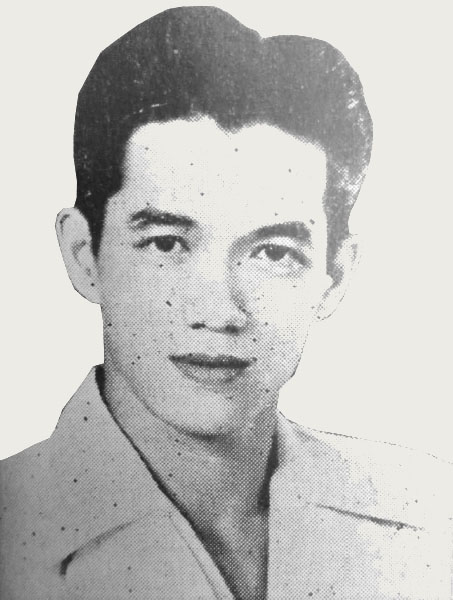
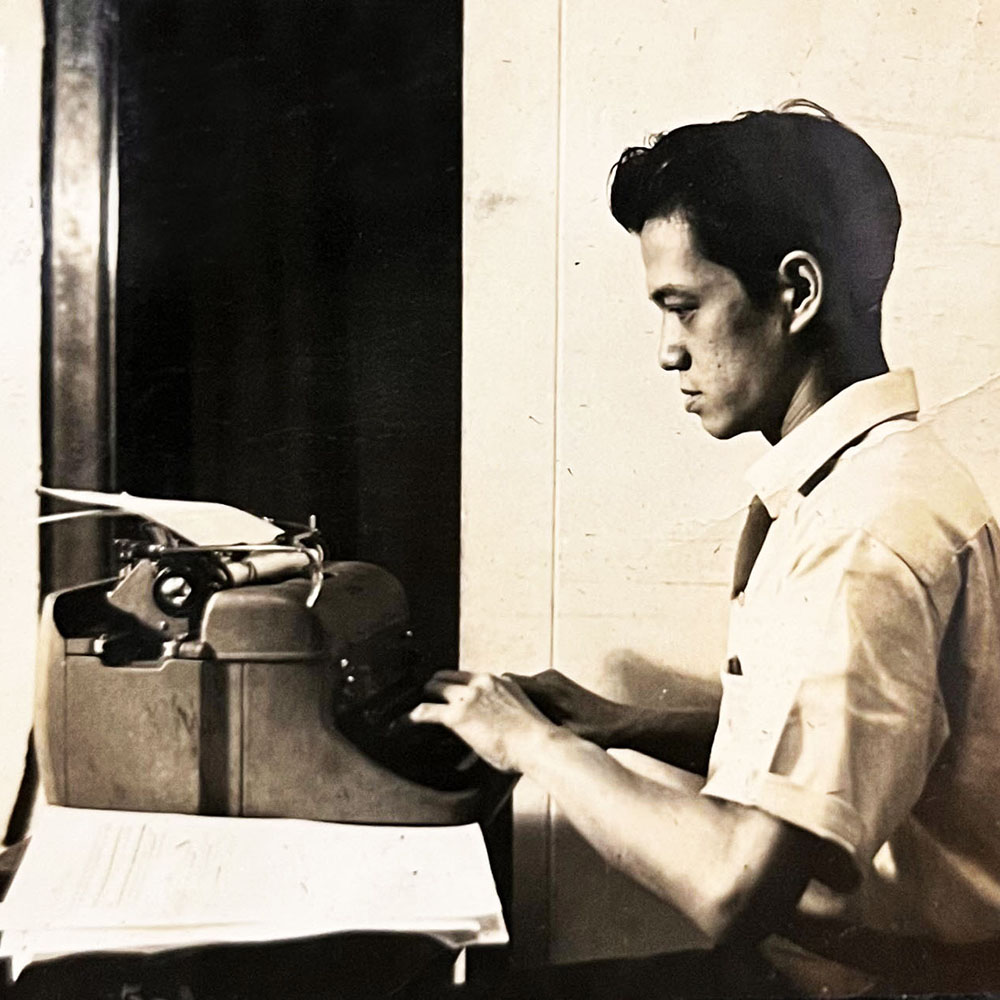
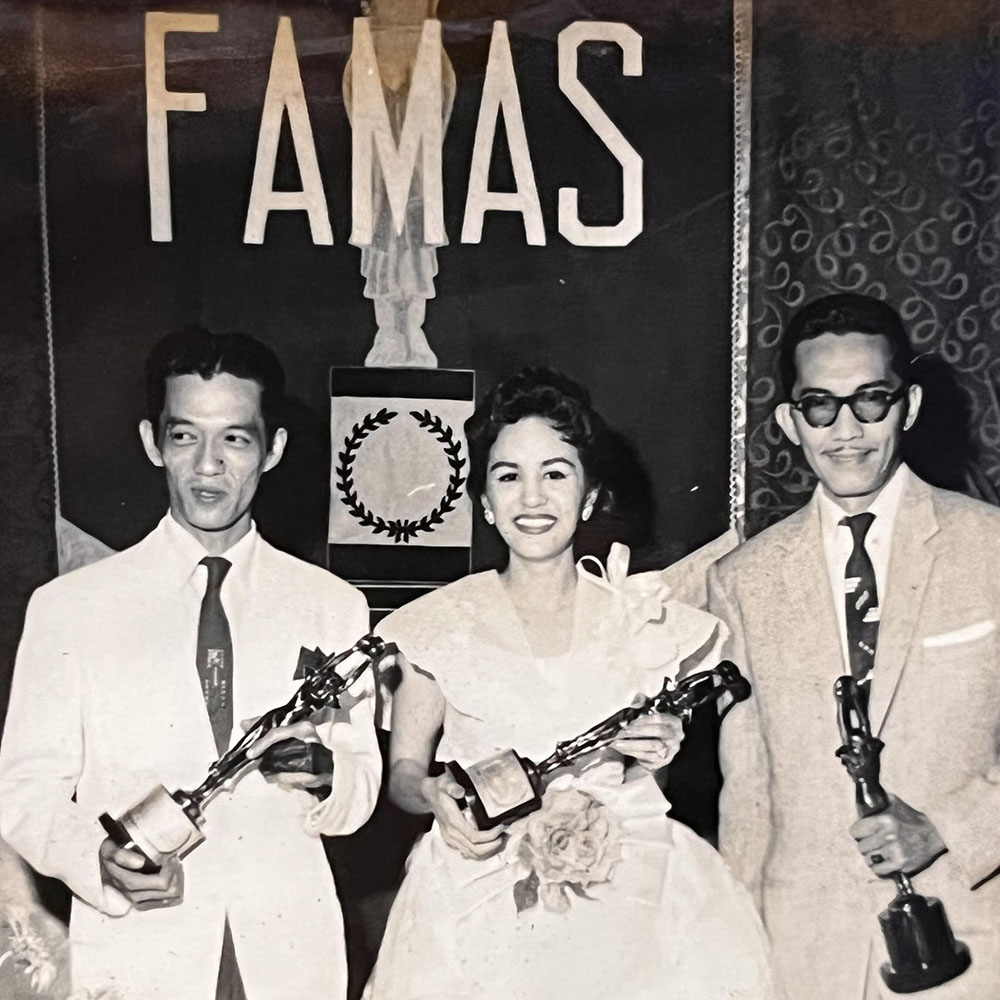
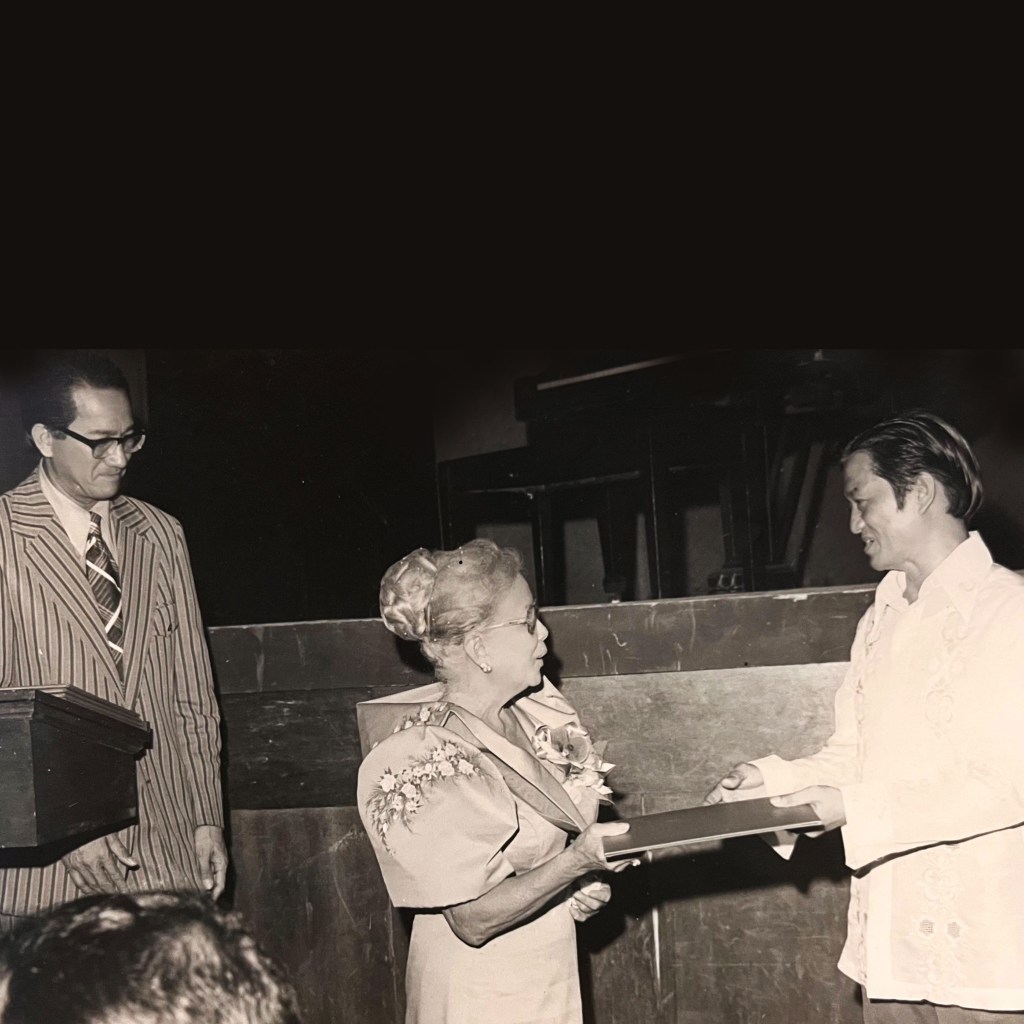



 Buglas Writers Journal